Jujube Tea (Red Date Tea): How to Make It at Home
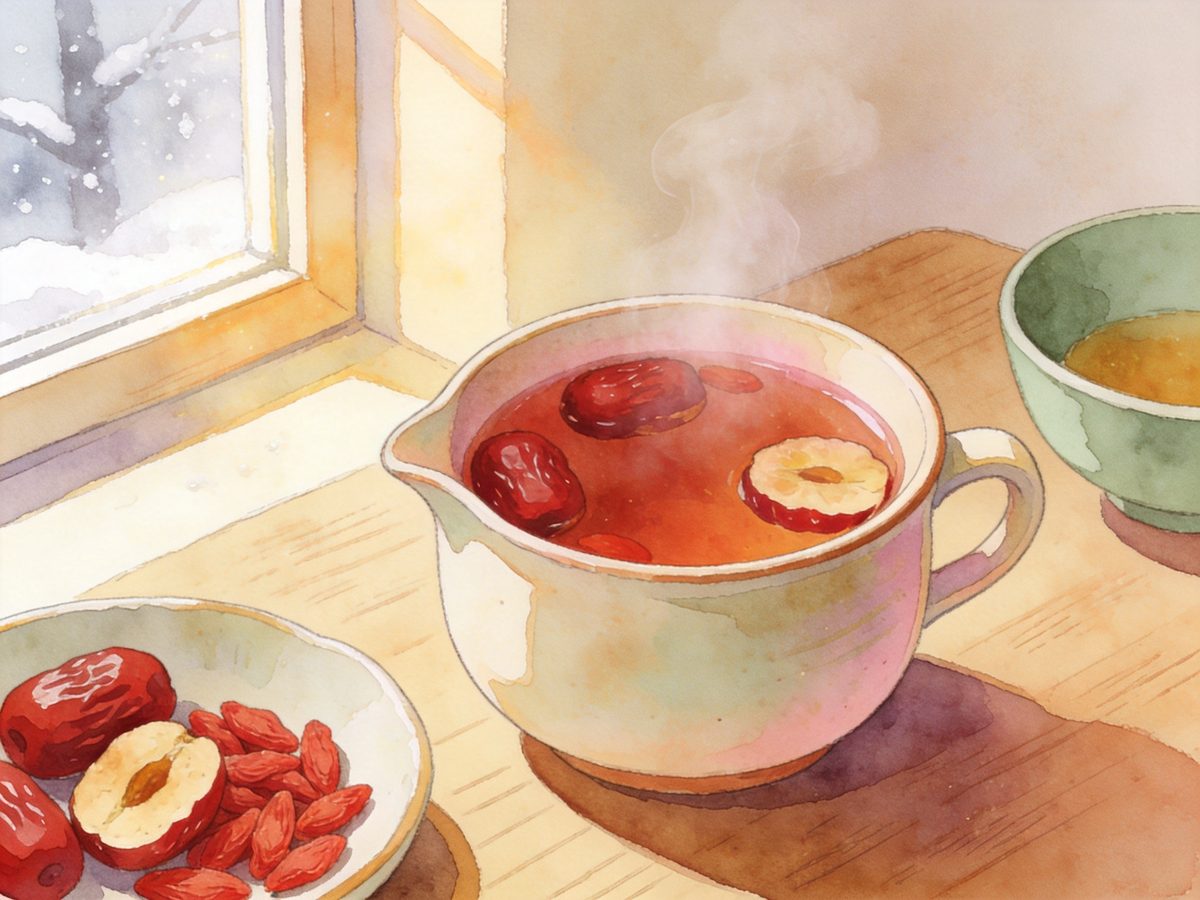
Introduction
Every food culture has a drink it makes for winter without ever calling it a recipe. In many Chinese homes, that drink is jujube tea — dried red dates simmered in water until the pot turns deep amber and softly, naturally sweet. Children drink it after coming in from the cold; grandparents drink it all afternoon; almost nobody measures anything.
Jujubes — 红枣, "red dates," sometimes called Chinese dates — are not related to the dates that grow in palm clusters. They are a crisp apple-like fruit when fresh and a wrinkled, mahogany-colored, honey-sweet fruit when dried, and they are one of the beginner's five herbal tea ingredients precisely because they are cheap, shelf-stable, and almost impossible to ruin.
In traditional Chinese food culture, red dates are counted among "warming, nourishing" foods, and they turn up in winter drinks, congees, and soups alike — you will even find them in some congee traditions. We describe that framing as the tradition it is. What the cup actually delivers is gentler sweetness than any sugary drink and a quiet, sustained warmth that suits cold months.
The Basic Recipe
Ingredients (2–3 cups)
- 8–10 dried red dates
- 600 ml water
- Optional: a strip of dried tangerine peel, or 4–5 chrysanthemum flowers
Method
- Rinse and pit. Rinse the dates, then either slice them in half and remove the pit, or give each date two or three lengthwise cuts. Opening the fruit matters: whole dates give a thin tea no matter how long they simmer.
- Simmer 15–25 minutes. Dates and water into a small pot, bring to a bare simmer, lid on. The water deepens from nothing to rose-amber to a proper tea color over about twenty minutes.
- Press and finish. Press each date against the pot wall with a spoon before serving — the flesh is soft by now, and pressing out the last of the sweetness costs nothing. Pour through a sieve if you like a clear cup.
- Eat the dates. They are tender, sweet, and entirely edible — a small dish of them alongside the tea is the traditional way, especially for children.
The tea itself needs no sugar. Dates are one of the sweeter dried fruits, and a proper simmer extracts plenty; adding brown sugar is possible (it moves the cup toward the brown sugar ginger tea end of the spectrum) but usually unnecessary.
The Classic Additions
- Jujube + goji. The most common upgrade: a teaspoon of goji berries added for the final five minutes of simmering. This is the two-ingredient pairing from our goji and chrysanthemum tea article, transplanted to a simmered, sweeter base.
- Jujube + ginger. Two or three ginger slices simmered the whole time for a warming edge on genuinely cold days.
- Jujube + longan. Dried longan, sold in the same aisle, simmers alongside the dates one-to-one for a deeper, more dessert-like drink — a common winter combination in southern China.
All three are covered in more combinations in Chinese herbal tea recipes.
Buying and Storing Red Dates
- Look for plump, unbroken fruit with deep color. Wrinkles are inevitable and normal; cracks, hard sugar crust, or an off smell are not.
- Size matters less than freshness. Small dates from a busy shop beat jumbo dates from a slow one.
- Pitted dates are fine and save a step, though whole dates keep better.
- Storage: airtight jar, cool dark cupboard, months of shelf life. In summer, some households refrigerate them to keep moths away — a sealed jar in the fridge works perfectly.
One honest note: dried jujubes are a sweet dried fruit, roughly in the range of dried figs in sugar content. The tea is gentler than juice or soda, but it is not a zero-sugar drink — that is part of why it satisfies.
Why It Suits Winter
Part of the answer is practical: jujubes are harvested and dried in autumn, so winter is when they are newest and cheapest. Part of it is the drink's temperament — low effort, hands-off, no brewing precision needed, a pot that stays warm on the stove for refill after refill. And part of it is simply tradition, which needs no justification. When you want the opposite temperament — sharp, floral, four minutes instead of twenty — that is chrysanthemum tea at home. When you want the full brewing fundamentals, see how to brew Chinese herbal tea.
Jujube tea is a kitchen tradition and a pleasant drink. Nothing in this article is medical advice, and no ingredient treats any condition.