Brown Sugar Ginger Tea: The Warming Chinese Recipe
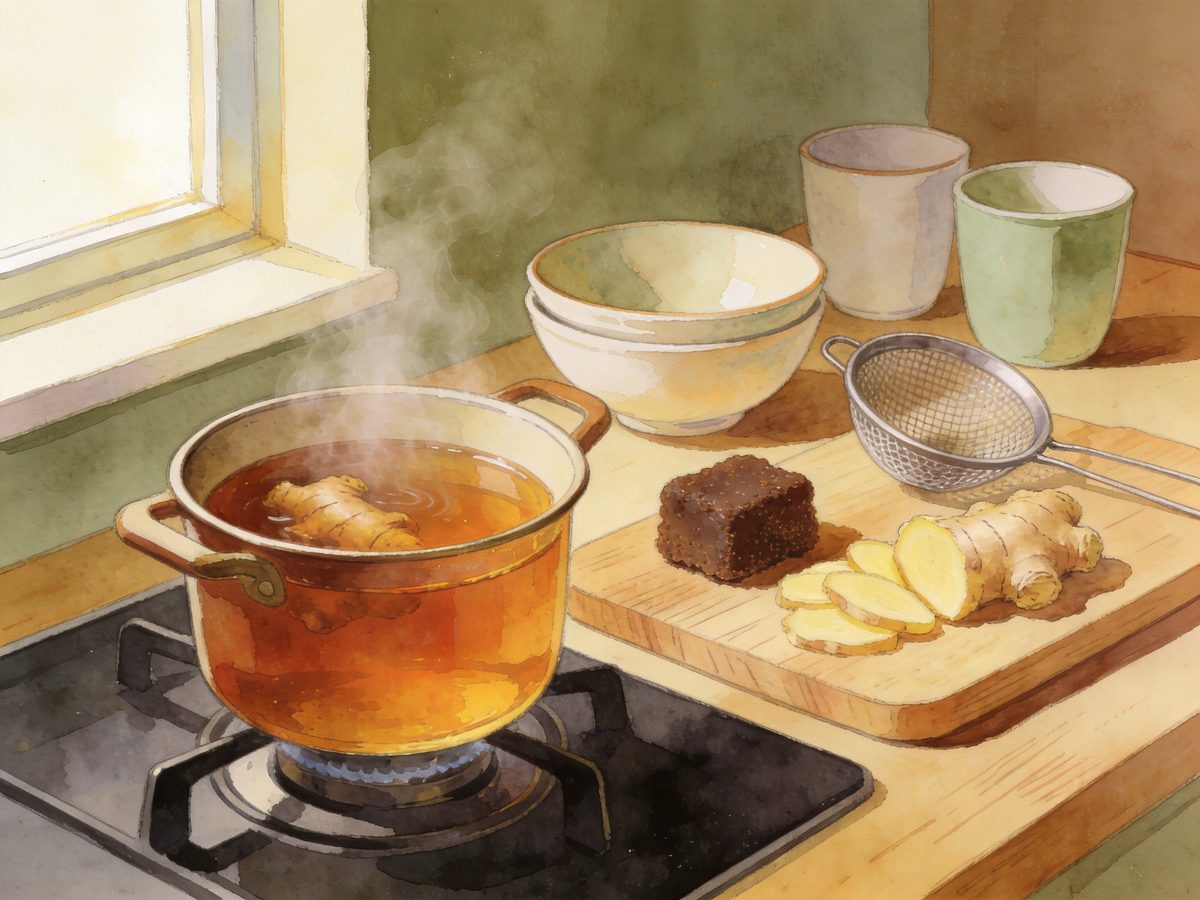
Introduction
Of all the drinks in the Chinese kitchen tradition, few have traveled as fast as this one. Brown sugar ginger tea — three ingredients, one small pot, fifteen minutes — has been a winter fixture in Chinese homes for generations, and it recently found a second life on social media, where ready-made versions of it have become genuine bestsellers.
The recipe predates the trend by centuries, and making it yourself takes about the same time as boiling water for instant noodles. It belongs to the same winter-tea family as our jujube tea and the simmered side of the Chinese herbal tea ingredients guide — but it is the most assertive of the three: spicy, sweet, and unambiguously warming.
One piece of honesty before the recipe: in Chinese tradition this is a "warming" drink, and that framing is exactly how Chinese families describe it. What it is not is a medicine — the warming is real warmth, the ginger is real flavor, and the brown sugar is real sugar. We keep both halves of that sentence.
The Recipe
Ingredients (2 cups)
- 25–30 grams fresh ginger — a thumb-length piece
- 25–30 grams brown sugar (Chinese dark brown sugar, 片糖 or 红糖; regular dark brown sugar works)
- 500 ml water
Method
- Slice the ginger thin. No need to peel if the skin is clean — a quick scrub is enough. Thin slices give up flavor fast; you want surface area, not elegance.
- Simmer, do not boil. Ginger and water into a small pot, bring to a bare simmer, and hold it there for ten to twelve minutes with the lid on. The water turns pale gold and the kitchen starts smelling like winter.
- Add the brown sugar off the heat, stirring until dissolved. Adding it earlier is fine but can catch and scorch on the pot bottom; off-heat is safer and tastes identical.
- Pour through a sieve into two cups, or leave the ginger in for a stronger, spicier second half.
Taste adjustments
- Gentler: 20 grams of ginger and a 3-minute shorter simmer.
- Bolder: smash the ginger slices with the flat of the knife before simmering.
- Citrus note: a strip of dried tangerine peel simmered along with the ginger is a classic Cantonese addition.
Why Brown Sugar Specifically?
Partly tradition, partly flavor. Chinese brown sugar is less refined than white sugar and carries molasses-like depth plus trace minerals — the drink tastes rounder and more caramel-adjacent than the same amount of white sugar would make it. Nutritionally the difference is modest; flavor-wise it is the whole point. If you only have white sugar, the tea still works — it just loses some of its warmth-in-depth.
The Culture, Briefly
In Chinese households, this drink marks specific moments: the first genuinely cold day, long hours in cold rain, and — most famously — a traditional offering for women during their periods, which is why ready-made packets of it are staples of Chinese supermarkets and, now, social media shops. The tradition is real and worth describing as such. The medicine is not: ginger tea is a warm, pleasant drink, and comfort itself has value, but it is not a treatment for anything.
If what you want is warmth on a cold day, you may also like our notes on ginger tea in cold weather. If what you want is to keep exploring the tea pantry, start with the beginner's five ingredients, or try the quietest drink in the tradition — chrysanthemum tea at home.
Storage: the strained tea keeps two days refrigerated and reheats well. Make a double batch on a cold Sunday; future-you will approve.
Brown sugar ginger tea is comfort food in a cup. Nothing here is medical advice, and no ingredient treats or prevents any condition.