How to Brew Chinese Herbal Tea: Heat, Time, Vessel
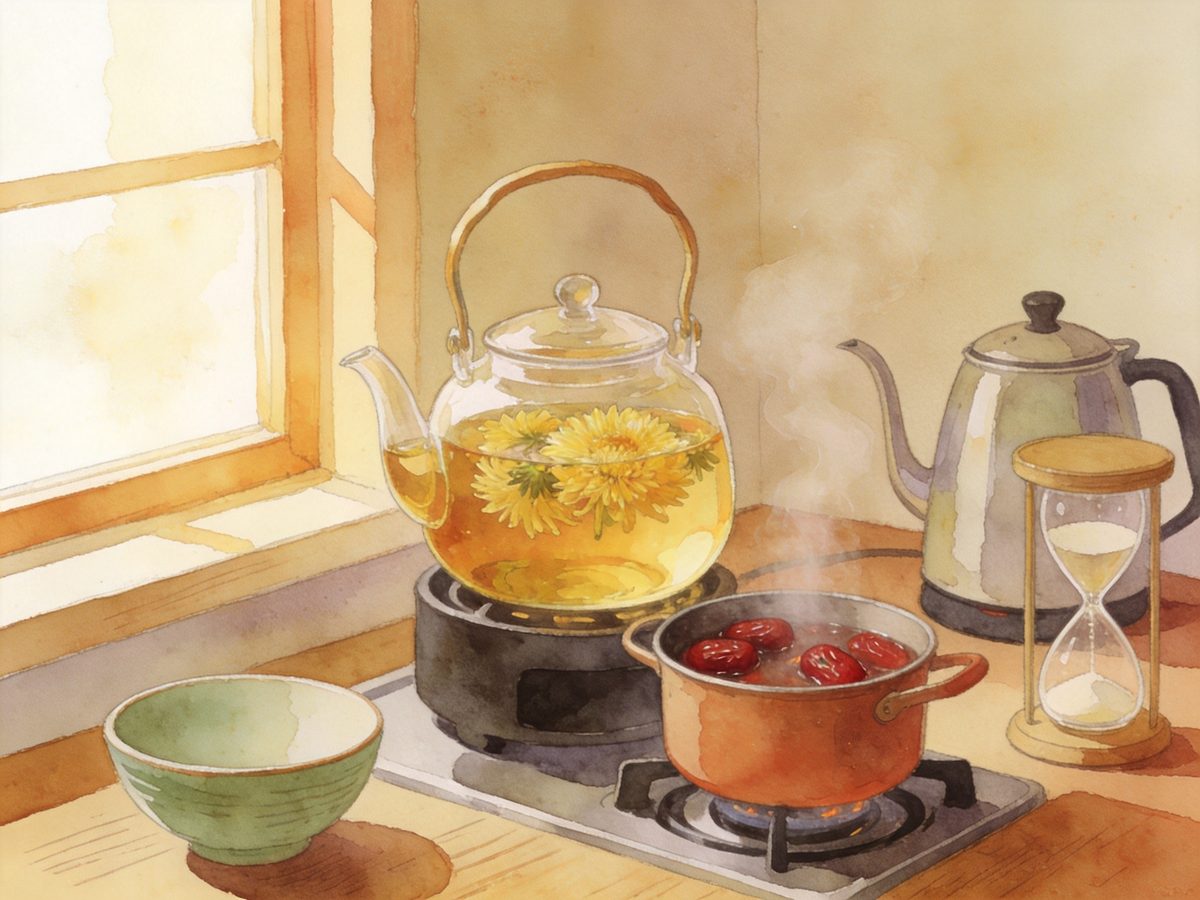
Introduction
Chinese herbal tea fails in exactly one way: it turns bitter or flat because of heat, time, or the wrong pot. The ingredients themselves are forgiving — dried flowers, berries, and roots do not punish beginners. What punishes them is boiling water dumped carelessly onto delicate petals, or a tough root given thirty seconds when it needed ten minutes.
This guide covers the three variables that matter. Once you understand which ingredients want steeping and which want simmering — a map of them lives in our Chinese herbal tea ingredients guide — you can brew almost anything in the tea aisle without a recipe.
The One Rule That Explains Everything
Match the heat to the toughness of the ingredient.
Delicate parts — flowers, leaves, thin peels — want steeping. Hot water poured over, then left alone. Chrysanthemum, most flower teas, and tangerine peel pieces all live here. Too much heat or too much time pulls out bitterness.
Tough parts — roots, dried fruits, barks, whole dates — want simmering. They need contact with actively hot water over minutes to give up their flavor. Goji berries sit near the boundary: fine steeped, better after five gentle minutes.
This is why the same kettle and the same mug can produce both a light floral cup and a deep amber one, depending on which shelf the ingredient came from.
Water Temperature, Practically
You do not need a thermometer. The two temperatures that matter have names:
Just off the boil (roughly 90–95°C). Boil the kettle, then wait about a minute, or pour it into the pot first and let the vessel absorb some heat. This is the default for chrysanthemum and other flowers. Full rolling boil on fresh flowers is the most common beginner mistake — it is exactly what makes a floral cup taste sharp and thin.
A bare simmer (small bubbles, not a rolling boil). For simmering dates, ginger, and roots on the stove. You are not trying to boil them hard; you are holding them in hot water long enough for flavor to move.
One more habit worth stealing from Chinese tea culture: rinse the ingredients. A quick pour of hot water over dried flowers and berries, discarded after five seconds, washes off dust from storage and shipping — and warms the vessel at the same time.
How Long to Steep or Simmer
| Ingredient type | Method | Time | The sign it is ready |
| Chrysanthemum and other flowers | Steep, just-off-boil | 3–5 minutes | Cup turns pale gold, scent opens |
| Goji berries | Steep or short simmer | 4–8 minutes | Berries plump, water faintly amber |
| Tangerine peel (chenpi) | Steep | 5–10 minutes | Aromatic, slightly bitter edge |
| Red dates (jujubes) | Simmer | 15–25 minutes | Deep amber, softly sweet |
| Fresh ginger slices | Simmer | 10–15 minutes | Warmth and gentle bite |
| Mixed blends | Simmer the tough parts first, add flowers last | see above | — |
The last row is the real secret of Chinese herbal tea recipes: in any multi-ingredient blend, the simmering ingredients go into the pot first, and the delicate flowers go in for the final few minutes only.
Choosing the Vessel
Glass teapot or tall glass. The best teacher for a beginner. You can watch the flowers open and the color develop, which teaches timing faster than any clock. Also the easiest to clean — herbal teas leave no tannin stains. Our favorite for chrysanthemum tea at home.
Clay or ceramic pot. The traditional choice, and genuinely useful for simmered drinks: thick walls hold heat through a long steep, and a well-used pot carries a faint memory of past brews. If you drink mostly one or two families of tea, clay rewards loyalty.
Mug with a lid or small plate on top. Underrated. Covering the mug while steeping keeps volatile aromas in the cup instead of the kitchen — the difference is noticeable with flowers.
Avoid: long-soak infuser bottles for flower teas. They are convenient, but an hour of steeping is how a good chrysanthemum turns bitter on a desk.
Three Fixes for Common Problems
- Too bitter? You used too much heat or too much time on something delicate. Rebrew with just-off-boil water and pull the flowers out at four minutes.
- Too weak? The ingredient is probably a simmerer being treated as a steeping ingredient. Move it to the stove, or simply use more of it.
- Tastes flat or dusty? Skip the rinse next time — that five-second hot-water wash genuinely changes the cup with dried flowers and peel.
Where to Go Next
The brewing method is only half the picture; the other half is knowing your ingredients. Start with the beginner's five, then apply today's timing table to the classic goji and chrysanthemum pairing, the simmered jujube tea, or the stovetop brown sugar ginger tea. When the weather turns, ginger tea in cold weather is the seasonal favorite.
This is brewing technique for kitchen drinks, not health guidance. Nothing here treats or prevents any condition.