Goji and Chrysanthemum Tea: The Classic Pairing
Introduction
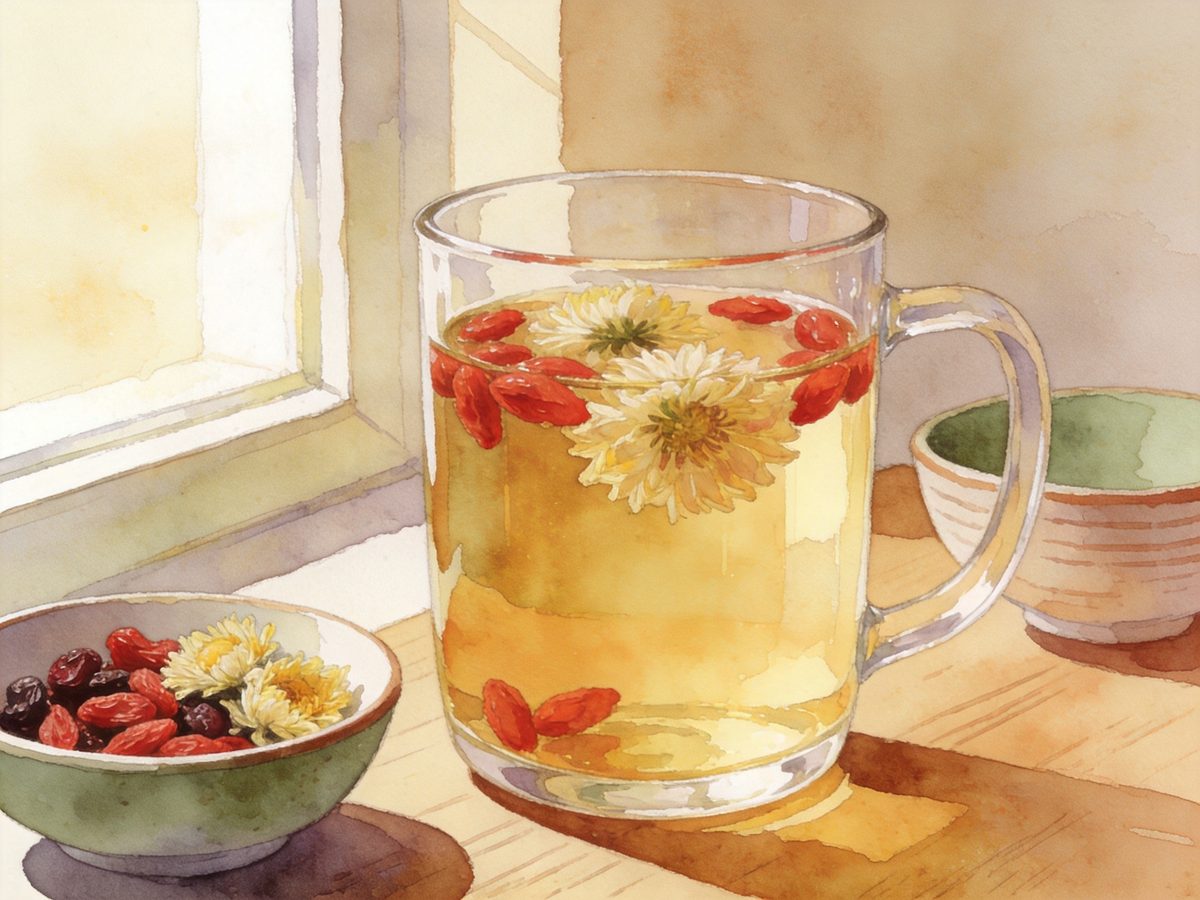
If Chinese herbal tea had a signature duet, this would be it. A spoonful of red goji berries, a handful of pale chrysanthemum flowers, hot water — the combination appears in office mugs, restaurant teapots, and supermarket tea blends across China, and it is the pairing that most often greets beginners at the tea aisle.
It earns that place honestly. The two ingredients need nothing from each other except company: one is floral and light, the other is soft and faintly sweet, and together they make a cup that tastes considered even though it took four minutes. Our Chinese herbal tea ingredients guide profiles each ingredient separately; this article is about the pairing itself.
A note on why tradition pairs them: in Chinese food culture, chrysanthemum is counted among "cooling" ingredients and goji among "warming" ones, and the blend is described as a balanced middle. We present that as the tradition it is — the honest reason to drink this tea is that it is gentle, pretty, and pleasant, not that it adjusts anything in your body.
The Basic Recipe
This is a one-mug recipe with forgiving measurements.
Ingredients
- 4–5 dried chrysanthemum flowers (the small "taiju" type, or 2–3 of the larger globe type)
- 1 teaspoon goji berries (about 5–8 grams)
- About 300 ml water, just off the boil
Method
- Rinse both ingredients: pour a little hot water over them in the mug, swirl five seconds, discard the water. This washes off storage dust and warms the mug.
- Pour in fresh just-off-boil water — boiled, then rested about a minute. Full-rolling boil is the main cause of a sharp, thin cup.
- Cover and steep four to five minutes. The flowers open, the berries plump, and the water turns pale gold with a faint amber fringe.
- Drink with the berries left in — they soften and can be eaten at the end, which many people consider the best part.
Adjusting the balance
- Too floral or slightly bitter? Fewer flowers next time, or shorter steep — pull it at three minutes.
- Too plain? A teaspoon of goji more, or a small piece of rock sugar, which is a common addition in teahouses.
- Want it warmer for winter? Add two slices of fresh ginger to the steep — or move to the fully simmered brown sugar ginger tea.
Buying the Two Ingredients
Chrysanthemum comes in several styles. Small pale buds and the larger round "Hangzhou" or "Tai" chrysanthemums both work; the flowers should look whole and smell faintly sweet, never browned or dusty. Buy from a shop with turnover.
Goji berries should be deep red-orange, plump, and slightly flexible rather than brittle. A very bright, unniform red can mean sulfur treatment — most Chinese groceries and tea shops sell perfectly fine berries, so when in doubt, buy small and see how they taste.
Both keep for months in sealed jars away from light. Neither contains meaningful caffeine — worth knowing if you drink this in the evening.
Why This Pairing Works as a Gateway
Two practical reasons this is the tea we recommend starting with, beyond taste. First, the flavor window is wide: steep it carelessly and it is still pleasant, which is not true of every flower tea. Second, the ingredients are cheap and available in any Chinese grocery — and once you own both, half the recipes in our beginner's guide are already in your pantry.
The natural next steps from here: learn the full brewing fundamentals in how to brew Chinese herbal tea, try goji on its own with the hot water habit, or go deeper on flowers with chrysanthemum tea at home.
Goji and chrysanthemum tea is a kitchen tradition and a pleasant drink. Nothing in this article is medical advice, and no ingredient treats any condition.