Goji Berries in Hot Water: The Daily Goji Tea Habit
Introduction
Of all the habits in the viral "Becoming Chinese" trend, this one has the most devoted followers: a thermos half full of small red berries, topped up with hot water, sipped all day — and yes, eaten at the end.
Goji berries (枸杞, gouqi, also sold as wolfberries) have been a pantry staple in Chinese households for generations. Long before they were a superfood price in Western supermarkets, they were what your colleague's thermos smelled like. Now the "goji in hot water" habit is having its global moment, alongside drinking plain hot water and congee breakfasts.
Here is what the tradition says, what a sensible reading looks like, how to make it — and the one safety note worth knowing before you start.
What the Tradition Says
In TCM dietetics, goji berries are classified as a food-herb that "nourishes the liver and kidneys" and benefits the eyes — traditional category language, describing a warming-neutral, sweet little berry used in teas, soups, and congee alike. Grandmothers recommend them for tired eyes and long screen days; students take them before exams; office workers call the thermos routine a survival tool.
An honest reading: goji berries do contain useful nutrients — notably zeaxanthin, the same carotenoid found in leafy greens, which concentrates in the retina; plus vitamin C and various polysaccharides. Eating a handful of dried berries is a perfectly reasonable snack by any modern standard.
What the tradition gets procedurally right is the soaking: water-soluble compounds leach gently into the water, and the ritual turns a snack into a slow, all-day hydration habit. And here is the practical detail most Western articles miss — zeaxanthin is fat-soluble, so the berries themselves matter more than the pink water. Drink it, then chew the berries. Chinese thermos culture already knew this: the berries are never left behind.
What it is not: a treatment for anything, and not a reason to eat a whole bag a day. A small daily portion is the entire tradition.
How to Make Goji Water (Thermos Style)
You need: dried goji berries (food-grade, from any Asian grocery or health store) and hot water.
- Rinse a small handful — about 5 to 10 grams (roughly a tablespoon) — of dried berries.
- Add to your mug or thermos and pour over hot water around 80–90°C, or let boiling water rest a minute first. You want warm, not scalding — the same temperature rule as plain hot water.
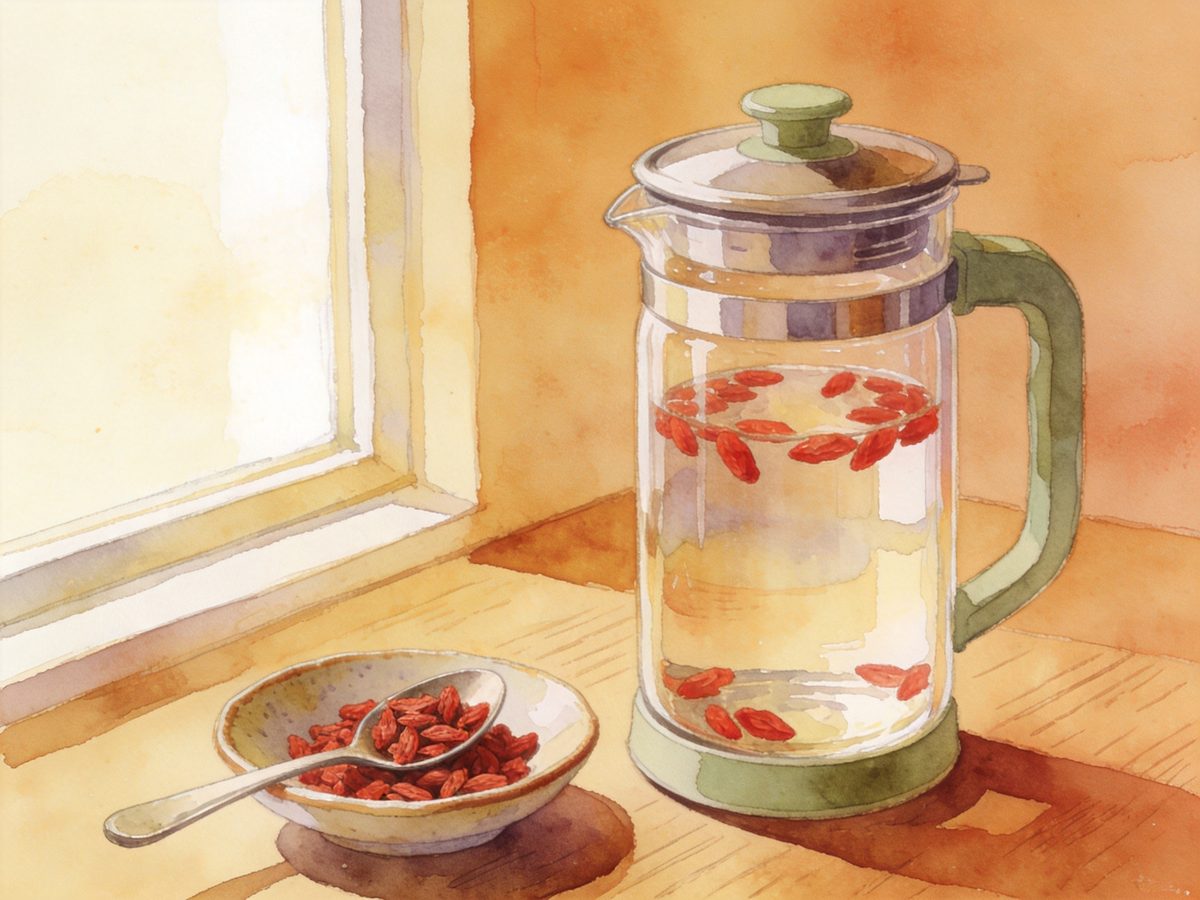
- Steep 5–10 minutes. The water turns pale amber-orange with a faintly sweet, raisin-and-herb smell.
- Sip through the day, refill once or twice. Top up with more warm water as you go.
- Eat the berries at the end. Softened by soaking, mildly sweet — this is where most of the nutrition actually is.
Easy variations:
- Goji + chrysanthemum: the classic office-pairing; floral and cooling in character. Our herbal tea ingredients guide covers both.
- Goji + red dates: warmer and sweeter, a winter favorite.
- Goji in congee: toss a spoonful into the pot for the last 10 minutes — see our plain rice congee guide.
Who Should Check First
Goji berries are food, and for most people this habit is as risky as raisin tea. One real exception is worth knowing: goji can interact with blood-thinning medication such as warfarin, and documented case reports exist. If you take warfarin or any daily prescription, ask your doctor or pharmacist whether a daily goji habit is fine for you — that is a thirty-second conversation, not a medical lecture.
Otherwise: rinse the berries, keep portions small, and skip the sugar-laden "goji juice blends" — the plain dried berry is the entire tradition, and it is cheaper.
The Bottom Line
Goji water earned its place in Chinese daily life the same way most good habits do: it is cheap, gentle, pleasant, and it makes drinking enough water feel like a small act of care. The internet did not discover a medicine this year — it discovered a thermos habit. That is still worth borrowing.