"Chinamaxxing": The Viral Chinese Wellness Habits, Explained Properly
Introduction
Sometime in the past year, Western social media discovered that millions of people drink their water hot.
The trend got names like "Chinamaxxing" and "Becoming Chinese": young Western creators adopting Chinese lifestyle habits — warm water instead of iced, evening foot soaks, congee for breakfast, early bedtimes, gua sha, tai chi in the park — half sincerely, half as a bit, and almost always to surprising engagement numbers. Mainstream outlets from the Washington Post to Forbes have profiled it; The Conversation and the Guardian have added a fairer question — who gets to turn a living culture into an aesthetic?
This site exists because we think the sincere version of the trend is worth taking seriously: behind every meme there is usually a real habit that Chinese families have used for generations. Here is what those habits actually are, what logic holds up, and how to try them without going to extremes.
Habit 1: Drinking Warm Water (Duo He Reshui)
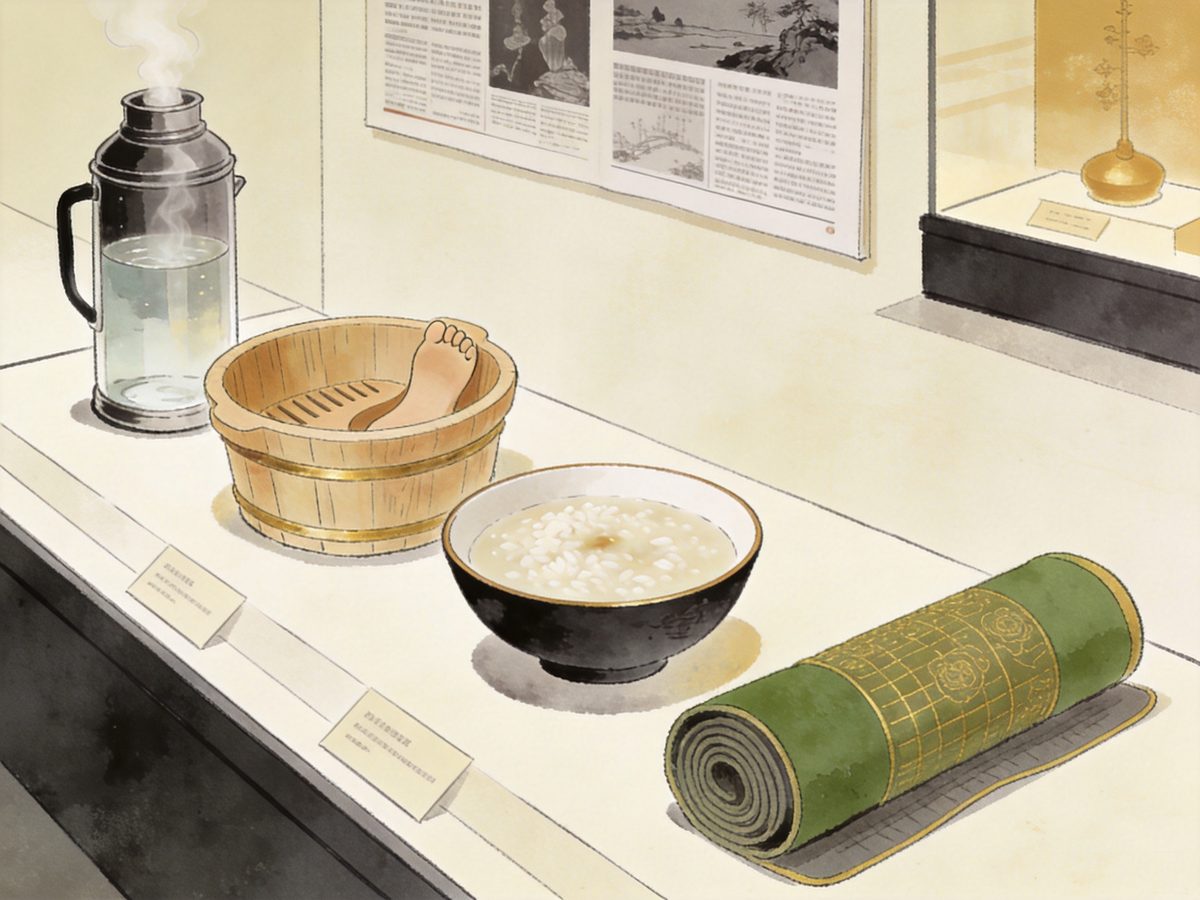
The cornerstone of the trend, and genuinely the most visible daily difference between Chinese and Western habits. In China, hot water (热水) is offered to guests, ordered at restaurants, and carried in thermoses by schoolchildren and grandmothers alike.
The traditional logic: cold "shocks" the digestion; warmth supports it. TCM dietetics ranks iced drinks as a Spleen burden, and warm water as the neutral default.
A fair reading: sipping warm water is not a therapy, and iced water is not poison — people in cold-drink cultures are perfectly healthy. But there is real, boring wisdom here: warm water is drunk slowly, which improves hydration habits by itself, and many people with sensitive digestion simply feel better skipping ice. Try it for a week; keep whatever feels true.
Habit 2: The Evening Foot Soak
The trend's coziest export: a basin of warm water (herbs optional) while you wind down, popularized in China as a daily winter ritual and now a staple of wellness TikTok.
The traditional logic: warmth drawn downward, calming an overstimulated mind and cold feet before bed.
What holds up: warm foot baths are genuinely relaxing, and a warm-then-rest transition is a reasonable wind-down. Our site has full safety guides: start with Warm Foot Baths Before Bed, try the mugwort version only after reading the allergy and pregnancy warnings, and remember the rule the memes skip — warm (38–40°C), not hot, and 15–20 minutes is plenty.
Habit 3: Congee
Rice simmered into a soft, warm porridge — the default Chinese breakfast and sick-day food, now appearing in Western meal-prep videos.
The traditional logic: congee is the Spleen's favorite — warm, moist, effortless to digest, endlessly adaptable (century egg and pork, pumpkin, red bean, or just plain with a soft egg).
What holds up: a warm, simple breakfast that does not spike then crash you is a legitimate upgrade over skipping breakfast or starting with pastry. It is not a detox or a cure — it is breakfast. Try plain rice congee as the base recipe.
Habit 4: Early Nights and Rhythm
The least photogenic habit is the one TCM cares most about: sleep aligned with the evening, plus naps and meals at consistent times. The meme version is "going to bed at 10pm like a Chinese grandmother."
The traditional logic: the TCM body clock assigns night hours to restoration; burning the midnight oil is literally "spending essence."
What holds up: sleep regularity is one of the few wellness ideas with overwhelming modern evidence behind it. This is the trend's best habit, and you do not need a single herb to adopt it.
Habit 5: Gua Sha — and the AI Face-Reading Offshoot
Gua sha went mainstream in the West years ago as a facial beauty tool; the trend brought back the body version and spawned a stranger cousin — people prompting AI chatbots to "act like a Chinese medicine doctor" and analyze photos of their face or tongue.
The traditional logic: gua sha scraping is a traditional technique for surface tension and stiffness; face and tongue observation are traditional pattern-reading tools.
What holds up — and what doesn't:
- Gentle facial gua sha with a clean tool and oil is mostly a pleasant face massage; there is no good evidence it "sculpts" anything long-term, and aggressive scraping can bruise.
- Body gua sha for muscle stiffness is a legitimate traditional comfort practice — treat it like a gentle massage, not a cure.
- AI face-reading is entertainment, not assessment. Traditional face and tongue diagnosis takes years of training and in-person observation; a chatbot describing your "liver qi stagnation" from a selfie is pattern-matching on memes. Enjoy it as a party trick; never make health decisions from it. If something about your health worries you, show it to a human doctor — starting with your actual face, not a photo of it.
What the Memes Miss (and the Culture Deserves)
Two honest notes to close:
- The habits are real; the aesthetic is not the culture. Chinese commentators have pointed out, fairly, that turning a living tradition into a 15-second checklist — minus the philosophy, minus the context, minus the people — flattens it into costume. If the trend introduced you to foot soaks, the respectful next step is curiosity about where the habits come from, not just a content calendar.
- TCM habits are comfort practices, not medicine. Nothing in the trend's toolbox treats any disease. The tradition itself always paired self-care with practitioners — the modern equivalent is: keep your doctor, enjoy your foot soak.
If you want to go deeper than the memes, our free guide and the Start Here section cover the actual framework — food nature, warmth, rhythm, and seasons — in plain English.