Mugwort Foot Soak: A Gentle TCM Evening Ritual
Introduction
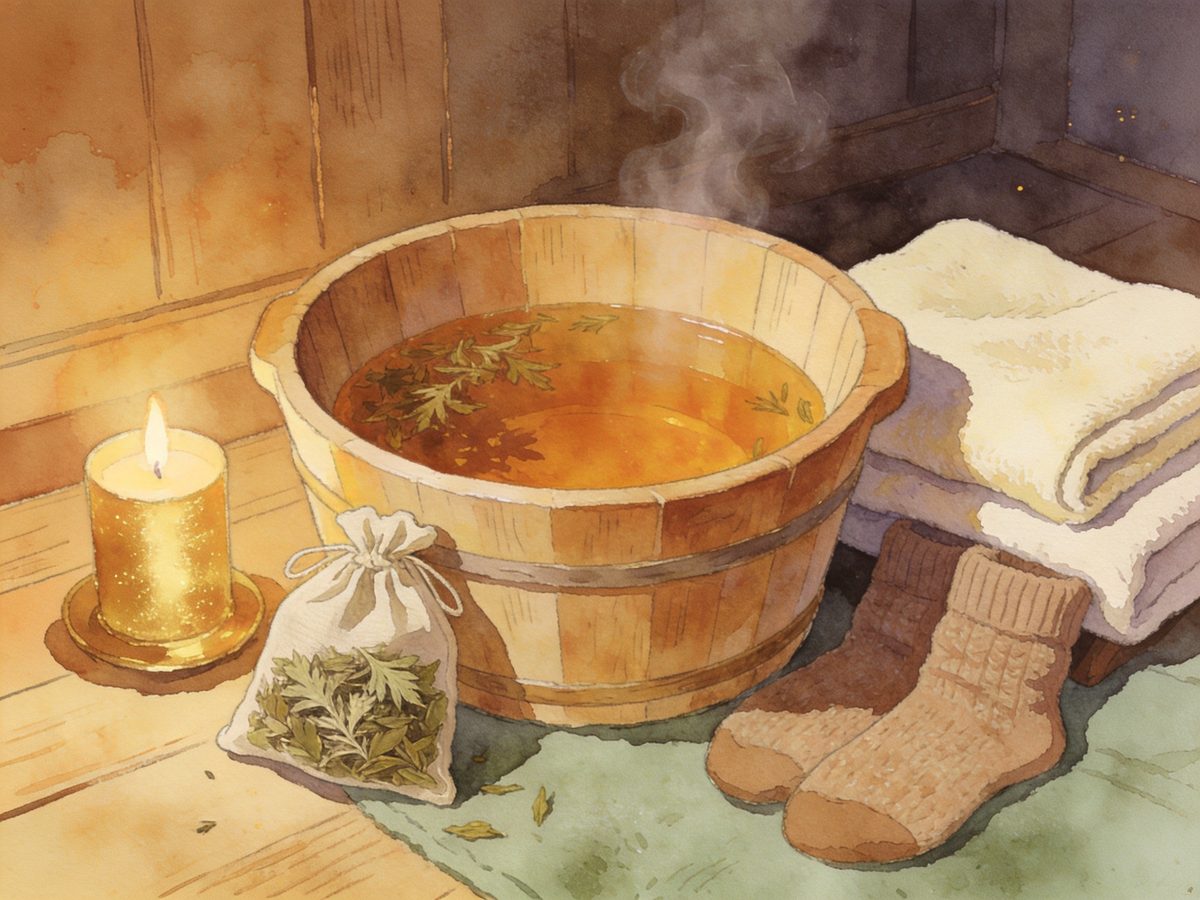
If you have spent any time in Chinese wellness corners of social media lately, you have probably seen the mugwort foot soak — a basin of amber-brown water, steam rising, usually captioned something about cold feet, better evenings, or "the TCM secret."
The trend is new; the practice is not. Soaking feet in a decoction of dried mugwort leaves — ai ye (艾叶) in Chinese — is a longstanding home ritual in China, especially in autumn and winter, when cold floors and cold feet arrive together.
This guide explains what mugwort is, how a traditional foot soak is prepared, and — more importantly — the safety rules, because herbal soaks have more boundaries than plain warm water. As always, this is wellness education, not medical advice, and a foot soak treats nothing.
What Is Mugwort (Ai Ye)?
Mugwort (Artemisia argyi) is a fuzzy-leafed herb in the same plant family as daisies and chrysanthemums. In Chinese medicine it is best known as the herb rolled into the cones and sticks used in moxibustion — the practice of warming acupoints with burning mugwort.
As a foot soak herb, dried mugwort leaves are simmered or steeped in hot water, releasing a strong, herbal, slightly camphor-like aroma. In traditional terms, mugwort is described as warming — which is exactly why the foot soak is a cold-weather ritual: the tradition says warm the feet, and the whole body feels warmer.
What modern users should know: mugwort belongs to a plant family responsible for a lot of contact allergies. If you react to daisies, chrysanthemums, ragweed, or chamomile, treat mugwort with real caution (details below).
How to Prepare a Traditional Mugwort Foot Soak
What You Need
- A basin or foot bath tub deep enough to cover your ankles
- A handful of dried mugwort leaves (sold in Chinese herb shops and online as "ai ye" or "mugwort leaves for foot bath"; many products come in pre-portioned tea bags for soaking)
- Hot water
- A towel, and warm socks for afterward
Steps
- Steep the herb. Put the mugwort in the basin and pour in hot water — traditionally boiling or near-boiling water is poured over the leaves, which are then left to steep for 5–10 minutes. Some people simmer the leaves in a pot for 10 minutes first for a stronger brew.
- Dilute to a safe temperature. Top up with cool water until the bath is warm, not hot — around 38–40°C (100–104°F). If you have any loss of sensation in your feet, use a thermometer, not your feet, to test.
- Soak 15–20 minutes. Keep the water warm by topping up with a little hot water if it cools. Your feet should feel pleasantly warm; skin should not turn bright red.
- Dry thoroughly — including between the toes — and put on warm socks.
A typical rhythm is a few evenings a week during cold months. There is no required dosage of leaves; a small handful (or one soak bag) per basin is the common home amount.
Plain warm water is also fine. The comfort of a foot soak comes mostly from the warmth itself, and research into warm foot baths suggests they can be genuinely relaxing. You are not missing out if you skip the herb.
What a Mugwort Foot Soak Can (and Cannot) Do
Being straightforward about the evidence:
- What is well supported: warm foot baths are relaxing, may help some people wind down before bed, and feel wonderful on cold feet. Some clinical studies have explored warm foot baths and herbal foot soaks as comfort measures — the research is early and mixed, and none of it establishes foot soaks as a treatment.
- What is traditional belief: the specific warming properties of ai ye, and the classic pairing of foot soaks with sleep rituals in Chinese household culture.
- What a foot soak cannot do: treat any medical condition, cure insomnia, improve fertility, fix circulation problems, or replace any medication or professional care.
If a soak helps you feel warm and calm in the evening, that is a fine reason to do it. If a product promises medical results, be skeptical.
For the basics of evening foot baths — including who should not use them — see Warm Foot Baths Before Bed. Curious about other soak additions? Compare options in Foot Bath Salt: Epsom Salt vs Chinese Herbal Soaks.
Safety Rules for Mugwort Foot Soaks
Herbal soaks need more caution than plain water:
- Pregnancy: skip mugwort soaks. Mugwort has a traditional reputation as an herb that can influence the uterus, and it is conventionally avoided in pregnancy in any form. Pregnant women should not use mugwort foot soaks without explicit guidance from their healthcare provider — plain warm (not hot) foot soaks are the safer choice, with the same temperature limits.
- Allergies matter. Mugwort is in the Asteraceae family (daisies, ragweed, chamomile). If you have ragweed or related plant allergies, or eczema that flares with botanical products, do a small patch test on your forearm first — and skip the herb entirely if you have ever reacted to mugwort products.
- Diabetes or neuropathy: use a thermometer. Reduced foot sensation makes it easy to scald skin without noticing. Use a thermometer to keep the water at or below 40°C, limit soaks to 15–20 minutes, and check your feet afterward.
- Never soak with open wounds, ulcers, or infected skin on the feet — herbal water is not sterile.
- Varicose veins, severe circulation problems, or recent foot surgery: ask your doctor before regular foot soaks.
- Stop immediately if you feel dizzy, itch, or notice redness and irritation spreading — dry your feet, rinse with clean water, and do not repeat.
- Keep the temperature warm, not hot. hotter is not better; very hot soaks can cause dizziness or low blood pressure, especially in older adults.
- Not for young children, and keep the basin out of reach of pets — mugwort is not for them either.
A Simple Mugwort-Soak Evening Ritual
If you have checked the safety rules above and they do not apply to you:
- Prepare the soak (steps above) about 60–90 minutes before bed.
- Soak 15–20 minutes while doing exactly nothing else — no phone scrolling, just warmth.
- Dry your feet well, put on socks, and follow with your normal wind-down: a warm drink, low lights, quieter activities.
If your evenings need more structure, A Chinese Wellness Bedtime Routine walks through a complete wind-down, and What to Eat at Night in Chinese Food Therapy covers the warm-drink side of the ritual.