Ginger Foot Soak: The Warming TCM Recipe (and Who Should Skip It)
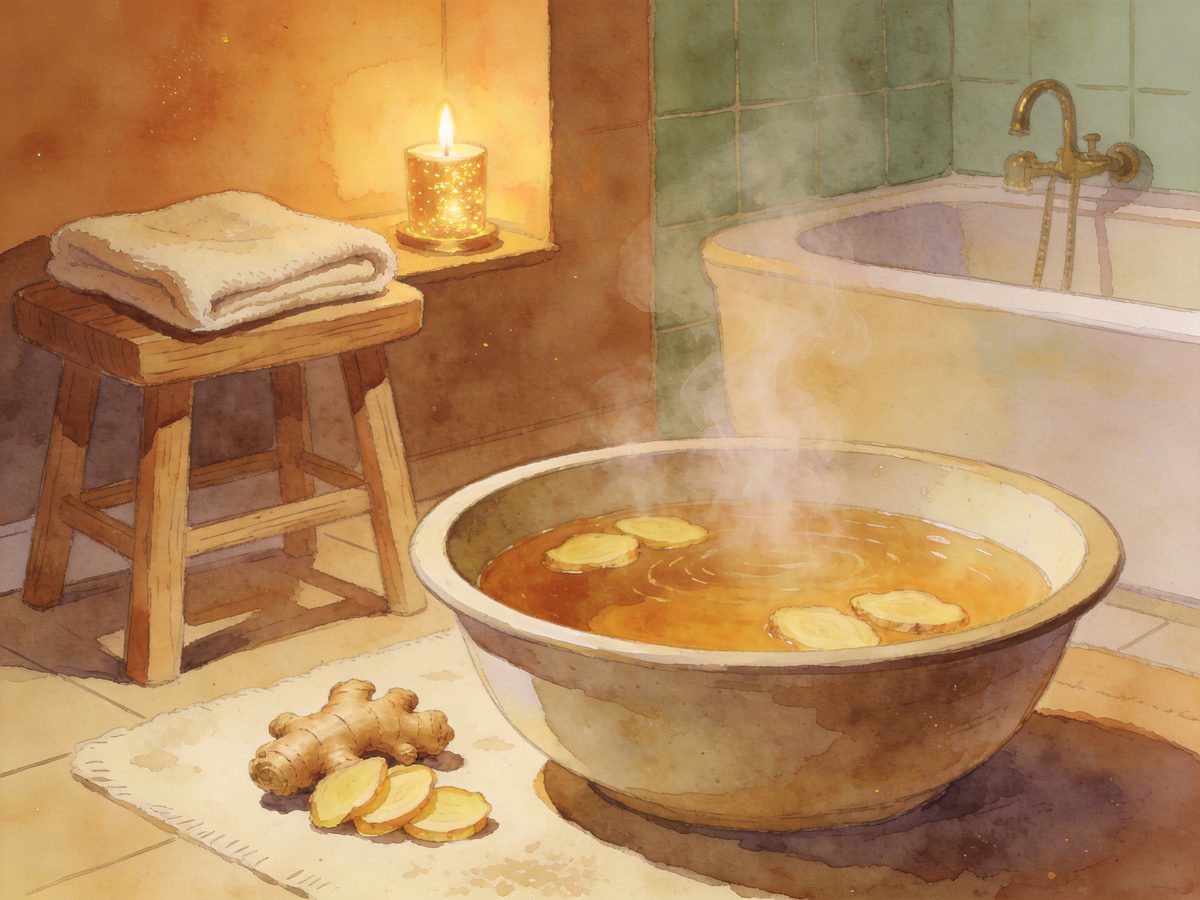
Why ginger, according to tradition
In Chinese medicine, ginger is the classic "warming" food. The traditional idea is that its warmth helps dispel cold — and since the soles of the feet are considered the far end of the body's circulation, warming them is thought to help the whole body feel less chilled.
A few honest notes before the recipe:
- "Dispelling cold" is a traditional concept, not a medical claim. What is measurably happening is that warm water widens blood vessels in your feet, and ginger adds scent and a gentle skin-warming sensation.
- It feels good for cold feet and chilly evenings — that alone is a fair reason to do it.
- It is not a treatment for any illness. If you feel genuinely unwell, see a doctor.
The recipe: ginger foot soak, the simple way
You need about ten minutes of prep, most of it hands-off:
- Slice 30-50 g of fresh ginger — a thumb-sized piece, skin on or off, sliced thin. More ginger means a stronger scent, not a stronger effect.
- Simmer the slices in about 2 liters of water for 10 minutes. A covered pot keeps the volatile oils in the water instead of the air.
- Pour the ginger water into a basin and top up with cool water until the total temperature lands at 38-40°C (100-104°F) — warm, not hot. Use a thermometer; your hand is a poor judge.
- Soak your feet for 15-20 minutes, topping up with hot water once if it cools down.
- Dry your feet thoroughly afterward, especially between the toes, and put on warm socks.
No basin big enough? The same slices work in a bucket, or you can start with ginger tea bags as a lower-effort version — the ritual matters more than the hardware.
Who should skip it or ask first
This is the part trend videos skip. Please do not:
- Open cuts, broken skin, or athlete's foot flare-ups: ginger can sting and irritate broken skin. Wait until healed.
- Diabetes, especially with nerve damage (neuropathy): reduced sensation makes it easy to burn yourself without noticing. Ask your doctor first, and always use a thermometer.
- Pregnancy: some traditional practices are modified during pregnancy. Check with your doctor or midwife before regular soaks.
- A fever or feeling acutely unwell: a hot soak is for comfort, not for "sweating out" an illness. Rest and medical care come first.
- Sensitive skin: do a small patch test with the diluted ginger water on your forearm first.
If the water ever causes itching, redness, or discomfort, stop, rinse with plain water, and skip the ginger next time — plain warm water is a perfectly good soak on its own (see the simple warm-water foot bath).
A one-week way to try it
Keep it small:
- Two or three evenings this week, after dinner and before bed.
- 15 minutes, 38-40°C, no screens — that is the whole practice.
- Follow with socks and lights low, sliding straight into your evening wind-down.
Where to go next
- The full beginner framework lives in foot bath basics.
- Curious about herbal variations? Compare mugwort foot soaks and salt soaks.
- If cold feet are a constant rather than an occasional thing, read the Chinese medicine view on always-cold feet — and get a medical checkup to rule out circulation or thyroid causes first.
- Want the numbers behind the ritual? Here is the full guide to foot bath temperature and timing.
A ginger foot soak is a comfort practice with a long cultural history — general wellness education only, not medical advice.