Sweating During a Foot Soak: What TCM Tradition Says
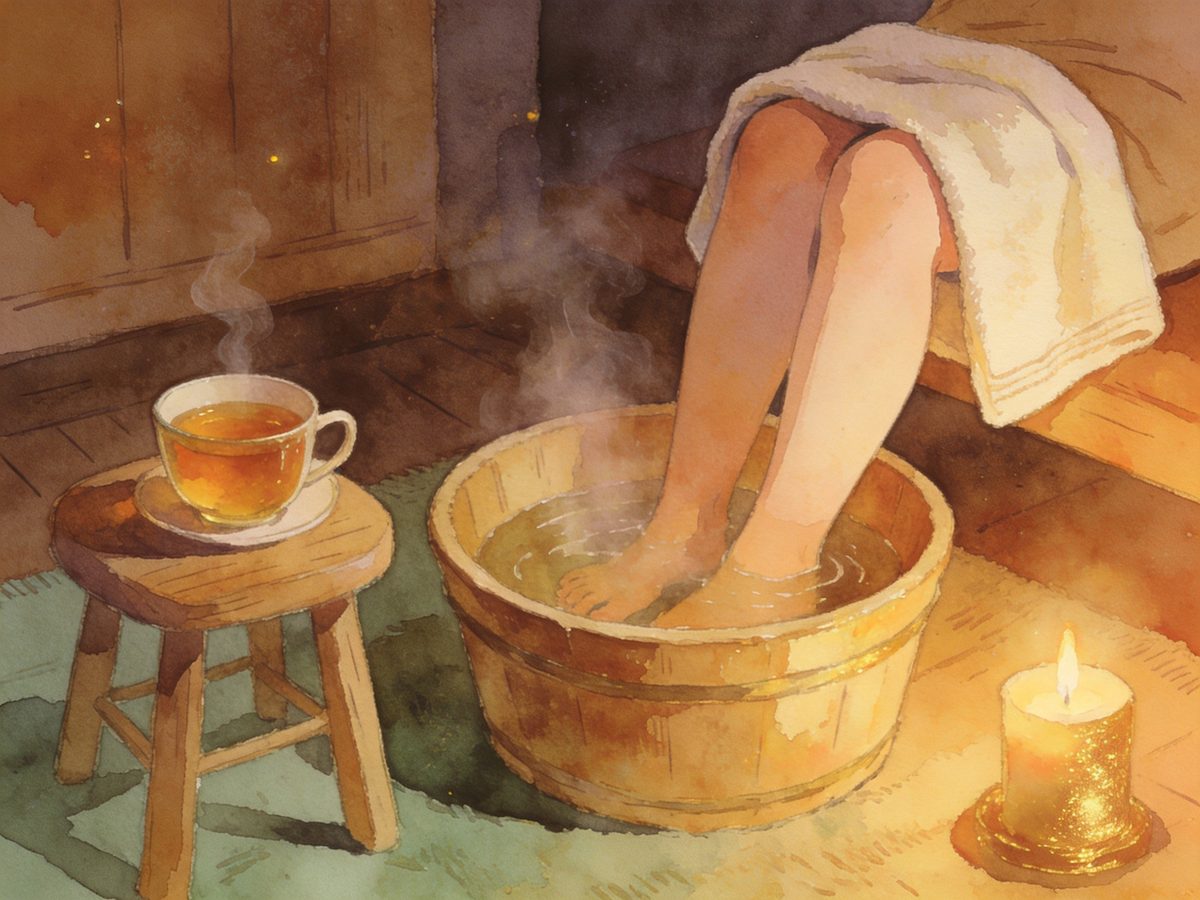
SEO title: Sweating During a Foot Soak: What TCM Tradition Says
URL slug: /foot-baths/foot-soak-sweating-tcm/
Hero: assets/heroes/foot-soak-sweating-tcm.jpg
Primary keyword: foot soak sweating
Secondary keywords: why do I sweat during foot bath, sweating feet tcm, sweating after foot soak
Meta description: Why you sweat during a foot soak, what Chinese tradition says about light versus heavy sweat, and the simple rule for when to end the soak.
Category: Foot Baths
Halfway through a warm foot soak, you notice it: your forehead is damp, maybe your back, maybe your upper lip. Is that good? Is it a sign the soak is "working"? Is more sweat better?
Chinese tradition has a surprisingly clear answer, and it is not "more."
The traditional view: slight sweat is the goal
In Chinese medicine, the desired outcome of a warming foot soak is described as a slight, fine sweat — wei han (微汗) — often first on the forehead or the upper back. The traditional reading:
- A light sweat means warmth is moving — the classic phrase is that warmth has reached the meridians and things are flowing. This is the "it's working" signal.
- Heavy sweating is considered counterproductive. In the TCM frame, sweat is not just water; pushing out large amounts is said to consume qi and fluids — you end the soak drained rather than restored. The traditional instruction is po zhi (po zhi): stop at slight sweat.
So the traditional target is easy to remember: damp forehead, yes. Dripping, no.
The modern explanation
You do not need the classical physiology to understand the phenomenon. A 15-20 minute warm leg soak:
- widens blood vessels in your feet and lower legs,
- raises your core temperature slightly (warm blood returning from the legs),
- and your body responds to that warming exactly as it responds to a warm room — by sweating a little to cool back down.
Forehead and upper-back sweat first because that is where the body prefers to shed heat. Light sweating in a foot bath is normal physiology, not a detox and not a diagnosis.
The practical rule
Combine both frames and you get a simple operating rule:
- Slight sweat appearing around minute 10-15 is normal and fine. Keep the water at 38-40°C — the temperature and timing guide has the numbers.
- If sweat is running, or you feel flushed, dizzy, or your heart is racing — end the soak early. Water that is too hot or soaks that run too long are the usual culprits.
- Towel off, drink a little warm water, rest 10 minutes before bed or before standing up quickly.
Who should be especially careful not to soak to heavy sweat
- Anyone with a fever or acute illness — and note that "sweating out" a cold is a myth; rest and fluids are the actual medicine.
- People prone to low blood pressure or dizziness, since prolonged warm soaks pool blood in the legs.
- Pregnant readers — keep soaks mild and brief, and clear the routine with your doctor.
- Diabetic readers with neuropathy — sensation limits apply; see the safety notes in the timing guide.
When sweating is a "see a doctor" sign
Sweating patterns are not a diagnostic tool, but a few patterns deserve medical attention rather than a soak adjustment:
- Night sweats that soak bedding, unrelated to any warm environment
- Sweating with chest pressure, shortness of breath, or fainting — urgent
- One side sweating while the other does not
- Sweating with unexplained weight loss or persistent fever
Those are checkup conversations, not foot bath topics.
The bottom line
A slight sheen of sweat is the tradition's version of "done" — and it matches what physiology says, too. Aim for damp, not dripping; keep the water 38-40°C; stop at 15-20 minutes; and let the soak flow into the rest of your evening wind-down.
Traditional concepts are shared for cultural context and education only — they are not medical claims.