The TCM China Haul: What's Actually Worth Buying (and What to Skip)
Introduction
The other half of Chinamaxxing, after the hot water and the early nights, is the haul.
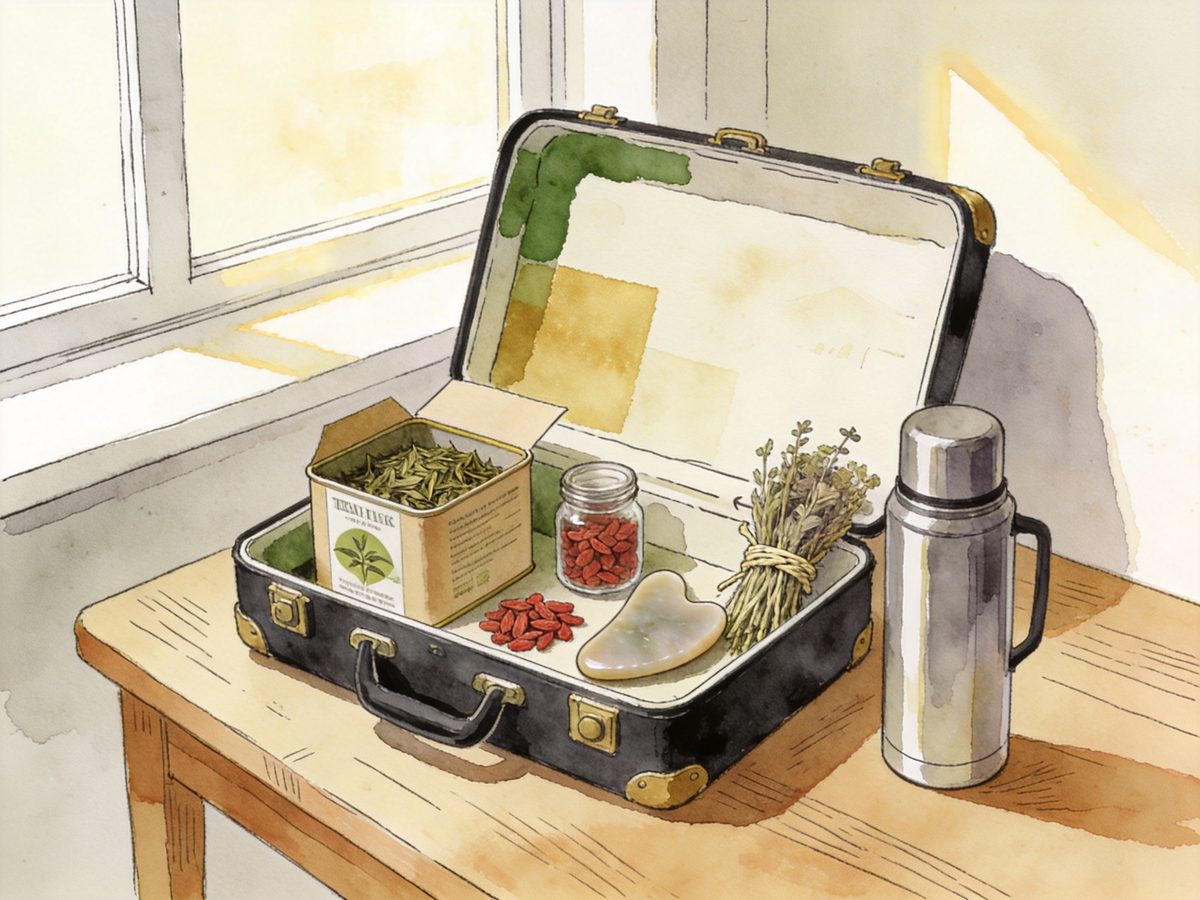
The travel version of the trend has its own vocabulary now: the empty-suitcase trip, the "China must-buy list," the tax-refund receipt taped to the suitcase handle. Some of it is electronics and clothes. But a noticeable slice of every haul video is wellness-shaped — a box of chrysanthemum buds, a gua sha stone, a bundle of mugwort for foot soaks, the same thermos every Chinese grandmother has owned since 1992.
This is the slice worth taking seriously, because it is the part of the trend that ends up on a kitchen shelf and gets used for years — or gets thrown away by February. Here is what a TCM-literate household actually keeps stocked, how to buy it well, and what to leave in the store.
Three honest rules first. Then the list.
Rule 1: Buy food-grade, not medicine
The single most useful filter for a wellness haul. The tradition's daily shelf is mostly food: teas, berries, peels, seeds, roots that simmer in soup. That is the layer you can buy confidently, pack safely, and use sensibly at home — the layer this whole site cooks from.
The moment a seller starts explaining what a product cures, you have left the food shelf and entered the prescription tier — and that tier is exactly where the tradition itself put the brakes. Herbal formulas in China are prescribed in rooms where a practitioner has met the whole person; they are not souvenirs. A souvenir with a cure claim on the label is not a bargain. It is the red flag the warning labels are made of.
Rule 2: Know your three tiers
The supermarket and the tea market are the food shelf — teas, dried berries and dates, peel, seeds, congee grains. Prices are honest, labels are readable, and everything here is bought by ordinary Chinese households weekly. This is where most of your haul should come from.
The old pharmacy (Tongrentang and its century-old peers) is a genuinely great visit — the weights, the drawers, the wall of tiny drawers is half museum, half shop. Buy your food-grade herbs and your external-use items here if you want the full experience; you will pay a brand premium for it. What you should not do is ask the counter to prescribe for your symptoms in two minutes of translated small talk — the good counters will gently refuse, and they are right to.
The practitioner owns everything else. If a haul video shows someone walking out of a pharmacy with a bag of individualized herbs, that bag had a consultation behind it. The formula matches the person, the season, and the other things they take. Yours, matched by a souvenir, matches nobody.
Rule 3: The border decides, not the brochure
Herbal products are exactly the category customs officers like to open. Seeds, plants, and anything animal-derived (deer products, certain shells, anything with "musk" or "ox" in the English name) are the classic hold-at-border items, and rules differ by country and change without announcements. Two lines of prevention: skip animal-derived products entirely — there is nothing on the food shelf that needs them — and check your own country's import rules before you buy, not at the arrival hall. Keep packaged, labeled, sealed items; keep receipts; and take the "duty-free souvenir" talk at the counter with the same skepticism as the cure claims. Tax-refund shopping rules in China change too — confirm the current policy and thresholds before your trip, not from a six-month-old video.
The list: what's actually worth the suitcase space
Chrysanthemum and goji — the everyday pair. The default desk tea of the entire trend, sold in every supermarket and tea market. Buy food-grade, loose, from a busy stall with turnover; vacuum-packed is fine. Here is how the pair is brewed and balanced, and what chrysanthemum actually does as a drink.
Pu'er and jasmine — the daily drinkers. A compressed pu'er cake travels better than almost any souvenir and ages happily in a cupboard; jasmine is the household green. Buy from a tea shop where you can smell the leaves, not from the airport.
The congee shelf: red dates, dried tangerine peel, lotus seeds. The trio behind half the congee pots in the trend's videos. All food-shelf items, all cheap, all keep for months. This is the haul purchase most likely to still be in use next winter.
A gua sha stone. The tool of the trend's most viral habit. A good one costs very little: smooth edges, one long curve, no cracks — jade, horn, or stainless all work, and the expensive collector pieces are buying mineral aesthetics, not function. The ritual it belongs to is explained here, gently and without the jawline claims.
Foot-soak herb packs. The pre-assembled mugwort-and-ginger bundles every Chinese pharmacy and supermarket stocks. Food-grade herbs, external use only, and the foot-soak guide covers the method — warm water, fifteen minutes, before bed.
The thermos. The unfashionable soul of the whole trend. The hot-water habit runs on a flask that goes everywhere, and buying a proper one in China — where the category has been refined for decades — is the cheapest durable item on this list. The habit it supports is here.
Medicated plasters and cooling oils. The pharmacy's external-use classics: the green-smelling oils, the herbal plasters every gym bag in China has one of. Buy labeled, sealed products from a real pharmacy, use them exactly as their labels say, external use only — and check that their herbal ingredients clear your own customs, because some do not.
Moxa sticks and a moxa box. Worth buying as the tradition's most distinctive object; worth not using casually at home. Moxibustion is a taught skill with real burn and smoke considerations — the shelf-safe version of the same plant is the foot soak above. Buy the box as a cultural piece, learn the practice from a practitioner before any home use.
A cupping set. Same honesty, stronger dose: the sets are sold everywhere and are harmless to own, but cupping is the tradition's professional tier — the marks on swimmers' shoulders come from trained hands. The set is a fine souvenir; the technique is not in the box.
What to skip, said once
Anything with a cure on the label. Unlabeled herbal blends of unknown origin. The wild-ginseng bargain that cannot possibly be real at that price. Anything animal-derived — the border will arbitrate, badly and expensively. The gift boxes with "ancient formula" printed in gold foil and an English sticker over the ingredients. And the "TCM experience" upsells in tourist districts that end with a very long receipt.
The haul that actually lasts
Every habit in the Chinamaxxing piece costs almost nothing to continue at home: a herbal tea brewed properly, a congee on a quiet morning, warm water in the thermos, a foot soak on cold nights. The stone is eight dollars; the souvenir that changes your days is the routine it belongs to.
Buy the shelf. Keep the habit. That is the whole haul.
This is a shopping and culture guide, not medical advice. Nothing here diagnoses, treats, or prevents any condition — persistent symptoms belong with a qualified healthcare provider, and herbal products you already take should be mentioned to your doctor or pharmacist.