Congee for Sick Days: Why It Feels Good (An Honest View)
Introduction
When someone in a Chinese family is unwell, sooner or later a bowl of congee appears. It is not a remedy in anyone's mind — it is what you cook when cooking is hard and eating is harder: one pot, cheap ingredients, nearly no effort to swallow.
This article has one job: explain honestly why congee is the sick-day food in so many households — and be just as honest about what it does not do, and about the signs that mean a bowl of porridge is not the right response at all.
The Honest Reasons It Feels Right
Nothing here is a medical claim. These are the practical reasons the tradition makes sense:
1. It is easy to eat when appetite is gone. Congee is soft, smooth, and bland. When nothing sounds good, "technically food that asks nothing of you" is exactly right. There is a reason bland, soft foods appear in convalescent traditions worldwide.
2. It brings water with it. Congee is mostly water by volume, and it is warm. A bowl quietly contributes fluids at a time when drinking plain water may feel unappealing. Fluids matter on ordinary sick days; that is common sense, not a cure.
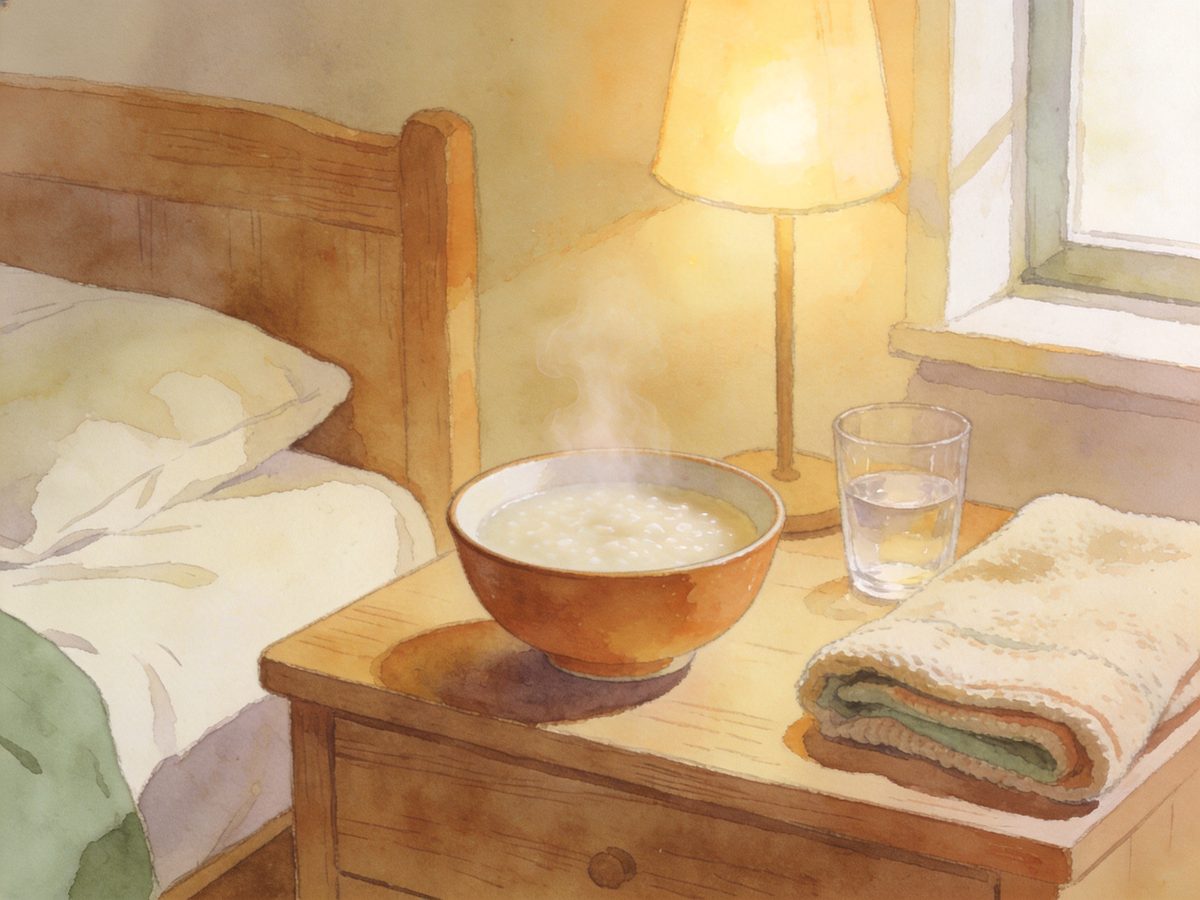
3. It is warm and unhurried. A hot bowl in the hands, steam, a slow meal in bed or on the couch — comfort has real value when someone feels miserable, even though comfort is not treatment.
4. It is effortless to make and to modify. A caretaker can cook a pot of plain congee from uncooked rice — or a 20-minute freezer-trick version — and then adjust the bowl: plain for a queasy stomach, a little shredded chicken for someone with their appetite back, a soft egg for protein.
5. It fits the tradition of warm, gentle food. The same culture that drinks hot water reaches for warm, simple food when someone is run down. As a cultural instinct, it points the same direction common sense does.
The Honest Limits
Now the other side, stated plainly:
- Congee does not treat anything. It does not shorten a cold, cure a flu, or heal a stomach. It is rice and water. Any article promising otherwise is selling something.
- It is not nutritionally complete. Plain congee is low in protein and fiber and is not a substitute for real meals over more than a day or two. As appetite returns, ordinary food should return with it.
- Blood sugar: white rice congee is easy to eat quickly, and its starch is fast-absorbing. Readers with diabetes should keep portions modest and consider a protein topping — the same caution our plain congee guide gives.
- Restricting food is not the goal. Eat what feels manageable; do not force a sick person into a congee-only routine.
When a Bowl of Congee Is Not Enough
Seek medical care promptly — skip the home cooking entirely — if any of these apply:
- High fever, or a fever that persists more than a couple of days
- Signs of dehydration — dizziness, very dark urine, inability to keep fluids down
- Difficulty breathing, chest pain, or severe pain anywhere
- Trouble swallowing, persistent vomiting, or blood in any form
- The patient is an infant, elderly, pregnant, or immunocompromised — involve a clinician earlier rather than later
Traditional comfort food and modern medicine are not rivals; they are for different jobs. Congee is for the ordinary, miserable, self-limiting days. The list above belongs to a doctor.
The Simple Sick-Day Bowl
- Make a loose pot of congee — 1 : 10 ratio, soupy and easy (method here).
- Keep it plain while appetite is poor. Ginger shreds for flavour are fine if wanted.
- As appetite returns: add soft protein — shredded chicken (see easy chicken congee) or a soft egg.
- Keep water going on the side; the bowl helps but does not replace drinking.
- Refrigerate leftovers promptly and reheat until steaming.
This article is about food and comfort, not medicine. Nothing here diagnoses, treats, or prevents any condition — see a qualified clinician for any health concern.