Congee Meal Prep: Batch-Cook a Week of Breakfasts
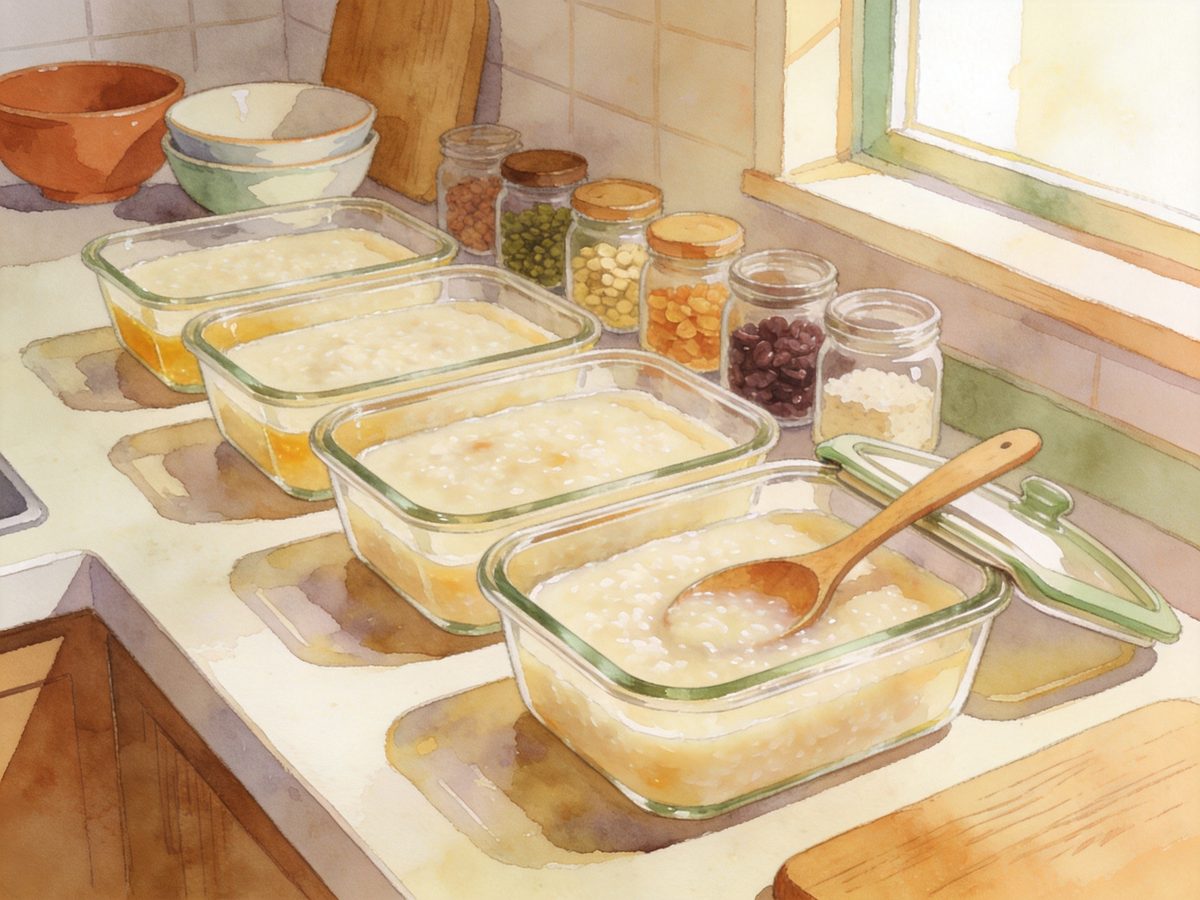
Introduction
Congee is the rare comfort food that improves when you make too much of it. The pot does not care whether it is feeding four or fourteen — the ratio holds, the timer holds, and unlike most batch-cooked things, it reheats back to something genuinely close to fresh. A Sunday pot becomes five unhurried breakfasts: warm, cheap, and already done while the kettle boils.
This is the plan-ahead page. The how-to-make guide covers the method itself; here we handle the batch questions — how much to cook, how long it keeps, whether congee freezes (yes — better than almost any rice dish), and how to reheat it so Friday's bowl tastes like Sunday's. The short answers to those frequently asked leftovers questions now get the full treatment.
The Batch Math
One rule does all the arithmetic: the ratio scales, the time barely does.
- Base recipe: ½ cup rice + 4 cups water (the 1:8 standard) → about 3 modest bowls.
- A work-week pot: 1½ cups rice + 12 cups water → roughly 9–10 bowls. A heavy 4-litre pot takes it without boiling over (fill no more than two-thirds; congee bubbles).
- Time: a doubled or tripled pot runs the same 35–45 minutes, maybe 5 longer — the depth, not the volume, sets the pace. Stir a little more often near the end.
Cook it to the thick side of your preference (1:6–1:7). Every reheat thins it slightly, and you will be adding water anyway — start dense and loosen toward perfect.
Batch Size by How Many Bowls You Need
Scale straight from the ratio; only the pot and the clock change.
| Bowls you want | Rice | Water | Simmer time | Pot size |
|---|---|---|---|---|
| 3 (a couple of days) | ½ cup | 4 cups | 35–40 minutes | Small saucepan |
| 6 (a full week of workdays) | 1 cup | 8 cups | 35–45 minutes | 3-litre pot |
| 9 to 10 (a big family week) | 1½ cups | 12 cups | 40–45 minutes | Heavy 4-litre pot |
| 15 or more (a gathering) | 2¼ cups | 18 cups | 45–50 minutes | Two pots, or one very large |
Two things that catch people out:
- Fill no more than two-thirds of the pot. Congee bubbles as it thickens, and a full pot will find the lid. This is the single most common reason a big batch ends up on the stove.
- Depth sets the pace, not volume. A tripled pot does not take three times as long — it takes maybe ten minutes longer, because the extra mass has to come up to heat as well.
How Each Portion Lasts
| Storage method | How long it keeps | Best for | Reheating |
|---|---|---|---|
| Fridge, shallow containers | 1 to 2 days | Monday to Wednesday of the week | Stove or microwave, splash of water |
| Freezer, flat single portions | About a month | The rest of the week, and future weeks | Stove from frozen, or overnight in the fridge |
| Freezer, one big block | About a month, but slower to thaw | Only if you will eat it all at once | Thaw overnight first, then reheat |
Freeze flat rather than in a deep tub. A flat pack freezes fast, thaws fast, and stacks without turning into a tower of soup. Leave a finger's width of headspace — frozen congee expands.
Fridge vs Freezer
Fridge — the 2-day plan. Cool the pot (a shallow container in the fridge speeds this; get it refrigerated within two hours of cooking), then eat within a day or two. Congee sets into a spoon-standing block overnight — that is rice starch, normal, not a spoilage sign. Past the window or off-smelling at any point: compost it, no debate.
Freezer — the real meal-prep move. Congee freezes cleanly for about a month:
- Cool fully, then portion into shallow, flat containers — flat freezes fast and thaws fast; a 350–450 ml soup container holds one generous breakfast.
- Leave headspace (about a finger's width) — frozen congee expands.
- Label with the date. Freezer-brained optimism is how mystery containers happen.
- Thaw overnight in the fridge, or go straight from frozen to the stove.
The texture after thawing is slightly softer and a touch separated — a stir with a splash of water while reheating reconstitutes it completely. Only the very silk-obsessed will notice the difference from day one.
Reheating: Three Ways, Honestly Ranked
- Stove (the texture winner): low heat, a splash of water, 4–5 minutes of occasional stirring until steaming all the way through. From frozen: lid on, low heat, 8–10 minutes, stirring twice. This is the method when the morning has ten spare minutes.
- Microwave (the weekday default): bowl with a loose cover, one-minute bursts, stirring between each, 2–3 rounds total — congee heats unevenly and holds its heat like lava, so the stir-through matters more than the clock. Same finish line: steaming throughout.
- Rice cooker (the overnight trick): frozen block in the pot with a splash of water, porridge setting if there is one — wake up to a ready pot. Works beautifully; only worth it if the cooker is already out.
The finish line for all three is the same food-safety sentence: reheat until it is steaming hot all the way through. Comfort food still has rules.
Reheating Times Side by Side
| Method | From the fridge | From frozen | Stir or not | Notes |
|---|---|---|---|---|
| Stove, low heat | 4–5 minutes | 8–10 minutes, lid on | Yes, every minute or so | Best texture; the only method that truly heats evenly |
| Microwave, loose cover | 2–3 rounds of 1 minute | 4–6 rounds, from frozen | Yes, between each round | Fastest on a weekday morning; heats unevenly, so keep stirring |
| Rice cooker, porridge setting | 20–30 minutes on keep-warm | Overnight, wake up to it | Stir before serving | Set it the night before and it does itself |
| No reheating | Eat it cold, like a thick rice soup | — | — | A legitimate option in a hurry; not the comfort version |
The rule that applies to every row: steaming hot all the way through, and a splash of water whenever it comes out thicker than you want.
The Topping Rotation (Why Week 2 Doesn't Get Boring)
A plain base all week is only boring if every bowl is identical. Keep four jars of accents ready and the pot stays interesting through Friday:
- Savory shelf: fried egg on top, the full topping spread (pickles, century egg, peanuts), scallion + sesame oil + white pepper
- Protein add-in: shredded chicken from a quick chicken congee batch, a soft-boiled egg, a spoon of peanut butter stirred in (better than it sounds)
- Sweet turn: sliced banana + a few dates; the sweet congee trio works as a batch plan too
- The lazy upgrade: whatever last night's stir-fry left behind, spooned on hot congee — the original clean-out-the-fridge breakfast
One readers-with-diabetes note carried over from the plain congee guide: white-rice congee eats fast and easy, so portion size and a protein topping matter more here than in most breakfasts.
The Sunday Run, Assembled
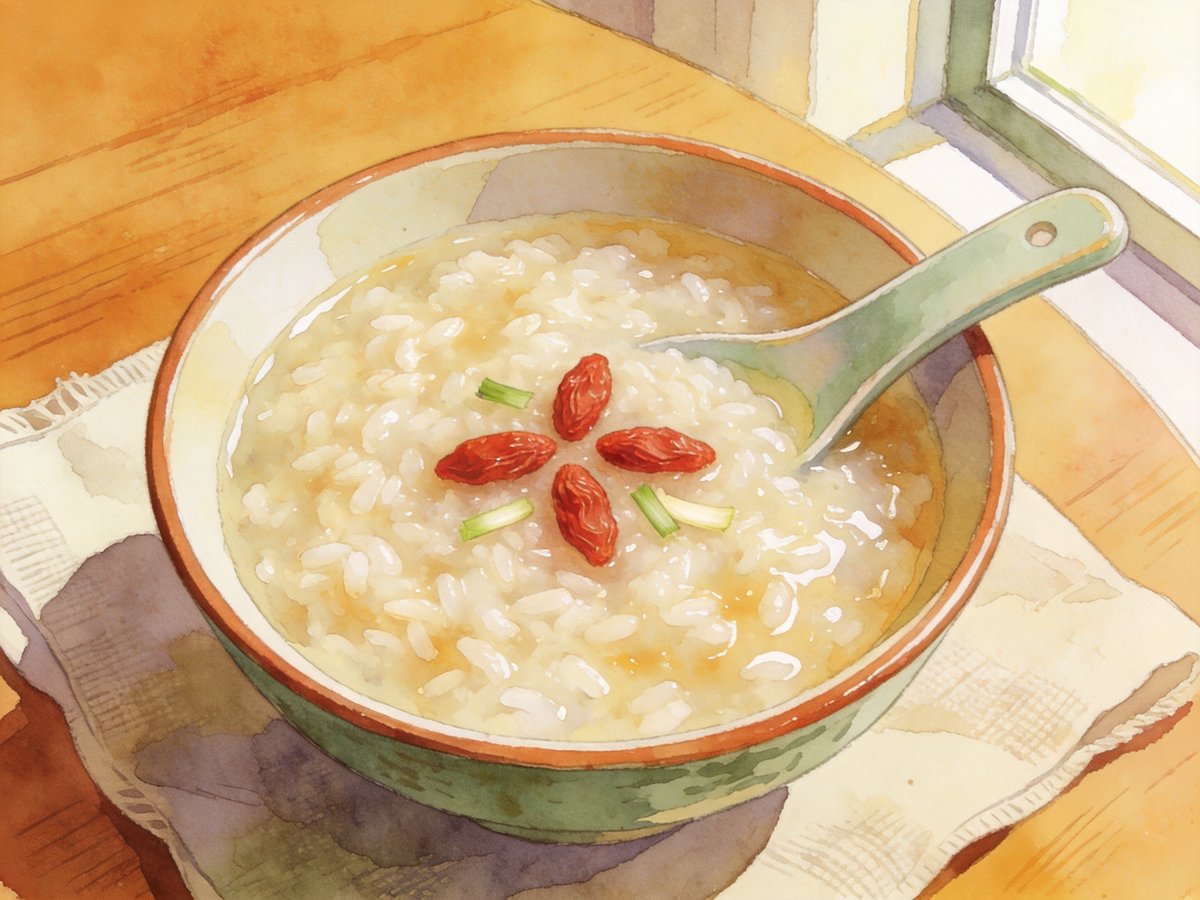
Pot on (1½ cups rice, 12 cups water) → 40 minutes of mostly ignoring it → cool in shallow containers → three to the fridge (Mon–Wed), the rest to the freezer → four jars of accents lined up → weekday mornings: reheat, top, sit down. Total active time Sunday: about 50 minutes, most of it in the kitchen anyway. Breakfast for the week: handled, warm, and quietly the cheapest meal in the house.
The Week, Bowl by Bowl
The point of a batch is not eating the same bowl five times — it is eating one good base five different ways. Each weekday version below is a thirty-second assembly job: reheat, add, sit down.
- Monday — the plain-and-egg baseline. Fried egg on top, a few drops of sesame oil, white pepper. Keep the first bowl simple so the rest of the week feels like an upgrade.
- Tuesday — shredded chicken. Last night's roast or a store rotisserie chicken, pulled apart and stirred through while the portion reheats. The heaviest bowl of the week, and the one that holds until lunch.
- Wednesday — the sweet turn. Sliced banana with a few dates, or a scoop of the sweet congee trio from the topping rotation. Breakfast that eats like dessert with zero extra cooking.
- Thursday — topping-bar night. Set out the jars and let everyone build their own bowl: scallions, peanuts, pickles, century egg, chili oil. The decisions happen at the table instead of the stove, which is its own kind of convenience.
- Friday — the clean-out bowl. Whatever vegetables are wilting and whatever protein scraps the week left behind, diced small and stirred into the last hot portion. The fridge empties; nothing gets composted that didn't have to be.
Same pot, five breakfasts, no repeats. The base stays constant; the toppings do the work.
Meal-Prepping for a Sick Week
There is one meal-prep scenario nobody puts on the calendar: the week somebody in the house feels awful. Congee is the bowl people turn to at times like that — a habit in Chinese home cooking that long predates storage containers. The angle here is pure logistics, not medicine.
On a day when whoever cooks is actually feeling fine — ideally before the wave hits — cook a pot, or carve four portions out of the Sunday batch, and freeze them flat in single servings. Then on the bad morning, nobody is standing over a stove: pull one container, reheat it on low until steaming all the way through, top it gently, hand it over. That is the entire plan, and on a rough week it earns its shelf space.
If you want the fuller picture of shaping a bowl around how someone is actually doing — plainer, thinner, warmed through with a little ginger — the congee for sick days guide walks through that kitchen logic bowl by bowl.
Containers, Labels, and Quantities
One work-week pot yields roughly nine to ten bowls, and this is where meal prep quietly succeeds or fails.
- One serving is 350–450 ml. That is the soup-container size from the freezer plan — a generous breakfast and a block that reheats evenly. Measure the first one with a ladle against a measuring cup; after that, your eye will be accurate enough.
- Label everything. Date and contents ("congee — Oct 24") on a strip of masking tape or a sticker. Unlabeled containers become science projects, and nobody audits a freezer at 7 a.m.
- Freeze flat first. Lay the filled tubs on a baking sheet, spread out, in the coldest part of the freezer until solid — a couple of hours — then stack them like books. Flat packs freeze fast, thaw fast, and do not build wobbling towers of soup.
- Glass or plastic: pick your personality. Glass thaws evenly, does not stain, and goes fridge to microwave without drama, but it is heavy and unforgiving when full. Plastic is light and cheap, though it eventually keeps a ghost of whatever strongly flavored thing lived in it. Both work; the freezer does not care.
Meal Prep Questions
Can you meal prep congee? Yes — one of the friendliest rice dishes for the job. The starch that makes a fresh pot creamy is the same starch that lets Thursday's portion reheat silky.
How much rice and water should I cook for a week? For six bowls, one cup of rice to eight cups of water; for nine to ten bowls, one and a half cups to twelve. The ratio holds at every size — only the pot and the clock change. The batch size table above has the full ladder.
How long does prepped congee keep? In the fridge, a day or two, same as any leftovers. In the freezer, about a month by home-kitchen standards — after that, freezer burn starts winning.
Can you freeze congee? Yes, and it freezes better than almost any other rice dish. Cool it fully first, portion it into shallow flat containers, leave a finger's width of headspace, and label with the date. Flat packs freeze fast and thaw fast; a deep tub does neither.
Is reheated congee much worse than fresh? A little softer, slightly separated — that is the whole list. A stir with a splash of water while it heats handles both, and most people cannot tell by the second bite.
How do you reheat congee without it turning to glue? Add a splash of water and stir. Chilled congee always thickens, and the water brings the texture back. On the stove it takes 4–5 minutes; in the microwave, 2–3 one-minute bursts with a stir in between.
Can the toppings be prepped ahead too? Partly. Shredded chicken, soft-boiled eggs, chopped scallions, and sauce jars all keep for days; fresh herbs wilt, bananas brown, and anything crisp goes soft in the fridge. Sturdy and dry go into jars on Sunday; delicate and wet wait for the morning.
Does jook meal-prep the same way? Jook versus congee is a naming question more than a cooking one — whatever your household calls it, the batch, freeze, and reheat-until-steaming rules are identical.
Cooking and food-safety education, not medical advice. Nothing here treats any condition — it just makes mornings easier.