Savory vs Sweet Congee: Two Traditions, One Pot
Introduction
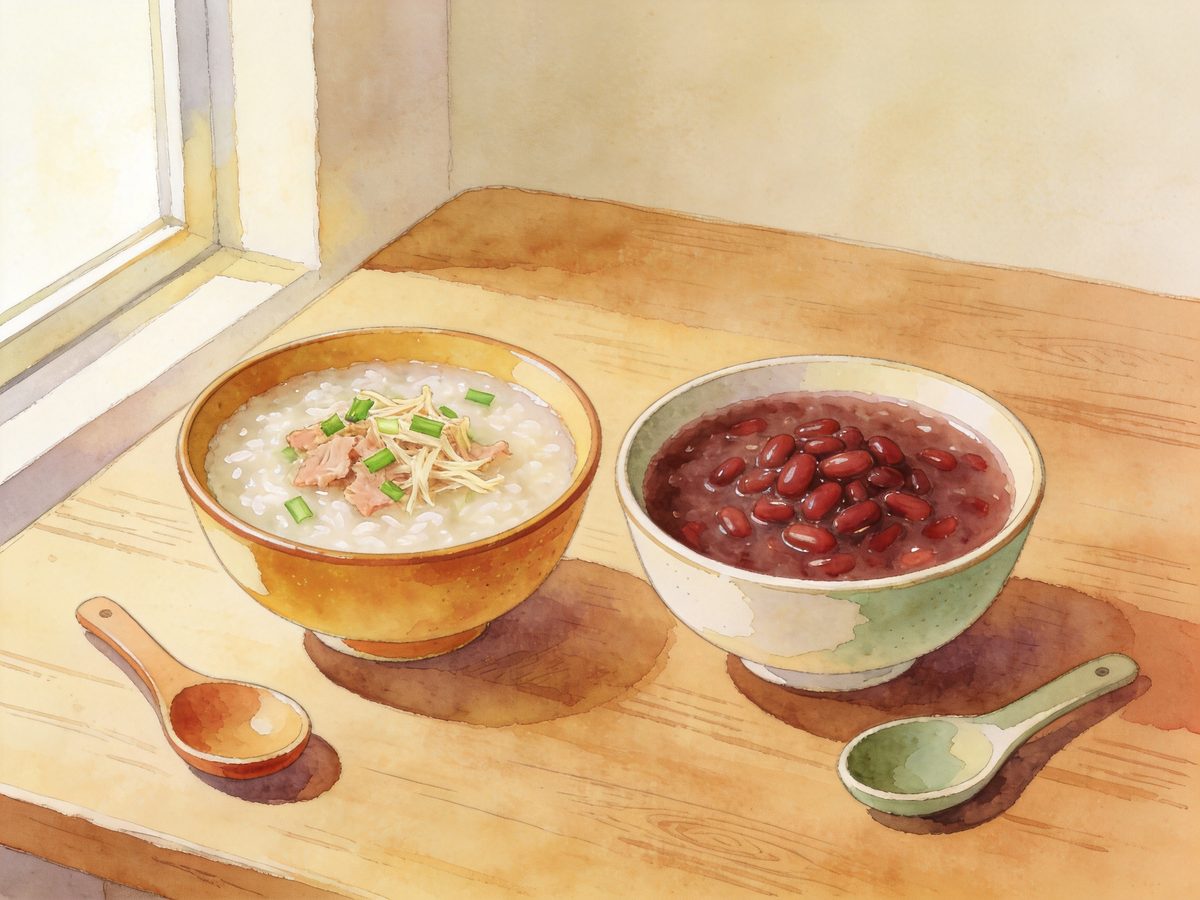
Ask whether congee is savoury or sweet and you have accidentally asked a regional question. In much of mainland China — and in most Cantonese teahouses and late-night congee stands — congee is savoury: salt, soy, pork, pickles, century egg. In other households, and across much of the diaspora dessert tradition, congee is sweet: red beans, taro, coconut milk, eight treasures.
Both are real congee. Both start from the same pot of plain congee. This article walks through the two traditions, gives you a base recipe for each, and settles the argument the only reasonable way — by letting you cook both.
The Savory Tradition: Congee as a Meal
Savoury congee treats the bowl as a complete, one-dish meal. The rice base may be cooked with stock or with the protein itself, and toppings do the seasoning work: the full topping list lives in this world.
Base savory recipe (one pot):
- Half a cup of rice, 4 cups of water or unsalted stock (1 : 8)
- Simmer 35–45 minutes until loose and flowing
- Finish with: a few drops of sesame oil, a pinch of white pepper, chopped scallion
- From there, add what you like — shredded pork, a soft egg, a spoonful of pickles on the side
The logic is dinner logic: bland base, seasoned top, texture contrast. If you grew up with congee as breakfast or late-night food, this is probably your congee.
The Sweet Tradition: Congee as a Dessert
Sweet congee belongs to the dessert-soup family (think red bean soup, tong sui in Cantonese tradition). The rice often shares the pot with beans, grains, and other things, and sweetness comes at the end.
Base sweet recipe (one pot):
- Quarter cup of rice plus a quarter cup of red beans (or mung beans, or taro cubes), 4–5 cups of water
- Simmer 60–75 minutes, until the beans are soft and the rice has broken down
- Stir in sugar to taste at the end — a couple of teaspoons is traditional; it is a dessert, not a health food, so there is no need to pretend
- Optional finish: a small splash of coconut milk, or a few goji berries — the same berries that star in goji tea
The famous celebration version is eight treasure congee (八宝粥) — rice plus eight mix-ins such as red beans, lotus seeds, peanuts, longan, red dates, and barley. The exact eight vary by family; the spirit is "everything good in one sweet pot."
Why the Split?
The honest answer is geography and occasion, not doctrine. Regions where congee is a daily meal (breakfast stands, late-night bowls) seasoned it like food — salty, savoury, filling. Traditions that served congee as a festive or dessert dish sweetened it — beans, dates, and sugar were celebration ingredients.
Both traditions agree on the deeper point: congee is the food you make when you want something warm, soft, and unhurried. The seasoning is the argument; the pot is the shared ground.
So Which Should You Make?
Try this simple sorting:
- Want dinner? Go savoury — egg, pork or chicken, scallion, pickles on the side.
- Want dessert or a weekend pot? Go sweet — red beans, a little sugar, coconut milk if you like it.
- Cooking for someone under the weather? Keep it plain and gentle — see our honest look at congee on sick days.
- Can't decide? Cook one pot of plain congee and season two bowls differently. This is what Chinese families actually do.
One pot, two traditions, zero wrong answers. And if you want the savoury side to come with its protein built in, that is exactly what chicken congee is for.
Congee, savory or sweet, is comfort food and cultural tradition. Nothing here is medical advice, and no recipe treats any condition.