15 Congee Toppings, From Century Egg to Quick Pickles
Introduction
Plain congee is a blank canvas — that is the whole point of it. The bowl is warm, soft, and neutral, and whatever you put on top decides whether it tastes like a quiet breakfast or a small feast. Our plain congee guide covers the base recipe; this one is about the fun part.
Below are fifteen toppings, roughly ordered from the most classic Chinese congee-stand choices to the ones a beginner pantry can manage tonight. None of them are required, none of them are medicine — they are just good.
The Classics
1. Century egg (皮蛋). The famous one: creamy, deeply savoury cured egg, cut into small cubes over congee, often with a few shreds of pork. If you have never tried it, this is the topping that converts skeptics. Buy sealed, commercially produced eggs.
2. Shredded pork with soy sauce (肉松's cousin — lean pork, simmered and shredded). A small handful of salty, tender pork turns congee into a proper meal. Leftover roast pork works too.
3. Pork floss (肉松). Dry, fluffy, sweet-savoury — a childhood staple for many Chinese families. Sprinkle it on just before eating so it keeps its texture.
4. Salted duck egg. Rich, salty yolk, a little goes far. Mash a little into the bowl like a seasoning.
5. Fried peanuts or soybeans. Crunch is the counterweight to all that softness. A small handful on top, or on the side.
The Pickle Family
Congee and pickles are a fixed couple in Chinese breakfast culture — the saltiness and snap against the bland warmth is the appeal.
6. Quick cucumber pickles. Smashed cucumber with a little salt, vinegar, and garlic, made ten minutes before eating. The easiest entry point.
7. Pickled mustard greens (酸菜). Sour, salty, chopped fine. Classic with a looser plain congee.
8. Preserved long beans or pickled radish. Purchase-ready, chop, serve. Keep portions small — these are seasoning, not a side salad.
9. Fermented tofu (腐乳). Intensely savoury; smear a thin layer on, or take a small cube on the side and dip.
The Fresh and Gentle
10. Sliced ginger and scallion. The default savoury finish: thin ginger shreds and chopped scallion on top, a few drops of sesame oil. Ginger congee has its own tradition, but as a topping this is simply flavour — we keep it honest.
11. A soft-boiled egg. The gentlest protein. Our plain congee guide suggests a poached egg; a jammy soft-boiled egg on top does the same job.
12. Blanched greens. A fistful of spinach or bok choy, blanched for thirty seconds and laid on top with a drop of soy sauce. Turns the bowl into a complete-feeling meal.
13. Corn. Sweet corn kernels, straight from the freezer into the last five minutes of cooking. Popular with children for obvious reasons.
The Modern Mix
14. Sesame oil and white pepper. The two-bottle finish. If you only ever learn one topping, it is this: a few drops of sesame oil, a pinch of white pepper, scallion if you have it.
15. Avocado and a soft egg. Not traditional at all — and honestly fine. Congee tolerates fusion well; the base is neutral enough to meet your own kitchen where it is.
The Five-Minute Topping Bar
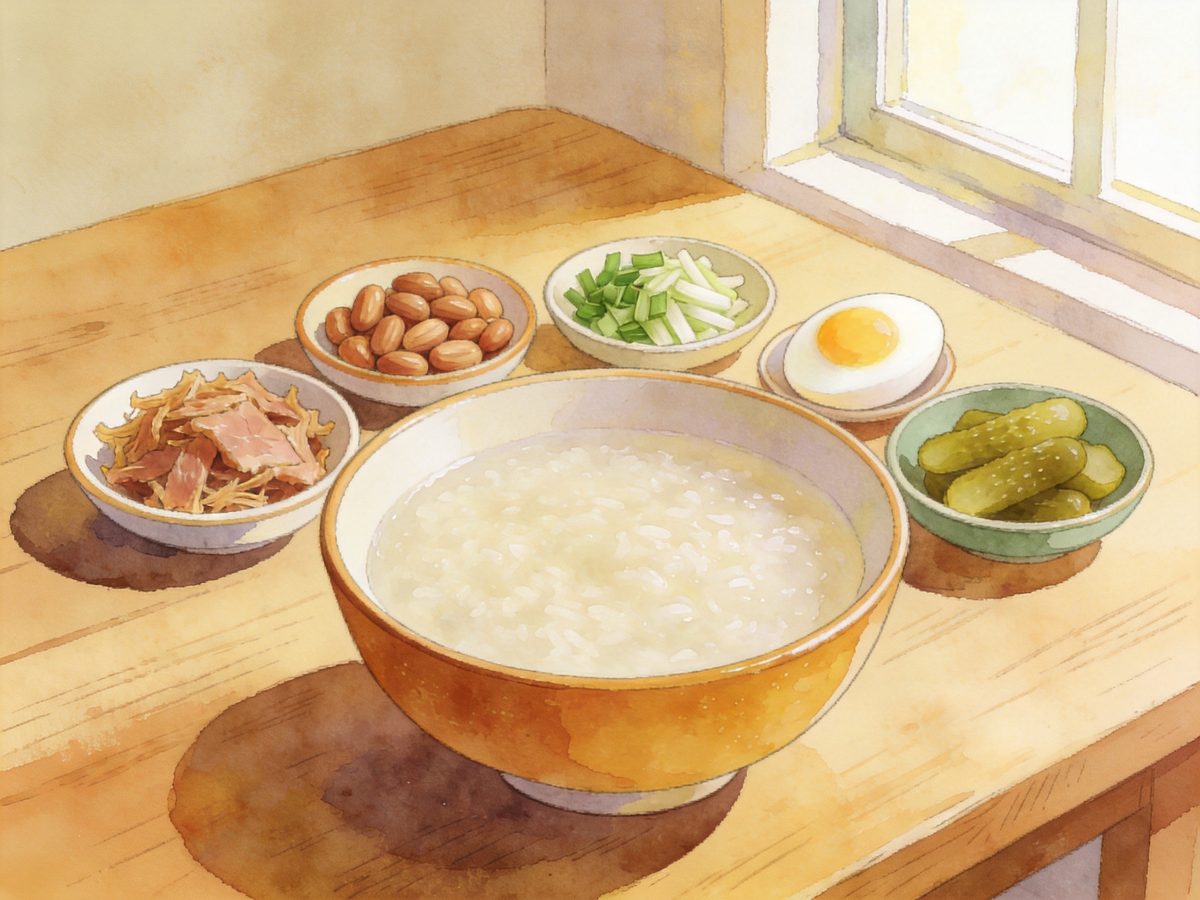
Our favourite way to serve congee for a family or a small group: cook the base once, then set out three or four small dishes — one pickle, one egg, one protein, one crunch — and let everyone build their own bowl. It turns the humblest dish in Chinese cooking into the most interactive one, and it works exactly as well for one person with a week of different moods.
Food Safety, Briefly
- Leftover toppings follow the same rules as the congee itself: refrigerate promptly, eat within a day or two, reheat what should be reheated.
- Century eggs and salted eggs should be commercially produced and sealed; once opened, keep them refrigerated and finish them within days.
- Pickles are seasoning. They can be salty — a small dish on the side is the traditional (and wiser) portion.
The Topping Logic: Four Jobs
After fifteen toppings, a pattern shows up. Every good congee topping does at least one of four jobs: salt, crunch, protein, or fresh.
Salt gives the blank canvas a voice. Plain congee is warm and soft, but it is close to flavourless on its own. Something salty — a smear of fermented tofu, half a salted egg yolk — is what turns warm rice water into breakfast.
Crunch is the counterweight. Congee is soft from the first spoonful to the last, and without a crisp element the texture never changes. Fried peanuts, quick pickles, even toast cubes do this job.
Protein turns a snack into a meal. An egg, shredded pork, a few cubes of century egg: anything with substance tells you the bowl counts.
Fresh cuts through the weight. Ginger, scallion, blanched greens — they lift the bowl and keep it from feeling heavy.
One job, done well, is fine. But the bowls people remember combine two or three: salted duck egg with scallion and peanuts, say. A single-dimension topping piled on alone, however good the ingredient, wears out fast. Salt without crunch is flat. Crunch without salt is just noise. So the logic is simple: complement what the base lacks. The blandness of plain congee is not a flaw to hide — it is the space these toppings move into.
How Much of Each Topping
Every one of these toppings can ruin a bowl if you use too much of it, and the limits are easy to state once you have a bowl in front of you. Two useful anchors: toppings should cover no more than about a third of the surface, and no single strongly flavoured item should be more than a tablespoon.
| Topping | Per bowl | Why that amount |
|---|---|---|
| Century egg | ½ egg, cubed | Rich and salty; a whole one overwhelms a normal serving |
| Salted duck egg | ¼–½ yolk, mashed in | Used as seasoning, not as a protein portion |
| Pork floss | 1–2 tbsp, scattered | Absorbs liquid and clumps if piled |
| Fermented tofu | ½ tsp smeared, or 1 small cube on the side | The most concentrated salt on the list |
| Pickles (any) | 1–2 tbsp, drained | Seasoning; the rest belongs in a small dish beside the bowl |
| Fried peanuts or soybeans | 1 tbsp | Adds fat and crunch quickly; more turns the bowl greasy |
| Soft-boiled egg | 1 | One is a portion, halves if there is other protein |
| Blanched greens | A small fistful | The one topping where more is genuinely fine |
| Sesame oil | 3–5 drops | Drops, not a drizzle |
| White pepper | A pinch | Enough to smell it, not enough to taste heat |
| Corn | 2–3 tbsp | Sweetness is the point; past that the bowl turns dessert |
| Avocado | ¼ fruit, sliced | Rich enough that a half makes the bowl heavy |
The pattern behind the numbers: the soft, bland base needs a small amount of something strong, not a large amount of something mild. If a bowl tastes flat, the fix is almost never more topping — it is a squeeze of something salty or a pinch of pepper.
Toppings for Different Mornings
The right toppings depend less on tradition than on what kind of morning you are having.
The five-minute morning. Sesame oil, white pepper, and yesterday's pickles. If there is a soft-boiled egg in the fridge, halve it on top. This is not a compromise; it is a legitimate breakfast, and it takes about as long as toast.
The morning with children. Corn, a soft egg, and pork floss. Children generally accept toppings they can choose themselves, and the topping-bar format from earlier solves a surprising number of arguments.
The morning with unexpected guests. Open the good pickles, boil a few eggs, put out the peanuts. Nobody expects a spread on a weekday, so a small effort reads as generosity. Century egg stays in the jar unless you know your crowd.
The morning when someone is home sick. Gentle is the whole brief: thin ginger shreds, scallion, a pinch of salt, nothing sharp or fermented. Our guide to congee for sick days covers the base and the pacing; on the topping side, keep it plain and warm.
The meal-prep morning. If you batch-cooked on Sunday, breakfast is assembly. Keep pre-portioned pickles and cooked eggs in the fridge, and hold the crunchy ones until the table. Our congee meal prep routine runs on the same idea: base done, toppings ready, bowl built in two minutes.
Different mornings, different bowls. The base never changes — only the toppings do.
Common Topping Mistakes
Four ways to spoil a good bowl, most of them learned the hard way in my own kitchen:
Turning the bowl into soup. Congee should be thick enough for a spoon to stand up. Watery toppings — wet pickles, over-blanched greens — thin the base into gruel. Drain first, then add.
Salting the whole pot first. Salt the congee itself, then add salted duck egg and pickles, and breakfast becomes a salt lick. Season the toppings, not the base. You can always add; you can never subtract.
Adding crunchy things too early. Peanuts go soft in steam and pork floss dissolves. Anything crisp should hit the bowl at the last second — one more reason the topping bar beats pre-plating.
Treating pickles like a salad. They are seasoning, not a vegetable side. A small dish on the side is the traditional portion, and the bowl tastes better for it.
Topping Questions People Actually Ask
Can I prep toppings ahead? Yes, with one rule: prep the wet and soft ones ahead — pickles, cooked eggs, shredded pork — and keep the crunchy ones dry until serving. Chopped scallion and ginger will wait in the fridge overnight.
Does adding toppings make it a real meal? In many households, yes: congee with an egg and a small pickle plate is a standard breakfast, not a light snack. Whether you call it congee or jook — our jook vs congee piece untangles the naming — a topped bowl is a complete plate in most Chinese breakfast traditions.
Sweet or savoury? Both traditions are real. If you grew up savoury, start with the classics above; if sweet congee is your habit, the same four jobs apply — salt becomes sugar, crunch becomes nuts or seeds. Our savoury versus sweet congee guide goes deeper, though the logic holds either way.
What if I don't have Chinese pantry ingredients? The four jobs still apply. Salt can come from olives, feta, or bacon. Crunch from toasted seeds. Protein from a plain egg or last night's roast. Fresh from whatever herb you have. The bowl does not care about authenticity; it cares about balance.
Can I add toppings to leftover congee? Yes, and it is the best argument for keeping a jar of pickles in the fridge. Reheat the congee until it steams, then top it fresh — do not reheat the toppings along with it, or the crunch and the egg both suffer.
Is a topped bowl a complete meal? It can be. An egg or some shredded pork plus a green vegetable gets you there; congee with only pickles is a lighter breakfast than it feels. If you eat this most mornings, vary the protein across the week rather than adding more of the same.
Ready to go further? Cook your base from uncooked rice, compare the savoury and sweet traditions, or make a one-pot chicken congee that needs no toppings at all.
Congee and its toppings are everyday comfort food. Nothing here is medical advice, and no ingredient treats any condition.