Century Egg and Pork Congee: The Classic Bowl, Step by Step
Introduction
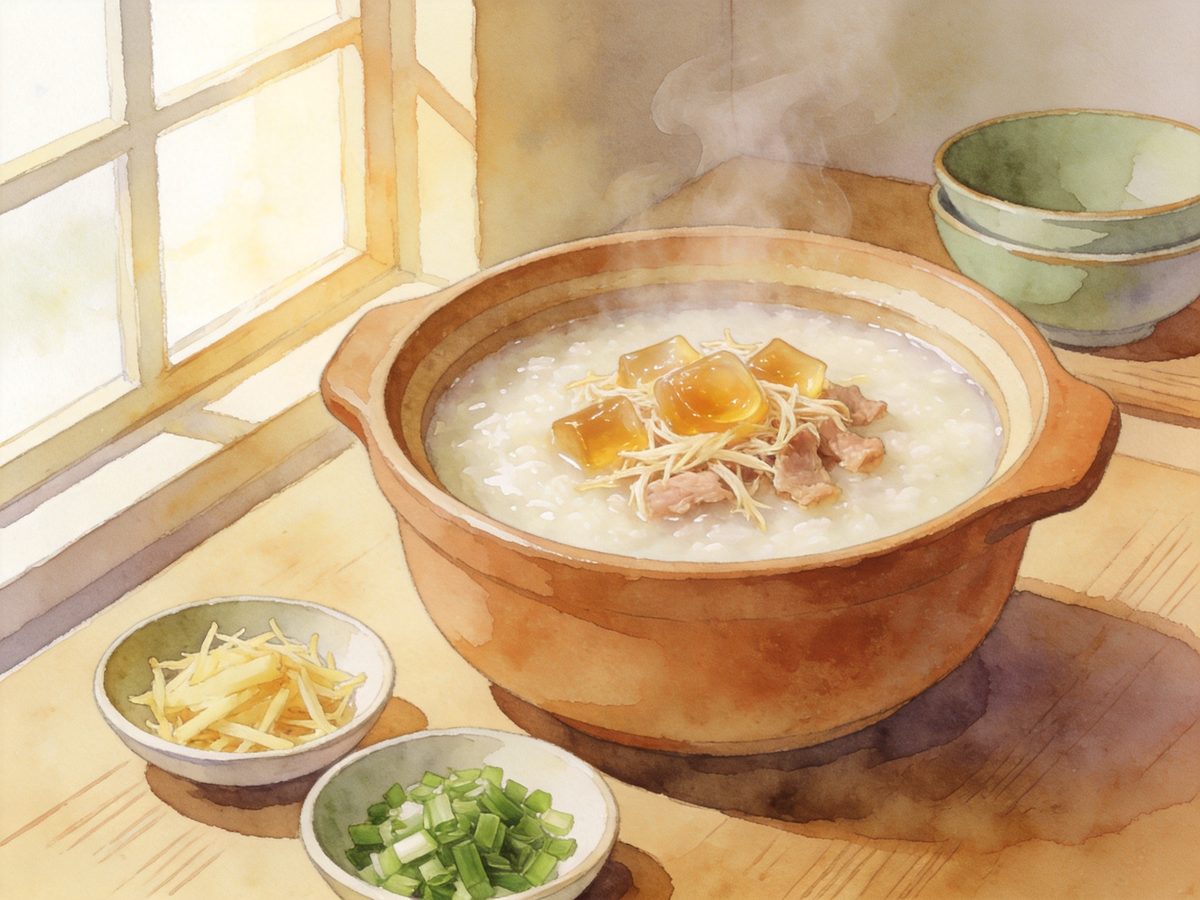
Every congee house in Guangzhou, Hong Kong, or Richmond has one bowl that sits at the top of the laminated menu, and it is this one: pidan shou rou zhou (皮蛋瘦肉粥) — century egg and lean pork congee. It is the dish the word jook was born to name: a base simmered to silk, thin ribbons of pork that turn tender in minutes, and cubes of preserved egg folding through like dark amber.
It is also simpler than its prestige suggests. The whole recipe is three movements — a plain congee base, a thirty-second pork marinade, and timing the egg so it goes in late. If you can make the base, this bowl is one errand (a century egg or two) and about forty-five minutes.
First, the Century Egg — What It Is
A century egg (皮蛋, pidan) is not a hundred days old, let alone a hundred years. It is a fresh duck (sometimes chicken) egg cured for weeks in an alkaline paste — traditionally wood ash, lime, and salt — that transforms the contents: the white sets into a translucent, tea-brown jelly with a faintly sharp, mineral edge, and the yolk turns dark green-gold and creamy, like a very old brie's personality in an egg's shape.
Buying notes, briefly:
- Buy labeled, sealed eggs from an established brand or a busy shop. Modern commercial pidan is produced with a lead-free process (zinc and copper formulations have replaced the old lead method) — the packaging says so.
- A good one peels to a smooth, glassy dark jelly with soft-set amber at the centre. Crystalline "snowflake" patterns on the surface are normal and pretty, not a defect.
- If you are pregnant and prefer to be cautious with preserved foods, this bowl works perfectly as plain pork congee — same base, same marinade, skip one ingredient. That is a food choice, not a medical directive.
The Pork: a 30-Second Marinade That Does Everything
Thin-sliced pork (lean shoulder or loin, about 150 g for four servings) sliced across the grain, then tossed with:
- ½ tsp salt
- ½ tsp cornstarch
- A few grinds of white pepper
- ½ tsp neutral oil (optional, keeps ribbons separate)
Rest it while the congee simmers. The cornstarch is the entire trick: it is how restaurant pork stays silk-soft in a pot that keeps boiling. Slice thin — thin ribbons cook through in three minutes and never toughen.
The Build
Base: Make the plain congee base — half a cup of rice to 4 cups of water is right — and add 2 slices of ginger to the pot from the start. Cantonese shops also add a small piece of dried tangerine peel for depth; it is optional and lovely.
Timing, once the base is creamy (about 35–40 minutes in):
- Stir in the pork, ribbon by ribbon, so nothing clumps. Simmer 3–4 minutes — it cooks through fast and stays soft.
- Add one diced century egg (peeled, cut into rough 1 cm cubes). Simmer 2 minutes more. Its flavour blooms into the pot; adding it late keeps its shape and edge.
- Taste and salt. Usually a small pinch is enough — the pork and egg both carry salt.
- Ladle, then finish per bowl: a few extra century-egg cubes and finely shredded raw ginger on top, chopped scallion, a drop of sesame oil, white pepper at the table.
The raw ginger shreds on top are not decoration — the sharp fresh ginger against the mellow, mineral egg is the flavour argument of the whole dish.
The Small Print That Makes It Restaurant-Grade
- Old egg meets new egg: shops dice some egg into the pot and top each bowl with fresh cubes. The cooked ones season, the raw-ish ones assert. Do both if you have two eggs.
- Water matters: this bowl rewards the looser 1:8 to 1:10 setting. Thick congee hides the silk.
- Do not skip the ginger in the pot. Preserved egg and ginger are an old married couple; either one alone is half a conversation.
- Leftovers: the egg's flavour deepens overnight — genuinely good next day, reheated like any congee until steaming.
Variations, Briefly
Beef for pork works with the same marinade; fish slices go in even later (90 seconds) with ginger and scallion only. And if the egg is a step too far this month, the same base with just pork is a complete, quiet bowl — the savory side of the congee dial at its most classic.
Cooking education only. Foods on this site are comfort and culture, not treatment — nothing here treats, prevents, or cures any condition.