Jook vs Congee: Same Bowl, Different Names (and How to Say It)
Introduction
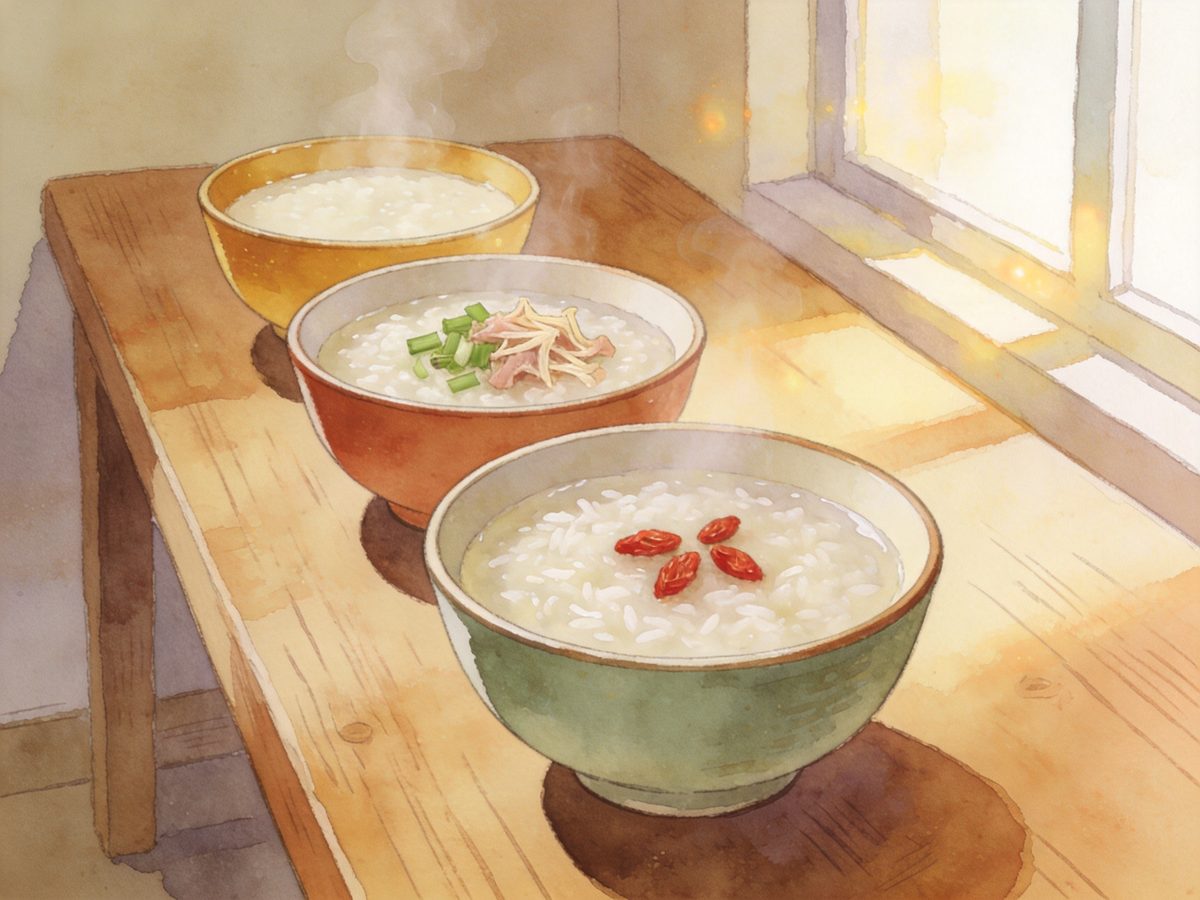
There are at least five English words in circulation for the same quiet bowl: rice, a lot of water, a long simmer. Order it in San Francisco and it is jook; read a wellness blog and it is congee; ask a Filipino titas and you get arroz caldo; a hotel buffet in Singapore calls it rice porridge; a grandmother says zhou and does not care what the menu calls it.
The names are not synonyms by accident — each one carries a piece of where the dish travelled and who was serving it. This is the vocabulary article: what each word actually means, why the same word can describe two different thicknesses, and how to order the bowl you want anywhere. By the end you will know the difference between jook vs congee, and the honest answer will turn out to be smaller than the internet suggests.
The Short Answer
Jook and congee are the same dish. Both are rice cooked in a generous excess of water until the grains slacken and the pot turns silky. The difference is linguistic, not culinary:
- Congee is the word English borrowed — by way of Portuguese and Dravidian languages of southern India (kanji, a rice gruel) — centuries before Europeans ever saw a Chinese rice pot. It is the umbrella term.
- Jook (sometimes juk, jok) is English's loan from Cantonese — 粥 (zuk1 in Cantonese romanization), the word you hear in Guangzhou, Hong Kong, and most Cantonese restaurants abroad. It stuck in Chinatown English because Chinatowns spoke Cantonese.
So: congee is what the dish is called from outside, jook is what it is called from inside. The pot does not notice the difference.
The Family Tree of the Word (and the Bowl)
- Zhou (粥) — the Mandarin word, the default in mainland Chinese homes. When a Chinese recipe says "cook some zhou," it means the same plain or dressed rice-simmered bowl this site covers in how to make plain congee.
- Jook / juk — Cantonese 粥. Cantonese kitchens treat the bowl as a canvas: lean pork and century egg, fish slices, beef and egg — the famous named bowls of the congee shop. Say jook and many readers picture exactly those.
- Congee — the traveller's word, now the standard English umbrella. In India the ancestral kanji still names its own rice gruels; the word migrated with trade routes and settled onto China's bowl in English print.
- Rice porridge — the descriptive fallback, common in Singapore and Malaysia English. Perfectly clear, slightly less charming.
- Arroz caldo — the Filipino bowl: chicken and ginger rice porridge under a Spanish name (literally "rice broth"), topped with fried garlic, scallions, egg, and a squeeze of calamansi. It is the dish wearing its colonial history on the menu, and it is delicious.
- Okayu — Japan's version, typically made with a firmer rice-to-water ratio, the grains still visible — a different point on the same dial.
One Dish, One Dial
If there is any real difference between the words in practice, it is thickness, and it is regional habit rather than definition:
- Cantonese jook tends to the silk side: long-cooked, grains fully broken, almost liquid velvet.
- Northern Chinese zhou often stops earlier: grains mostly intact, spoonable, closer to what this site calls the 1:6 thick setting.
- Okayu sits firmer still; arroz caldo lands in the middle with its chicken and ginger riding on top.
The dial — and the ratio that controls it — is the only technical argument in the whole naming debate. Everything else is history.
What to Call It, and Where
Practical etiquette of the word:
- At a Cantonese restaurant or dim sum house: jook will be understood instantly; congee will too.
- In a mainland Chinese home context or recipe: zhou (or just "rice porridge" in translation).
- Searching recipes online: try both congee and jook — the results overlap almost entirely, which is the whole point of this article.
- Talking to mixed-company English: congee is the safest umbrella; jook signals you have been to the good restaurants.
Start With One Bowl
Whatever you call it, the way in is the same: plain rice congee as the base, a spread of toppings as the accent, and one of the named bowls as ambition — our century egg and pork version is the classic the congee shops built their names on. The word you use matters about as much as the spoon you pick. The bowl matters.
This is a cultural and cooking guide. No food on this site is presented as treatment for any condition — the vocabulary is just vocabulary.