Plain Rice Congee for Everyday Comfort: A Simple Chinese Wellness Food
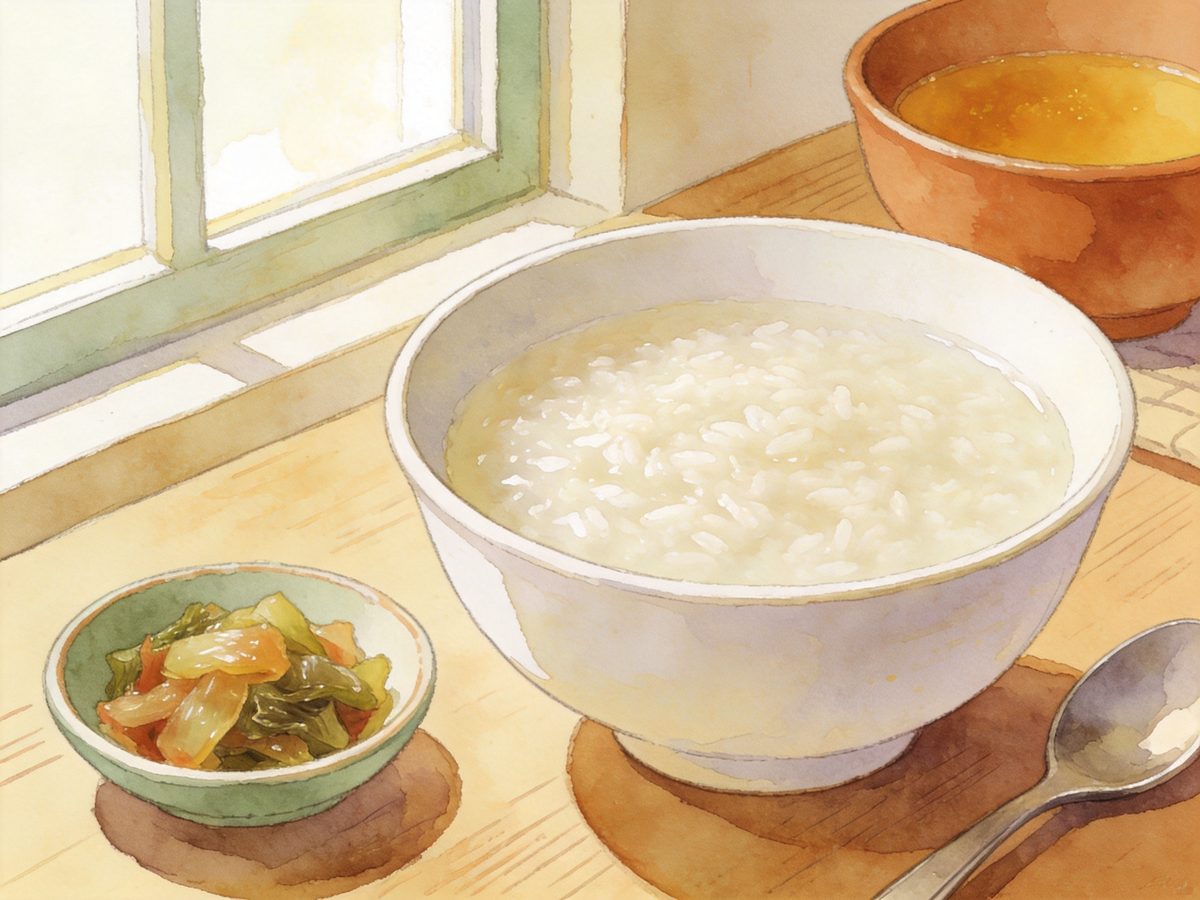
Congee (also called jook or rice porridge) is one of the simplest foods in Chinese cooking. It's rice simmered in water until it breaks down into a soft, porridge-like consistency. Nothing more, nothing less.
Many people find congee comforting - it's warm, easy to eat, and naturally bland. This article shows you how to make it and offers a couple of simple variations.
Safety First
If you are pregnant, take medication, or have a medical condition, consult a qualified healthcare professional before trying any self-care practice. Full safety notes.
What Congee Is
Congee is simply rice cooked in a large amount of water until it softens into porridge. The ratio is roughly 1 part rice to 6-8 parts water, simmered for 30-40 minutes. That's the basic version.
It's not a medicine. It's not a treatment for any condition. It's just soft rice in water - a blank canvas that you can eat plain or dress up simply.
Basic Plain Congee Recipe
You'll need: 1/4 cup white rice (jasmine or short-grain works well), 4 cups water, a pinch of salt.
How to: Rinse the rice. Combine with water in a pot. Bring to a boil, then reduce to a gentle simmer. Cook for 30-40 minutes, stirring occasionally, until the rice breaks down into a thick, porridge-like consistency. Add a pinch of salt. Eat warm.
Simple Variations
Once you have the basic congee down, here are two gentle variations to try:
Roasted Apple with Cinnamon: While your congee cooks, core an apple, sprinkle with cinnamon, and roast at 180°C (350°F) for 20-25 minutes. Serve on top of or alongside your congee for a naturally sweet contrast.
Plain congee with a soft egg: Cook an egg to your preference - soft-boiled or poached works well - and place it on top of a bowl of warm congee. The runny yolk adds richness without needing any seasoning.
Who Might Want Plain Congee
Plain congee is about as gentle as food gets. You might find it helpful when:
- You want a warm, simple breakfast that's easy on the stomach.
- You prefer bland food - not as a treatment, just as a personal preference.
- You're looking for a low-effort meal that requires minimal ingredients.
Who Should Be Cautious
- If you have diabetes, white rice can raise blood sugar. Consider smaller portions or consult your healthcare provider.
- If you're on a low-carb or medical diet, congee may not fit your meal plan.
- Plain congee is not a complete meal replacement for extended periods - it's low in protein and fiber on its own.