Chrysanthemum Tea at Home: Flowers, Steeping, Taste
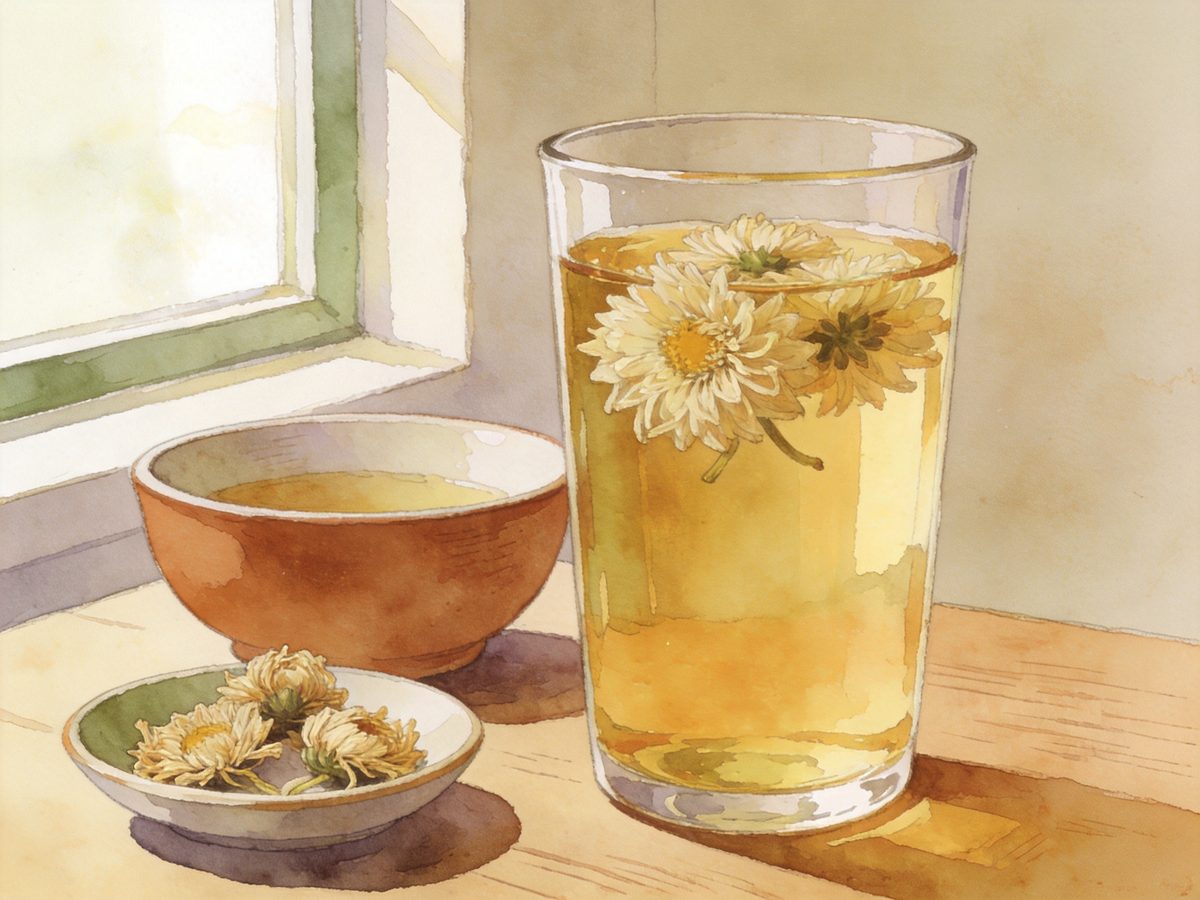
Introduction
Chrysanthemum tea is the quietest drink in the Chinese tea tradition — pale gold, faintly floral, barely sweet, more scent than flavor. It is what offices brew by the kettle-load, what teahouses serve without being asked, and what many Chinese families reach for when the meal was rich or the afternoon is long.
It is also the easiest flower tea to make badly. Steeped too hot or too long, chrysanthemum turns from delicate to distinctly bitter, and most first-time negative impressions of it trace back to exactly that. This article covers the three things that matter: which flowers to buy, how to steep them, and what the finished cup should taste like. The one-ingredient basics assume the brewing fundamentals from how to brew Chinese herbal tea; the pairing tradition lives in our goji and chrysanthemum tea article.
In traditional Chinese food culture, chrysanthemum is classified as a "cooling" ingredient — the counterweight to warming ones like ginger and red dates. That classification is a tradition of cuisine and season, and we present it as such. The honest reason to drink chrysanthemum tea is simpler: it is light, caffeine-free, and quietly pleasant, which is its own kind of comfort.
Which Flowers to Buy
Dried chrysanthemum comes in a few recognizable styles, and the differences are mostly about intensity and looks:
- Hangbaiju (杭白菊) — small white-petal buds. The everyday workhorse: gentle, lightly sweet, brews into the clearest cup. The best first purchase.
- Taiju (胎菊) — unopened small buds. Picked before the flower opens; the most delicate and the most expensive. Slightly sweeter, very hard to make bitter.
- Gongju (贡菊) — larger white flowers. More assertive aroma and a stronger edge; popular for the classic goji pairing.
- Golden chrysanthemum (金丝皇菊) — one big bloom per cup. Sold as a single-flower spectacle; brews a deeper gold. More show than subtlety, but lovely in a glass pot.
Whatever the style, apply the same checks: flowers should look whole and intact, pale rather than browned, and smell faintly sweet and hay-like. Dust and fragments at the bottom of a bin mean age.
Steeping, Step by Step
For one cup:
- Rinse. 4–5 flowers (or 2–3 large ones) in the mug, a quick pour of hot water, swirl five seconds, discard. This washes off storage dust and pre-warms the vessel.
- Water: just off the boil. Boil, then rest the kettle about a minute — or fill the pot first and let it absorb heat. This single detail is the difference between delicate and bitter; full-rolling boil is the classic first-timer mistake.
- Steep 3–5 minutes, covered. A lid or saucer on top keeps the aroma in the cup. The flowers unfurl, and the water turns a pale, clear gold.
- Taste and strain. At four minutes the cup should be floral and soft. Leave flowers in and they keep brewing — for a second pour, top up with more just-off-boil water rather than letting the first steep run long.
The repeat-steeping habit: good chrysanthemum gives two to three infusions. Each round is slightly lighter; the second is often considered the best-balanced.
What It Should Taste Like
Described honestly: mild floral sweetness with a hay-like, faintly herbal edge, a clean finish, and a pale gold color that smells the way it tastes. Not perfumey like jasmine, not vegetal like green tea, not sweet on its own — the sweetness is more suggestion than fact.
If it is bitter: water too hot, steep too long, or too many flowers. All three fixes cost nothing.
If it tastes flat or dusty: you skipped the rinse, or the flowers are old. Buy smaller amounts from shops with turnover.
Sweeteners: rock sugar is the traditional addition — a small crystal in the cup rather than a spoonful — and it rounds the floral edge nicely. Honey goes in after the tea cools slightly, not into boiling water.
The Pairing and the Neighbors
Chrysanthemum rarely drinks alone in Chinese tradition. Its two classic companions:
- With goji berries — the signature pairing, covered fully in goji and chrysanthemum tea: soft sweetness against floral lightness, four minutes, one mug.
- With a touch of aged tangerine peel — a Cantonese-leaning combination with a quietly aromatic edge, one of the five ingredients in our beginner's guide.
When the season turns cold and you want the warming counterweight instead, that is the territory of jujube tea and brown sugar ginger tea — and the full ingredient map is in the Chinese herbal tea ingredients guide.
Storage: airtight jar, away from light, and use within a few months for full aroma. Flowers fade faster than berries or dates.
Chrysanthemum tea is a kitchen tradition and a pleasant caffeine-free drink. Nothing in this article is medical advice, and no ingredient treats any condition.