Chinese Herbal Tea for Beginners: Start With 5
Introduction
Walk into any Chinese grocery store in autumn and the tea shelf seems to have its own language: goji berries, dried chrysanthemums, brick-hard red dates, twisted pieces of dried tangerine peel. If you have ever wanted to try Chinese herbal tea but did not know where to start, this is the door.
Our full Chinese herbal tea ingredients guide covers fourteen ingredients in depth. This one narrows it down to a beginner's five — the ones that are easiest to buy, hardest to ruin, and most rewarding through the cold months. None of them need special equipment, and all of them forgive imperfect brewing.
One honest note before we start: "herbal tea" here means traditional Chinese kitchen drinks — dried plants steeped or simmered in water, caffeine-free, drunk for warmth and comfort. It is a food culture, not a medicine cabinet.
The Beginner's Five
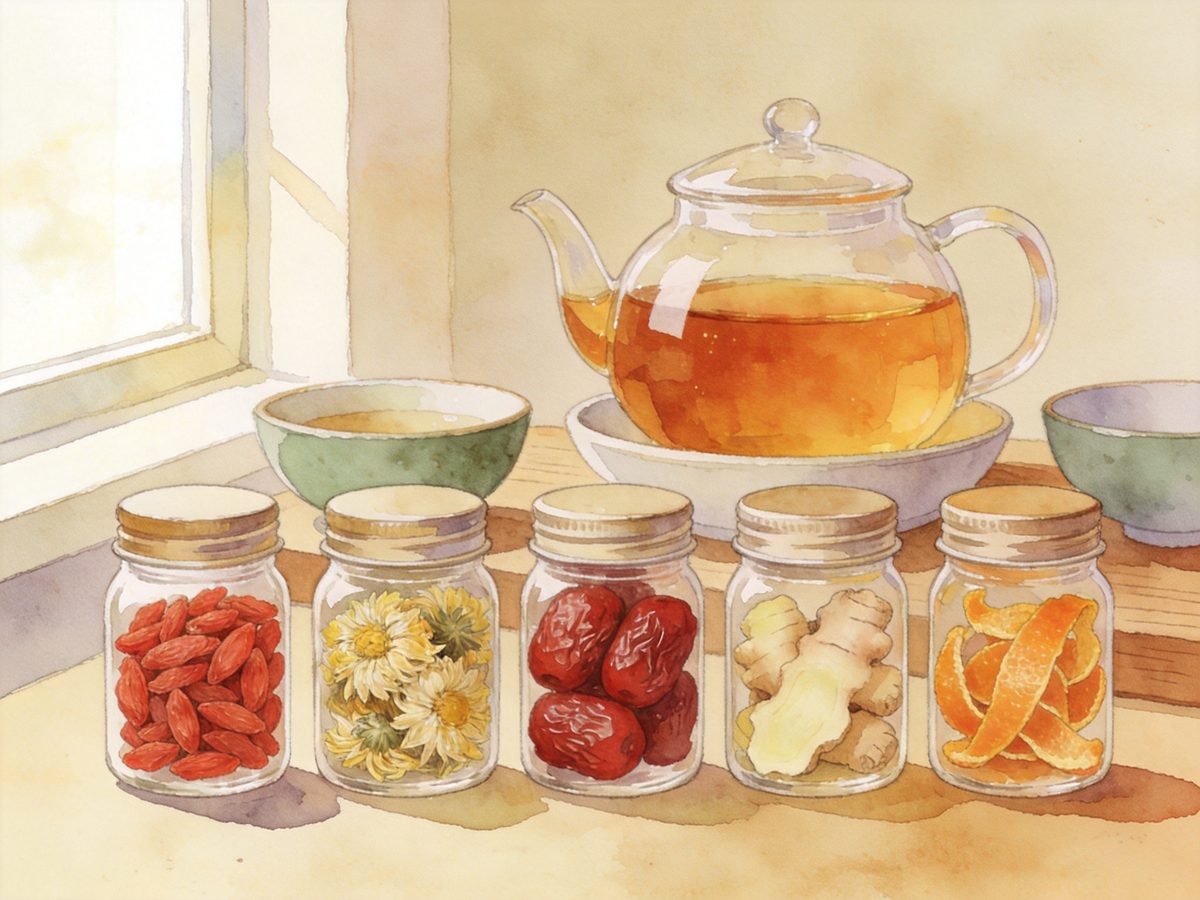
1. Goji berries (枸杞). Small, red, slightly sweet, and the single easiest entry point — you can eat them straight, but dropped into hot water they plump up and turn the cup faintly amber. They pair with almost everything on this list, and we have a whole article on the goji and hot water habit.
2. Chrysanthemum flowers (菊花). Dried whole flowers, pale gold. Steeped alone they make a light, gently floral cup — see our guide to chrysanthemum tea at home. Paired with goji, they form the most classic two-ingredient tea in the Chinese pantry.
3. Red dates, or jujubes (红枣). Wrinkled, mahogany-colored, and naturally sweet. Simmered rather than merely steeped, they give a soft, dessert-adjacent drink that Chinese families have made for winter for generations. Full method in our jujube tea guide.
4. Ginger (姜). The one ingredient you already own. Fresh slices in hot water is the simplest herbal tea there is, and with brown sugar it becomes the warming drink currently beloved far beyond Chinese kitchens — the brown sugar ginger tea recipe.
5. Dried tangerine peel, or chenpi (陈皮). The most "acquired" of the five and the most distinctively Chinese: aged citrus peel, steeped into a quietly aromatic, slightly bitter drink. Buy small amounts first; a little goes a long way.
Two First Brews to Try This Week
Brew one: the classic pairing
Put a teaspoon of goji berries and four or five chrysanthemum flowers in a mug. Pour in hot water that has just come off the boil, wait four minutes, and drink. This is the pairing that shows up in offices, homes, and tea shops across China — light, floral, faintly sweet. Our goji and chrysanthemum tea article covers the ratios in detail.
Brew two: the winter warmer
Simmer three slices of fresh ginger in two cups of water for ten minutes, then stir in a small piece of brown sugar. Ten minutes of mostly-hands-off cooking for the warmest cup on this list — the full brown sugar ginger tea method is here.
Buying Tips for the Tea Aisle
- Buy from stores with turnover. Dried flowers and berries fade; shops that sell a lot of them sell fresher ones.
- Check the flowers. Good chrysanthemum is whole, pale, and smells faintly sweet — avoid browned or crushed dust at the bottom of the bin.
- Dates should be plump and unbroken. Wrinkles are normal; splits and sugar crystallization are not ideal.
- Small packets first. Every ingredient here keeps for months in a sealed jar, but beginners should still buy the 100-gram bag, not the bulk bin.
- No caffeine, mostly. None of the five contains meaningful caffeine — a common and pleasant surprise for people expecting "tea" in the black-tea sense.
How to Keep Going
Once these five feel familiar, the rest of the pantry opens up naturally. Browse the full ingredients guide to see what to try next, learn the brewing fundamentals — water temperature, timing, vessels — in how to brew Chinese herbal tea, or explore ready-made combinations in Chinese herbal tea recipes. When the first cold snap arrives, our notes on ginger tea in cold weather pick up exactly where this list ends.
Chinese herbal tea is a kitchen tradition, not a treatment. Nothing in this article is medical advice, and no ingredient here treats any condition.