A Week of Warm Meals: Simple TCM-Inspired Meal Planning
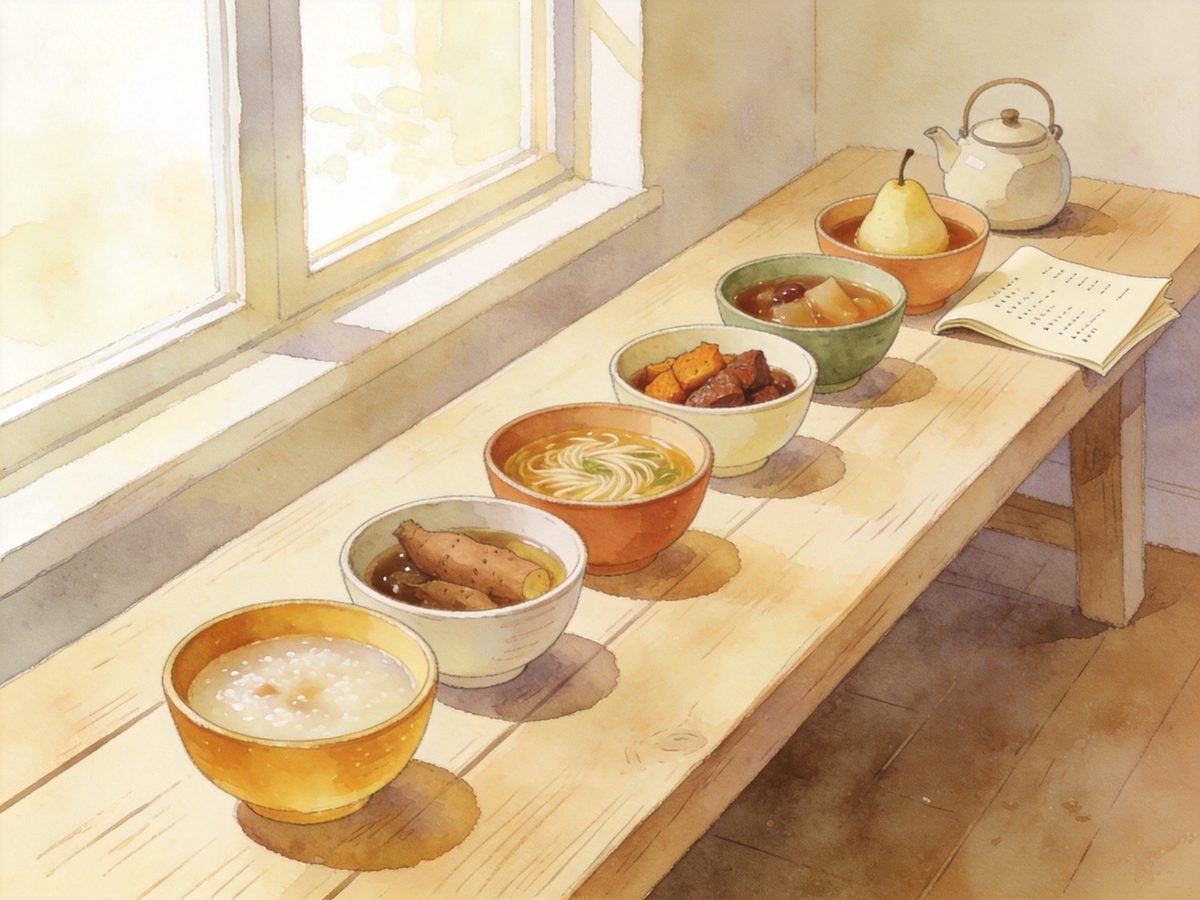
Introduction
Ask a Chinese grandmother for health advice and it will probably arrive as food: "eat something warm," "less ice," "have some congee." In Traditional Chinese Medicine (TCM), the kitchen comes before the pharmacy — and the daily rhythm of warm, cooked, simple meals is considered the foundation of digestive comfort.
This article turns that tradition into a practical 7-day warm meal plan: one anchor meal for each day, built from ordinary supermarket ingredients, with a warm drink alongside. It is meal inspiration in the Chinese food-therapy spirit — not a medical or nutritional prescription, and not a substitute for professional advice.
If you want the "why" behind the warm-food principle first, our guides to what to eat at night in Chinese food therapy and the dampness diet cover the theory.
The Three Rules Behind the Plan
TCM meal logic fits on an index card:
- Warm over cold. Cooked, warm foods are traditionally considered easier on digestion than iced drinks and big raw salads — especially as the weather cools.
- Soft over heavy. Congee, soups, and stews are the classic formats: hydrating, gentle, and filling without being greasy.
- Simple over clever. The tradition prizes routine — roughly regular meal times, modest portions, and few ingredients done well.
That is the whole framework. There are no superfoods to hunt and no rules about calories; the plan below simply applies these three rules to a normal week.
The 7-Day Warm Meal Plan
One anchor meal per day (dinner unless noted), plus a warm drink. Everything is flexible — swap days freely.
Monday — Plain rice congee night
The reset meal after the weekend: plain rice congee with a simple topping — a soft-boiled egg, a few drops of sesame oil, or shredded chicken if you like. Warm tea alongside.
Tuesday — Ginger and scallion noodle soup
A bowl of ginger scallion noodle soup: warming broth, soft noodles, and the classic TCM pairing for a chilly evening.
Wednesday — Steamed or roasted vegetables with rice
The lightest night of the week: roasted squash, carrots, and sweet potato over steamed rice. In TCM terms, root vegetables are grounding and gently sweet — a contrast to fried or heavily sauced dinners.
Thursday — Warm oat bowl with dates
Breakfast-style comfort at dinner: a warm date and oat bowl, with walnuts or a spoon of ground black sesame on top — both traditionally associated with nourishing the body in autumn and winter.
Friday — Miso-style or vegetable tofu soup
A light soup with tofu, mushrooms, and greens. Tofu is a staple of Chinese home cooking; in TCM terms it is considered mild and moistening. Keep the salt modest and let the warmth do the work.
Saturday — Your favorite warm dish, made at home
The plan's flex day: cook whatever warm dish you love, at home. The tradition's point is the rhythm — a warm, unhurried meal — not a specific recipe.
Sunday — Poached pear dessert to close the week
A soft, gently sweet finish: pears poached with a little ginger or a few goji berries. Pears are the classic moistening fruit of autumn in Chinese food culture — and autumn is the season TCM associates with dryness.
The daily warm drink: ginger tea on cold days (here is when it fits and when it does not), chrysanthemum or plain warm water otherwise. For more variety, see our simple Chinese herbal tea recipes.
Batch-Prep Tips for Real Life
The plan only works if it survives a busy week:
- Cook the congee base ahead. Rice congee keeps 2–3 days refrigerated; loosen with hot water and reheat.
- Chop once, use twice. Cut ginger, scallions, and root vegetables for two meals at once.
- Keep a "warm emergency" on hand. Instant-style noodle soup plus an egg beats a cold sandwich on the night everything goes wrong.
- Drink the warm water anyway. The simplest habit in the whole tradition — a thermos on the desk — does more than any single recipe.
Adapting the Plan Honestly
- Allergies and intolerances come first — swap freely; the framework (warm, cooked, simple) matters more than any ingredient.
- Diabetes, IBS, kidney conditions, pregnancy, or any therapeutic diet: adapt with your healthcare provider or dietitian. "TCM-friendly" does not mean medically appropriate for everyone.
- Honey appears in some traditional variations: never give honey to babies under 1 year old.
- Vegetarian? Nearly every day works as-is; swap the chicken topping for mushrooms or tofu.
- If eating patterns feel out of control, or food causes anxiety or pain, that is a conversation for a professional — not something a meal plan should paper over.
This plan is a rhythm, not a regimen. Missing a day changes nothing; the point is that most days lean warm.