The Dampness Diet: Foods to Favor and Foods to Ease Off On
Introduction
Feeling heavy after every meal. Rings that feel tight in the morning. A foggy, sluggish afternoon no matter how much you sleep. In Traditional Chinese Medicine (TCM), this cluster of complaints often gets one word: dampness (湿).
We have covered what dampness is and the herbal teas traditionally used for it. This article looks at the other half of the tradition: the diet — which foods TCM theory blames for building dampness, which ones it considers drying and supportive, and how to apply all of this in a modern kitchen without going to extremes.
Standard reminder: this is wellness education in the Chinese food tradition, not medical advice, and no food treats any condition.
Quick Recap: What "Dampness" Means Here
In TCM theory, the Spleen (a digestive function, not the anatomical spleen) is responsible for transforming fluids and food into usable energy. When that function is described as weak or overwhelmed, fluids are said to pool instead of circulate — creating "dampness": heaviness, bloating, sticky-tongue coating, puffiness, loose stools, and mental fog.
The dietary logic follows directly. Foods are said to worsen dampness when they are hard to digest or fluid-retaining; foods are said to help when they support digestion and gently promote fluid movement.
Foods Traditional Theory Blames for Dampness
- Dairy — the number one dampness food in TCM dietetics: cold, rich, and considered "phlegm-forming." (Lactose intolerance being common in East Asian populations is one theory for how this observation became tradition.)
- Sugar and sweets — cakes, milk tea, desserts: sticky in quality, traditionally said to create exactly the sticky internal environment dampness describes.
- Greasy and deep-fried food — heavy oils are considered directly damp-forming and Spleen-weakening.
- Iced drinks and large amounts of raw food — in this framework, cold shocks the digestive "fire" needed to process fluids; salads and smoothies in quantity are considered harder work than cooked food.
- Excess refined flour and processed food — bread, noodles, and snacks eaten at the expense of cooked vegetables and protein.
- Overeating at night — a digestion that never finishes its day is traditionally described as a dampness factory. (Our guide to what to eat at night in Chinese food therapy covers the evening side of this.)
- Alcohol — in TCM terms, alcohol is damp and hot at once; hangover symptoms are practically the dampness poster child.
Read that list as a whole and it maps closely onto what any modern dietitian would call the ultra-processed, high-sugar, high-alcohol tier of the food supply. You do not have to accept "dampness" as physiology to notice the pattern.
Foods That Support the Other Side of the Balance
The traditional "dampness-friendly" shortlist is built around grains, seeds, and vegetables described as mild, drying, and fluid-moving:
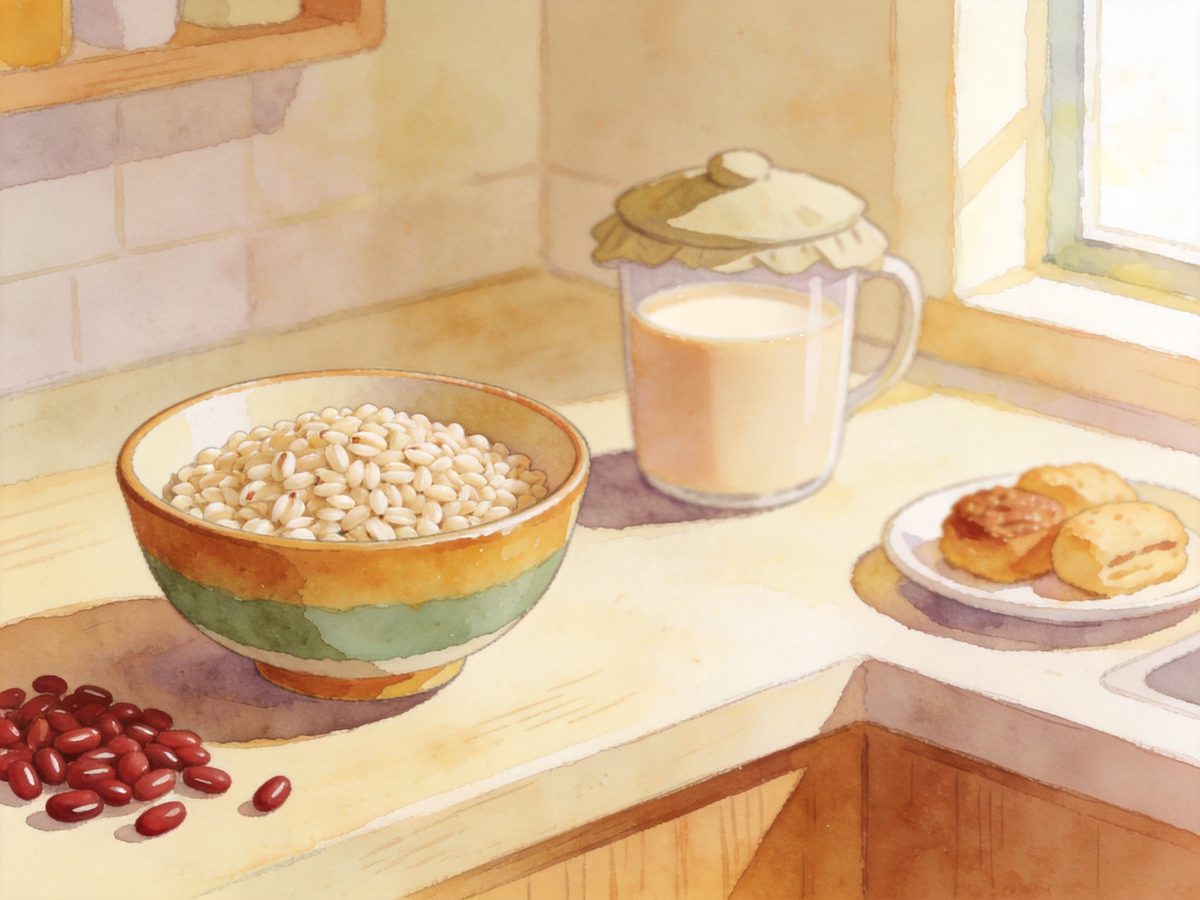
- Job's tears (coix seed, 薏米) — the most famous dampness ingredient: a chewy grain traditionally used in soups and teas for "draining damp." Usually simmered until soft; often paired with red beans.
- Red adzuki beans (红豆) — the other half of the classic red-bean-coix pairing; traditionally used for bloating and water retention.
- Winter melon — mild, watery vegetable traditionally used to promote urination and reduce "damp heat" — common in summer soups.
- Ginger — the warming counterweight: a few slices in cooking or tea are traditionally used to support the digestive fire, especially for people who feel cold and bloated.
- Barley and millet — mild grains considered gentle on the Spleen; congee is the classic format.
- Corn silk tea — a folk favorite for fluid balance.
- Cooked, warm, simple meals — less a food than a rule: the tradition holds that the Spleen likes warmth, routine, and meals that are easy to finish.
A practical starting point people often use: swap one icy drink or dessert a day for warm food or one of the teas above, cook dinner instead of frying it, and see how you feel after two weeks. That kind of small, reversible experiment is food therapy at its most sensible.
What This Diet Is Not
Honesty about the boundaries:
- Dampness is not a medical diagnosis. Bloating, puffiness, and fatigue have many possible medical causes — thyroid issues, anemia, IBS, heart or kidney problems among them. The dampness framework is a pattern language from pre-modern medicine, useful for organizing cooking habits, not for explaining symptoms.
- No food "drains" anything in a measurable medical sense. Coix seed does not treat edema. Winter melon soup does not cure water retention caused by a medical condition.
- Do not self-treat persistent symptoms with diet. Ongoing swelling, weight change, bowel changes, or bloating that does not track with meals belongs with a doctor.
- Do not go elimination-crazy. Cutting entire food groups based on TCM food natures — especially without guidance — is not what the tradition recommends either. Moderation is the actual through-line.
When to See a Professional
Seek medical evaluation for:
- Swelling in the ankles, legs, or face that pits when pressed, or appears with shortness of breath
- Bloating that is persistent, painful, or accompanied by weight loss or blood in stool
- Chronic diarrhea or loose stools lasting weeks
- Fatigue severe enough to interfere with daily life