Shanghuo (上火): What "Internal Heat" Means in Chinese Food Culture
Introduction
If you have Chinese friends or family, you have probably heard someone announce that they are "shanghuo" (上火) — literally, "fire has risen" — usually right before they refuse fried chicken, order an extra pot of chrysanthemum tea, or explain that the mouth ulcer on their tongue is "from eating too many lychees."
Shanghuo is one of the most-used health words in everyday Chinese conversation, and it has no exact English equivalent. This article explains what it means, why fried food and late nights are blamed for it, and which foods Chinese food culture considers "cooling." It is cultural and wellness education — not a medical framework, and not a substitute for one.
What Does "Internal Heat" Mean in TCM?
In Traditional Chinese Medicine theory, health depends on balance — including a balance between warm and cool forces in the body. "Fire" (火) in this framework is not a bad thing by itself: it is the warmth that powers digestion and activity. Problems start when fire flares too high or drifts to the wrong places — a state called excess heat or, colloquially, shanghuo.
The classic signs people describe as shanghuo:
- Mouth ulcers or blisters on the lips or tongue
- A sore, scratchy, or "hot" throat
- Red, tired eyes
- Breakouts, especially around the mouth and chin
- Bad breath, a bitter taste, or a red-looking tongue with yellow coating
- Constipation or dry stools
- Feeling irritable, restless, or unusually short-tempered
- Trouble falling asleep from feeling "too awake"
In TCM's finer-grained version, the fire has "locations" — stomach fire, liver fire, heart fire — each with its own symptom flavor. Everyday usage is much simpler: you feel overheated and irritated, and you want to cool down.
The Usual Suspects: What People Blame for Shanghuo
Ask anyone raised with this concept and the list is remarkably consistent:
- Fried, roasted, and deep-fried food — chips, fried chicken, barbecued anything
- Very spicy food — the classic day-after-sichuan-hotpot complaint
- "Heaty" fruits — lychee, longan, durian, and mango have this folk reputation
- Nuts and roasted seeds in quantity — especially roasted melon seeds at New Year
- Late nights and overwork — "staying up late gives you internal fire" is folk wisdom so established it is almost a law of nature
- Stress and suppressed irritation — in TCM terms, emotions that "stagnate" can eventually "flame up"
Notice that this list overlaps heavily with what conventional health advice also discourages: ultra-processed fried food, alcohol, chronic sleep loss, and unmanaged stress. The framework is different; many of the conclusions rhyme.
Cooling Foods: The Traditional Answer
Chinese food culture sorts foods along a spectrum from warming (热性) to cooling (凉性/寒性), and shanghuo is traditionally managed by temporarily favoring the cool end:
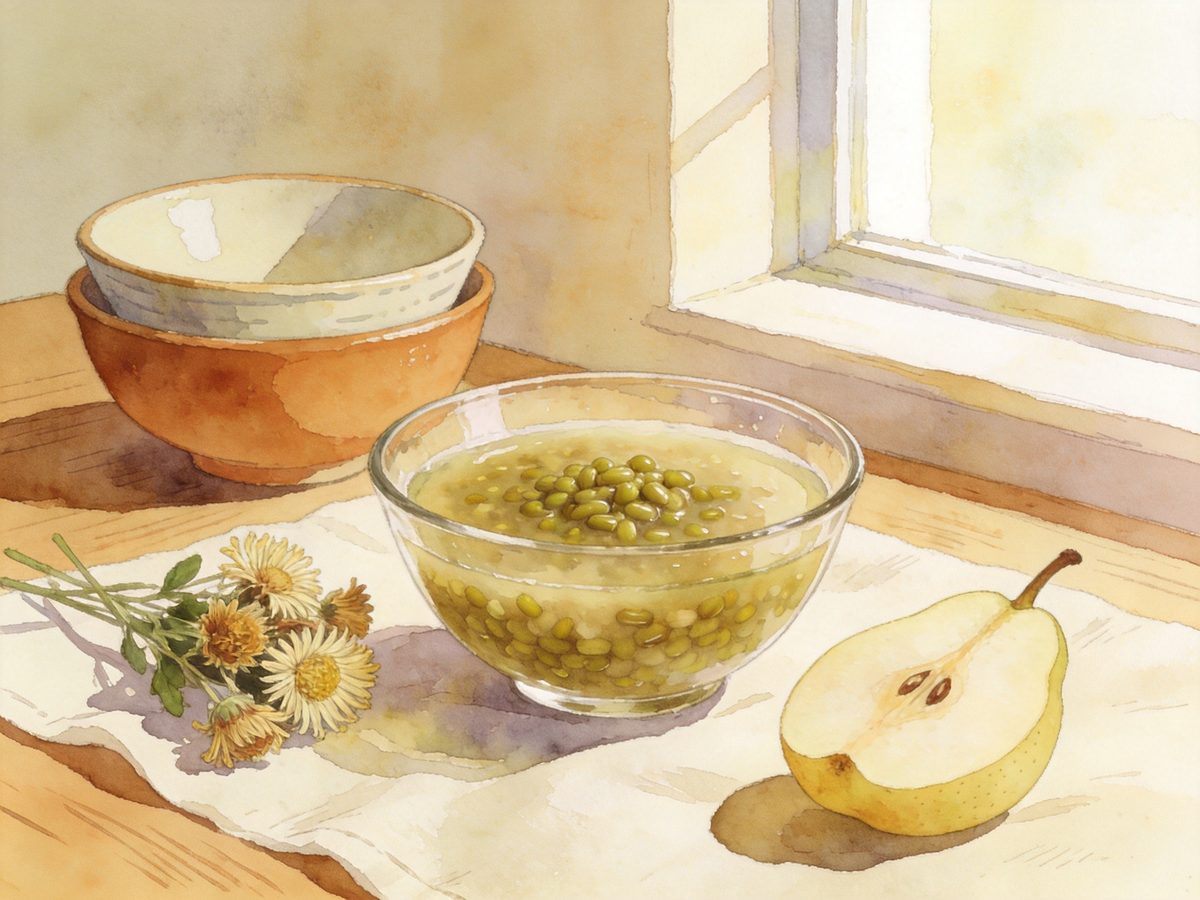
- Mung beans — mung bean soup (绿豆汤) is the single most famous "fire-reducing" home remedy of summer. Simmered until soft, lightly sweetened, drunk warm or cool.
- Chrysanthemum tea — the default office order when someone says their throat feels hot or their eyes are tired.
- Pear — juicy and traditionally "moistening-cooling"; often steamed or poached.
- Winter melon — simmered in soup, classically used for summer heat.
- Bitter melon — the strongest-tasting entry; bitter flavors are traditionally associated with clearing heat.
- Watermelon — considered so strongly cooling it is nicknamed a "natural white tiger decoction" in folk speech (a reference to a classic TCM formula).
- Soy milk, tofu, and green leafy vegetables — everyday mildly cooling staples.
- Lotus seed and lily bulb — traditionally used when the "fire" is described as heart fire: restless, irritable, bad sleep.
The traditional caveats matter too: these foods are considered cool or cold in nature, and TCM holds that eating them in excess — especially cold drinks and raw food — can burden digestion (the Spleen, in TCM terms). Someone who already feels cold, bloated, or loose-stooled is traditionally told to go easy on the cooling foods and choose cooked, warm versions instead. Balance, not extremes, is the whole point.
A Sensible, Modern Way to Use the Concept
You do not need to accept the full TCM framework to use shanghuo as a useful shorthand. In practice, the traditional advice adds up to something conventional nutrition would largely endorse:
- After a stretch of heavy, fried, or spicy eating, switch to lighter, water-rich meals for a few days.
- Drink enough fluids — warm or cool, whatever sits well with you.
- Protect your sleep; late nights genuinely do make skin, eyes, and mood worse for most people.
- Notice your own patterns: if lychees reliably coincide with mouth ulcers for you, eating fewer of them is reasonable self-observation, whether or not "heatiness" is the mechanism.
What the concept does not do is diagnose. A mouth ulcer that lasts more than two weeks, a sore throat with fever, a skin infection that is spreading, or acne that is severe or scarring are medical issues — see a professional rather than drinking more chrysanthemum tea.
When Symptoms Need Medical Attention
Seek care for:
- Sore throat with high fever, difficulty swallowing, or muffled voice
- A mouth ulcer that has not healed within 2–3 weeks, or recurrent ulcers that are large or very painful
- Skin breakouts with spreading redness, warmth, or pus
- Blood in stool, unexplained weight loss, or persistent changes in bowel habits
- Frequent "heat" symptoms that don't settle — worth a general check-up