Autumn Lung Dryness in Chinese Medicine: Foods for the Dry Season
Introduction
Every season has a personality, and in Traditional Chinese Medicine (TCM) autumn's personality is dry. The air cools, humidity drops, and many people notice the same small annoyances arriving on schedule: a scratchy throat, dry skin, chapped lips, and that tickly autumn cough that lingers for weeks.
In TCM, this is not a coincidence. Autumn is the season of the Lung — and the classic explanation for why autumn feels harsh on the nose, throat, and skin is a concept called lung dryness (sometimes called "autumn dryness"). The traditional response is not medicine but the kitchen: a family of gently moistening foods that have been cooked into autumn meals for centuries.
This article explains the idea and lists seven of the best-known moistening foods, with simple ways to eat them. It is general wellness education — not medical advice — and none of these foods treat or cure any condition.
Why the Lung Is the "Tender Organ" of Autumn
In TCM theory, each season corresponds to an organ system. Autumn belongs to the Lung (paired with the Large Intestine), and the Lung is classically described as a "tender" or "delicate" organ because it is the only one in direct, open contact with the outside air.
The traditional reasoning goes like this:
- The Lung "dislikes dryness" the way the Spleen is said to dislike dampness.
- Dry autumn air is thought to draw moisture from the Lung and from the body's surface — which in TCM terms includes the throat, nose, and skin.
- The result is the classic autumn pattern TCM describes as dryness attacking the Lung: dry or scratchy throat, dry cough with little phlegm, dry nostrils, and thirst that water does not seem to fix.
Whether or not you take the meridian framework literally, the practical takeaway survives translation: as the air dries, it makes sense to cook and eat differently — more moist, warm, and soft; less harsh, fried, and dehydrating.
The 7 Classic Moistening Foods for Autumn
1. Pear — the star of the season
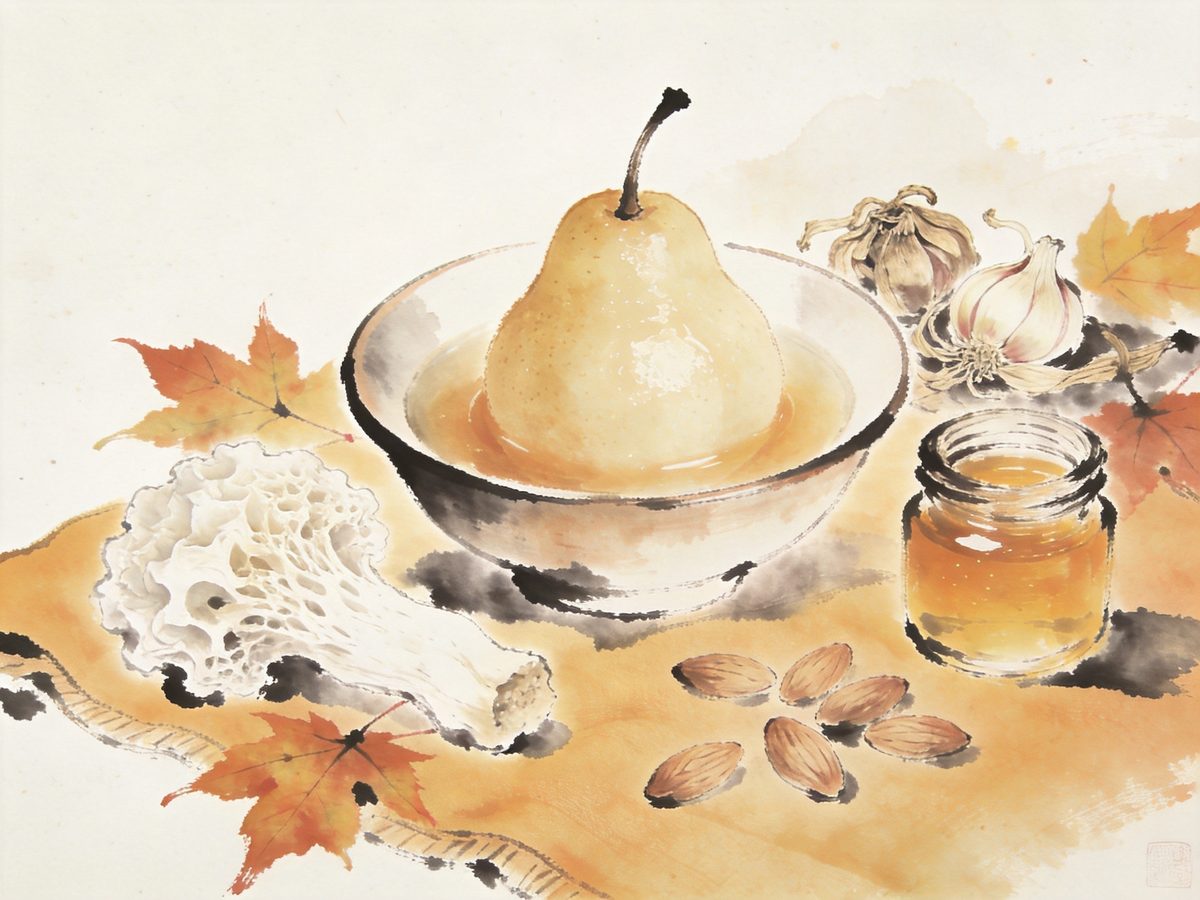
No food is more associated with autumn in China than the pear. Pears are juicy, cooling, and traditionally described as moistening the Lung and soothing the throat. The most famous home preparation is poached or steamed pear: a whole pear, cored, slow-cooked until soft — sometimes with a small amount of rock sugar or a few slices of ginger.
2. White fungus (tremella)
Snow fungus is the quiet legend of Chinese dessert soups. Simmered until gelatinous with dates, goji berries, or a little rock sugar, it is traditionally used to nourish yin and body fluids — the classic "moisture food" of autumn. It is bland on its own, which makes it a carrier for whatever gentle flavors you pair it with.
3. Lily bulb
Dried or fresh, lily bulb is a traditional autumn ingredient in congee and soups, described in TCM texts as moistening the Lung and calming the spirit. It has a mild, slightly sweet, starchy taste.
4. Lotus root
Crunchy when stir-fried, soft and starchy when slow-cooked in soup, lotus root is a favorite autumn vegetable — traditionally associated with moistening dryness and supporting fluids.
5. Honey
Honey is the classic moistener in TCM dietetics — traditionally used for a dry throat and dry stools. Stirred into warm (not boiling) pear water or oatmeal is the usual home method.
Important safety note: never give honey to babies under 1 year old, because of the risk of infant botulism. This applies to all honey, in any amount.
6. Sesame seeds and nuts
Black and white sesame, walnuts, and almonds are traditional autumn staples — oily, rich, and described as nourishing yin. Ground sesame sprinkled on congee or oatmeal is an easy everyday version. (Nut and seed allergies are common; skip anything you react to.)
7. Daikon radish
The white radish is the one intentionally "juicy-cool" vegetable on the list — traditionally used to clear residual warmth and moisten phlegm in early autumn. Simmered in soup with pork or mushroom, it turns mild and sweet.
How to Eat for Autumn: The General Principles
Beyond specific ingredients, traditional autumn eating leans on a few simple rules of thumb:
- Cook more, chill less. As temperatures drop, TCM suggests easing off iced drinks, big raw salads, and straight-from-the-fridge fruit, and shifting toward soups, stews, congee, and steamed or poached fruit.
- Favor soft and moist textures. Congee, soup, poached pear, and dessert soups are the season's natural format — they deliver fluid alongside calories.
- Keep pungent flavors mild. Small amounts of ginger, scallion, and onion are traditional; heavily spiced, very hot, or fried food is traditionally thought to worsen dryness.
- Drink warm fluids through the day. Warm water and gentle herbal teas fit the season better than dry, salty, or dehydrating drinks.
If you want ready-to-cook versions of these ideas, see our seasonal recipe pages: Autumn Eating in Chinese Wellness (pear-ginger comfort bowl and mushroom sweet potato soup) and Chinese Herbal Tea for Cough.
A Realistic Way to Think About "Moistening" Foods
It is worth being honest about what food can and cannot do. Eating more pears and soup will not "treat" a cough, and TCM food therapy was never meant to replace medical care. A more realistic framing:
- These foods are hydrating, gentle, and easy on an irritated throat — the same qualities that make warm soup feel good when you are sick in any culinary tradition.
- If the TCM framework helps you cook seasonally and pay attention to how food makes you feel, it is doing its job.
- If a symptom is persistent, it needs a professional, not a different recipe.
When a Dry Cough Needs Medical Attention
See a healthcare professional if you have:
- A cough lasting more than 2–3 weeks, or that is getting worse
- Wheezing, shortness of breath, or chest pain
- Coughing up blood
- Fever that does not settle, or unexplained weight loss
- A dry mouth and dry eyes severe enough to interfere with daily life
Seasonal scratchiness is common. Persistent symptoms are not something to manage with food alone.