Drinking Hot Water: The Chinese Wellness Habit Explained
Introduction
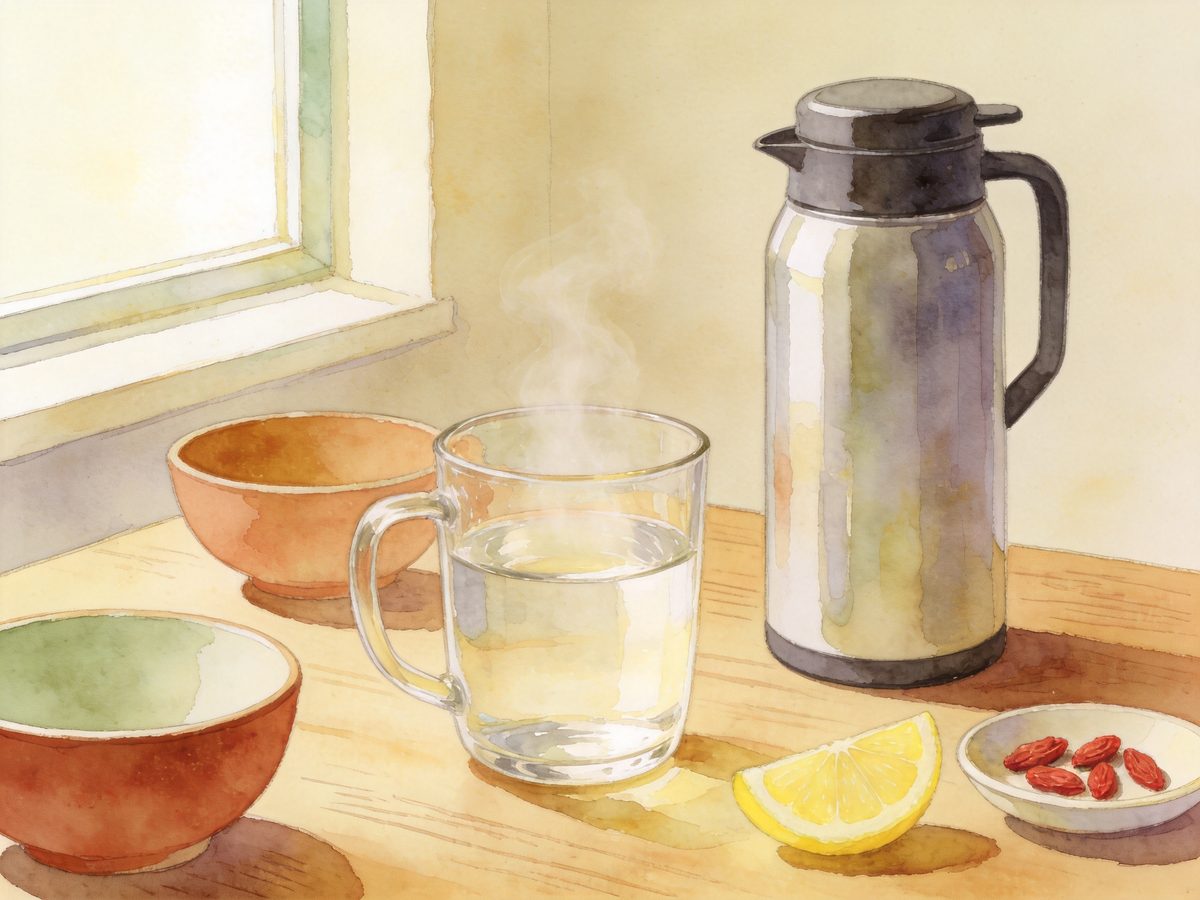
If you have seen the "Becoming Chinese" or "Chinamaxxing" videos, you already know the scene: someone sets aside their iced coffee, fills a mug with steaming water, and drinks it plain — no tea, no lemon, just hot water (热水).
To many Western viewers this was the strangest habit in the whole trend. To millions of Chinese families, it is the most ordinary thing in the world: hot water is what you offer a guest, what restaurants serve by default, what schoolchildren carry in thermoses, and what grandmothers consider the correct answer to almost everything.
We have already touched on this habit in our Chinamaxxing explainer. This article goes deeper: where the habit comes from, what the traditional logic is, an honest reading of what it does and does not do — and how to try it safely, including one temperature warning most viral videos skip.
Where the Habit Comes From
Drinking warm water is not a fad in China; it is infrastructure and memory.Boilers and hot water dispensers stand in schools, train stations, and offices. Doctors and parents alike have handed down the same instruction for generations: drink more warm water.
The reasons people give are practical as much as philosophical. Historically, boiled water was simply safer water — boiling made questionable tap water drinkable long before filtration was common, and the habit stuck. Around that practical core, traditional Chinese medicine (TCM) built a warmer logic: cold is associated with contraction and stagnation, warmth with circulation and comfort. In TCM dietetics, iced drinks are seen as a burden on the Spleen and Stomach — the system responsible for transforming food into energy — while warm water is considered the neutral, gentle default.
Whatever framework you prefer, the practical outcome is the same: in China, "water" mostly means warm water, all day, every day.
What the Tradition Says — and an Honest Reading
The traditional logic: warmth supports the "digestive fire." Cold, in this view, makes the digestion work harder, while warm liquids keep everything moving comfortably. Morning warm water "wakes up" the system; warm water with meals keeps the stomach cozy.
A fair reading: hot water is not a therapy, and iced water is not poison — people in iced-drink cultures are perfectly healthy, and no study shows hot water treating anything. But there is real, boring wisdom in the habit:
- It slows you down. You cannot gulp scalding water; you sip it. Many people find they simply drink more water, more calmly, when it is warm.
- Comfort is real. People with sensitive stomachs often report that warm drinks feel better than icy ones, especially in the morning or around meals. That feeling is legitimate even if it is not "medicine."
- It replaces something worse. Swapping a third iced soda for hot water is an upgrade no nutritionist would argue with.
That is the honest version: a hydration habit with comfort benefits and cultural depth — not a detox, not a cure, not a personality.
The Safety Note Most Videos Skip
The habit is safe, but temperature matters more than trend.
- Comfortable sipping temperature is roughly 35–40°C — warm to the touch, never painful. If you have to blow on it, wait.
- Very hot beverages are genuinely risky. The WHO's cancer research agency (IARC) classifies beverages drunk above about 65°C as "probably carcinogenic" to the esophagus, based on repeated scalding injury. Regularly drinking very hot liquids is one habit where tradition and modern evidence both say: don't.
So the correct version of the Chinese habit is warm water, not scalding water. Boil the water if you like — then let it rest until it is pleasant to sip.
How to Build the Habit (One Week)
- Morning first. One mug of warm water before or with breakfast, before coffee. Notice how it feels compared to your usual cold drink.
- Carry it. A simple thermos keeps water in the comfortable zone for hours. This is the actual "Chinese hack" — the thermos culture, not the temperature extremes.
- Add, don't drown. Once plain warm water feels normal, try the classic additions: a few goji berries in hot water, a slice of lemon, or a spoon of honey. Or go further with boiled apple water when you want something cozier.
- Pair it with a meal habit. Warm water with meals keeps the whole rhythm gentle — the trend's habits stack naturally.
- Keep whatever feels true. If warm water all day is not for you but a warm morning mug is, that is a perfectly good result.
The Bottom Line
Drinking warm water is the least exotic health habit imaginable, which is exactly why it survived the meme cycle: it costs nothing, it risks nothing at the right temperature, and it quietly improves how most people drink water. That is the whole trick — and it is enough.