Boiled Apple Water: A Simple Chinese Digestive Ritual
Introduction
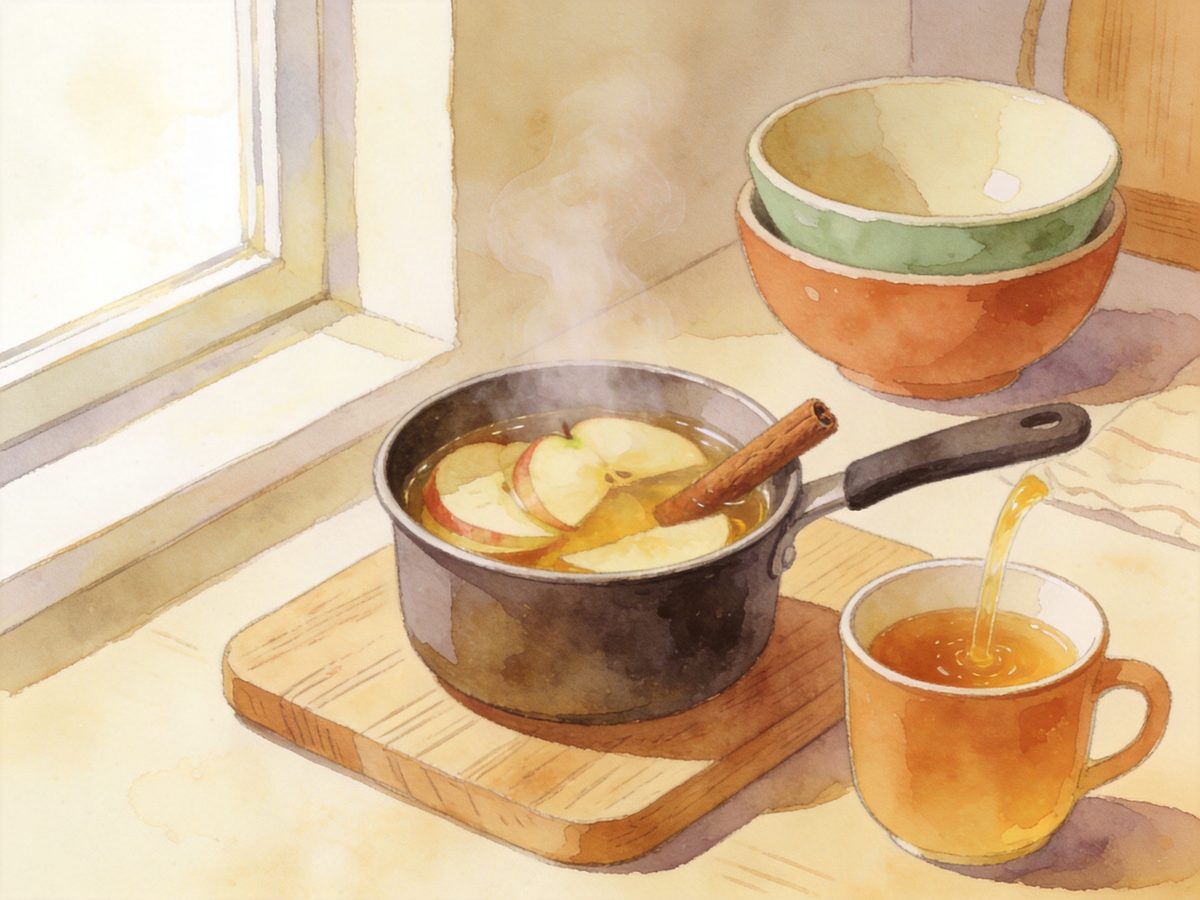
Among the habits floating out of the viral "Becoming Chinese" trend, one looks like a typo: people boiling apples. Sliced apple, simmered in water, drunk warm — sometimes called apple water, sometimes just "the boiled apple thing."
It is not a typo. Simmering fruit in water is an ordinary home practice across China — apple water for the family table, pear water (冰糖雪梨) for scratchy throats in dry winters, dried tangerine peel water after rich meals. Fruit is treated less as a raw snack and more as an ingredient for gentle, warm drinks. The apple version simply travelled best on video.
Here is how to make it, what the traditional logic is, and an honest read of what this drink is — and is not.
Why Cooked Fruit? The Traditional Logic
In TCM dietetics, raw fruit is considered "cool-cold" in nature, while cooking shifts a food toward warm and neutral — easier on the Spleen and Stomach, the system traditional medicine treats as the body's digestive furnace. This is the same logic behind why Chinese households serve fruit warm in winter, why sick-day food is congee and stewed fruit rather than a smoothie, and why hot water — not iced — is the default.
An honest reading: the verifiable part of this drink is modest and real. A warm, lightly sweet fruit-infused water is:
- hydrating, in a form many people find easier to drink in quantity than cold water;
- gentle on the stomach, simply because it is warm and mild — the same reason hot water feels soothing to most guts;
- a low-sugar comfort drink, assuming you are not adding a pile of sugar — the apple's own sweetness does the work;
- cheap — one apple, one pot, four servings.
Apples do contain pectin, a soluble fiber that cooking does not remove. What a warm drink will not do: "flush toxins," repair digestion, or treat anything. If a video promises that, close it. The honest version is smaller and still worthwhile: a comforting, warming drink that makes an afternoon or evening feel cared for.
The Recipe: Boiled Apple Water (Two Ingredients)
You need: 1 apple (any variety; Fuji and Honeycrisp hold flavor well) and 3–4 cups of water.
- Wash and core the apple — peel on or off, your call. The peel carries much of the aroma, so leave it on if the apple is clean. Slice into thin wedges.
- Simmer, don't boil hard. Add the slices to 3–4 cups of water, bring to a gentle boil, then lower to a soft simmer for 10–15 minutes, until the water turns pale gold and smells like warm apple.
- Taste and adjust. The apple sweetens the water by itself. If you want more warmth, add a small piece of cinnamon stick or a strip of dried tangerine peel (陈皮) — a classic Chinese pairing.
- Drink warm. Pour and sip at comfortable temperature — warm, not scalding, same as the goji water rule.
- Eat the apple. The softened slices are a quiet bonus — warm, spoon-tender, and perfectly good.
Storage: keeps in the fridge for about two days; reheat gently. Make a small pot fresh when you can — the aroma fades.
When People Drink It
- Evening wind-down, instead of a snack — warm, mildly sweet, zero caffeine.
- With or after heavy meals, as the gentle drink traditional households reach for (often with tangerine peel).
- Winter mornings, alongside or instead of the congee pot — it pairs naturally with a warm breakfast.
- Any time a cold drink feels wrong — the use-case every Chinese grandmother assumes you already understand.
The Bottom Line
Boiled apple water is not a discovery and not a cure; it is a warm drink with one ingredient and a long domestic history, which is exactly why it fits this site. Try it once on a cold evening, eat the apple afterward, and you will have understood the habit better than most of the internet did.