How to Stay Healthy on a Budget: What Chinese Home Wellness Does With Almost Nothing
Introduction
Wellness has a pricing problem. Between gym memberships, supplement stacks, cold plunge tubs, and retreats, "getting healthy" can sound like a hobby for people with spare hundreds per month. Meanwhile, in ordinary Chinese households, the health advice grandmothers have handed down for generations is famously, almost aggressively cheap: drink hot water, eat your congee, walk after meals, soak your feet, go to bed early.
That is not a coincidence. The backbone of Chinese home wellness is a tradition called zhi wei bing (治未病) — "treating disease before it starts" — and its core assumption is that maintenance should be daily, boring, and nearly free, because the expensive thing is the crisis, not the habit. This article walks through the actual budget playbook: what each habit costs, what the tradition says it is for, and how to build a routine for roughly the price of one fancy coffee a month. It is wellness education, not medical advice.
The Budget Wellness Lineup: What Each Habit Actually Costs
Here is the honest price list. Numbers are rough US grocery-store estimates and will vary by city, but the order of magnitude is the point.
| Habit | What you need | Rough monthly cost | What the tradition says it is for |
|---|---|---|---|
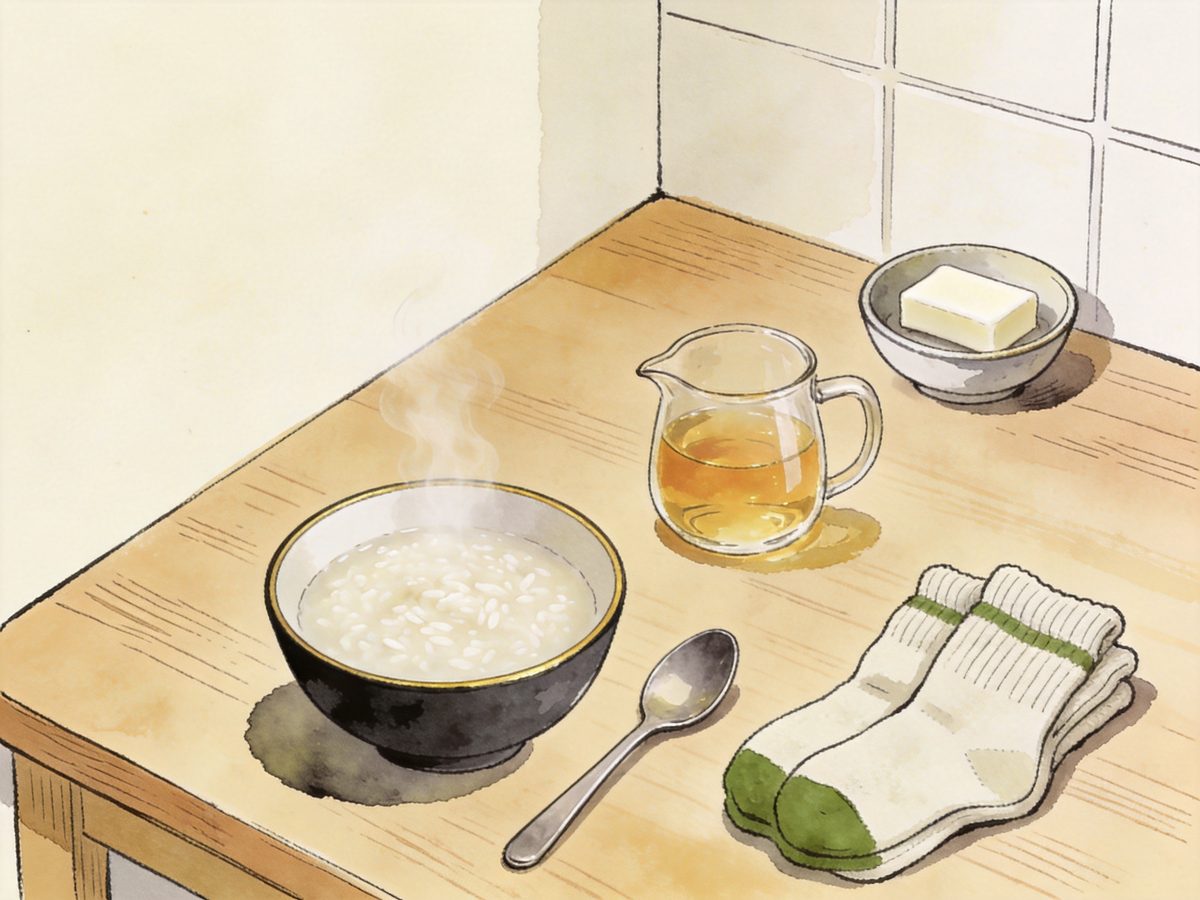
| Warm water through the day | A thermos and tap water | ~$0 (thermos once: $15–25) | "Warm the middle" — gentle on digestion versus iced drinks |
| Warm breakfast (congee or oatmeal) | Rice, millet, or oats | $8–12 for the base grains | Morning warmth and easy digestion; the everyday base meal |
| Walking after meals | Shoes you already own | $0 | "Move the grain" — circulation and digestion support |
| Evening foot soak | A basin and warm water | ~$0 (basin once: $10–20) | Wind-down; traditionally draws the day's chill out |
| Early, regular sleep | An alarm clock discipline | $0 | "Restores yin" — the tradition's first-line repair |
| Dress the draft points | Scarf, socks, waist coverage | $10–15 once, lasts years | Neck, abdomen, and ankles are where cold "enters" |
| Ginger or scallion in cooking | Fresh ginger root | $2–4 | Warming spice for cold days and heavier meals |
Add it up: after the one-time thermos and basin, a running cost of roughly $12–16 per month — about one specialty coffee and a muffin. Compare that to the standard American wellness stack: a $45 gym membership, $60 of supplements, a $15 juice — and the comparison answers itself before you even argue about whether any of it works.
Why the Tradition Is Cheap on Purpose
The classical line behind all of this comes from the Huangdi Neijing, China's oldest medical classic: the superior physician treats disease before it starts (治未病). The text illustrates the idea with a farmer's image — digging a well after you are already thirsty is too late. Prevention is cheap; crisis is not.
That framing quietly carries an economics lesson, and Chinese family culture absorbed it as common sense for two thousand years:
- Maintenance is daily and boring, so it cannot be premium-priced. Hot water, warm meals, early nights — no supply chain, no markup.
- The family, not the clinic, is the unit of prevention. Grandmothers enforce the cheap version because they are practicing household-level prevention, not selling anything.
- Small signals are handled early — a heavy feeling after every dinner, sleep getting lighter each month — because in the tradition, correcting a small signal is the cheapest intervention there is.
None of this is uniquely Chinese, of course. Conventional health advice — sleep 7–9 hours, move daily, eat mostly unprocessed food, manage stress — is the same free list wearing a lab coat. What the Chinese tradition adds is a system that makes the free list feel like a coherent practice with rhythm and reasoning, rather than a nagging to-do list.
One more honest note on the money angle: public-health researchers have long argued that the most expensive medical care is late care — emergency visits, unmanaged chronic conditions, complications stacking up. That is why many US insurance plans cover preventive services like annual check-ups and screenings at no extra cost: catching things early is cheaper than catching them late. A budget-health plan therefore has two halves, and only one of them is free. The habits in this article are the free half; the covered check-up is the paid-by-your-plan half. Skipping the second half to save money is not thrift — it is the well-after-thirst mistake.
The Five Habits, in Detail
1. The hot water habit
The most mocked and most durable Chinese wellness habit: a thermos of warm water sipped through the day, instead of constant iced drinks. The traditional rationale is that cold drinks make the digestive system "spend energy warming things up," while warm water is neutral kindness. There is little hard evidence either way on the physiology, but as a budget move it is unambiguous: it replaces sodas, lattes, and juices with tap water, which is the single cheapest dietary upgrade that exists.
2. Congee as the default breakfast
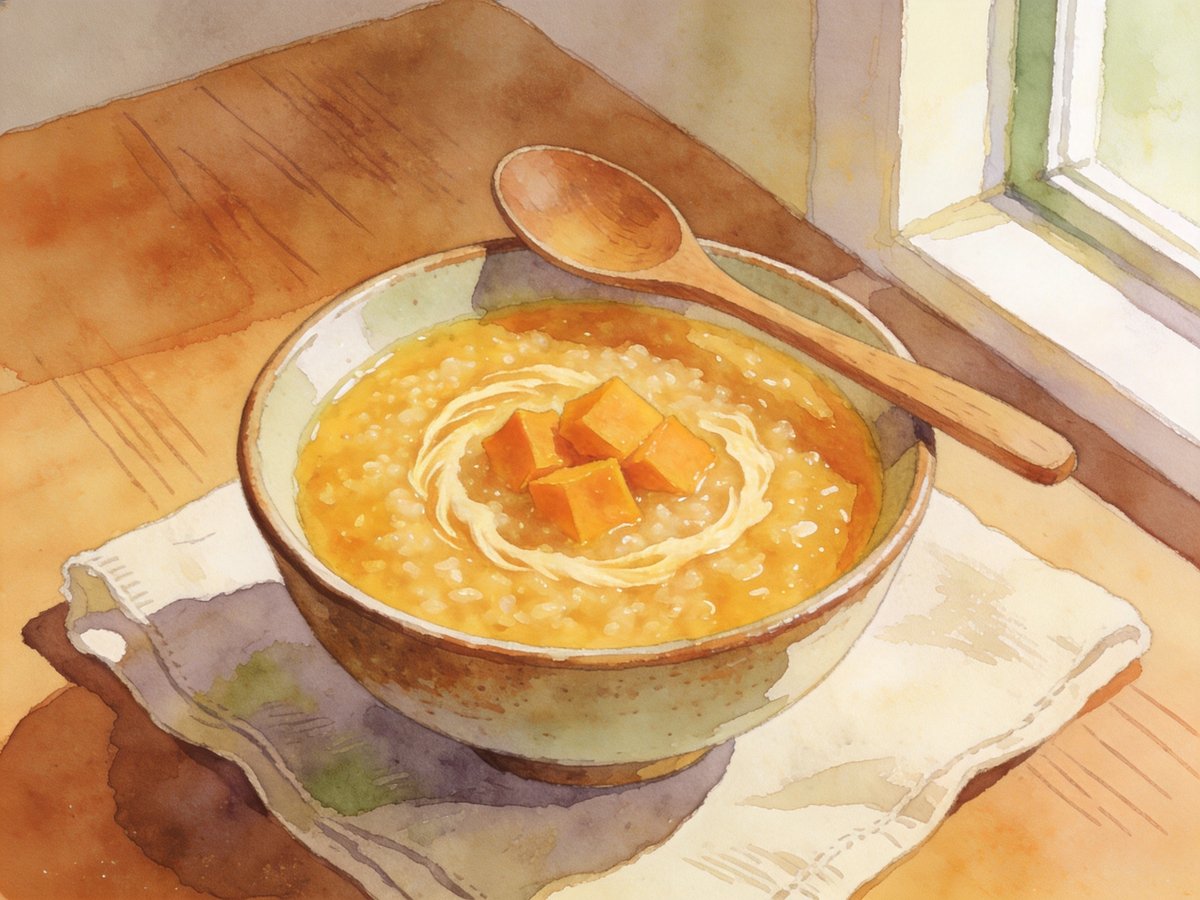
Plain rice congee — rice simmered in six to eight times its volume of water until it turns silky — is the working person's breakfast across southern China. A batch costs cents: half a cup of rice, a big pot of water, forty minutes. It is gentle on a half-awake stomach, endlessly top-up-able with whatever the fridge has (an egg, leftover vegetables, a handful of peanuts), and it anchors "warm, regular breakfast" — the habit the tradition treats as non-negotiable. Oats work the same way if rice is not your thing; the point is warm and cheap, not specifically rice.
3. Walking after meals
"饭后百步走" — walk a hundred steps after eating — is proverb-grade advice. Ten to fifteen unhurried minutes after lunch or dinner, outdoors if possible. The tradition says it helps the "grain move"; modern studies on post-meal walks and blood sugar would not disagree with the direction. Cost: zero. The discipline costs more than the shoes.
4. The evening foot soak
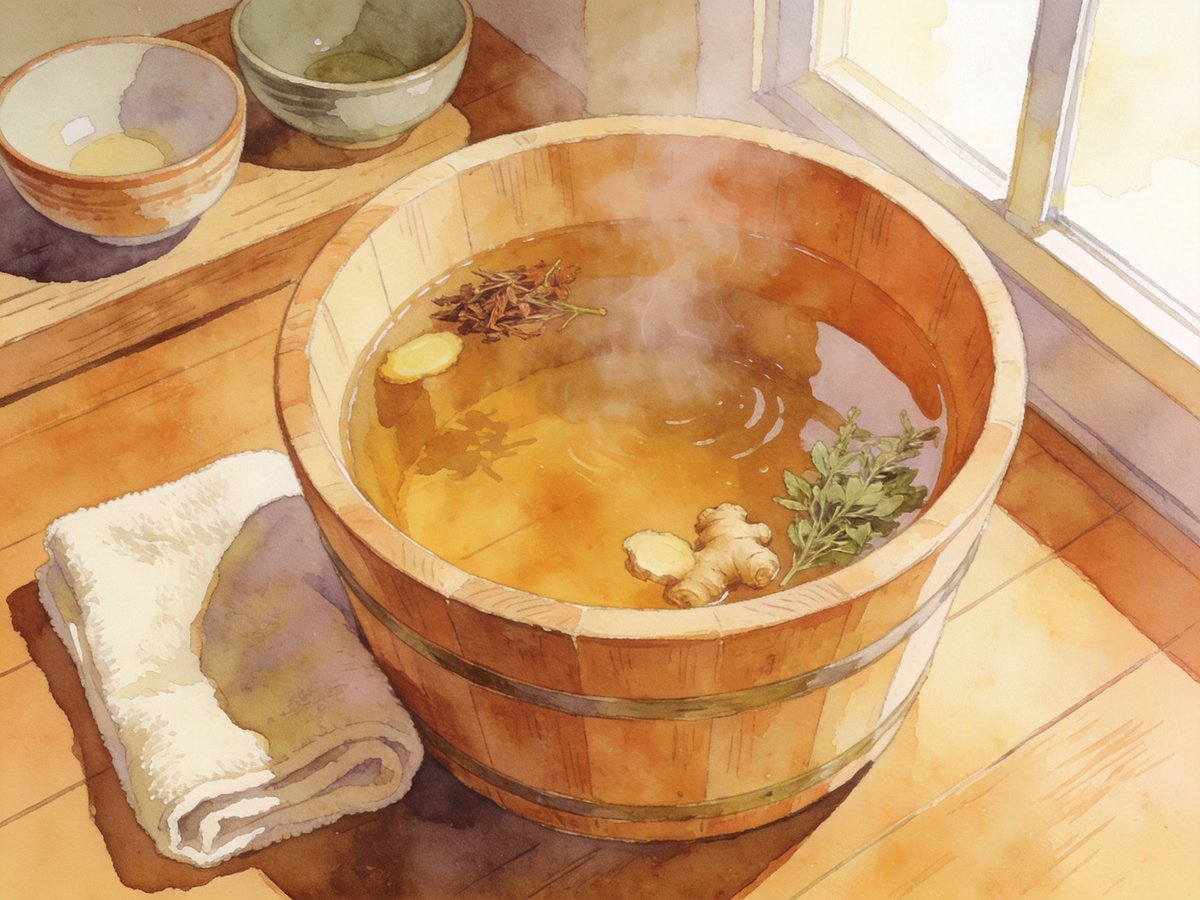
A basin of warm water, fifteen to twenty minutes while you sit and do nothing, then dry and straight into warm socks. It is the ritual version of "the day is over" — traditionally framed as drawing warmth down and settling the mind before sleep. Fancy versions add mugwort or ginger, but the plain warm-water version does 90% of the job at 0% of the cost.
5. Early nights and covered draft points
Chinese grandmothers have two parallel obsessions: you sleep too late, and your ankles are showing in winter. In TCM terms, late nights "burn yin" — the body's reserve — and cold enters at the neck, the lower back, and the ankles. The modern translation: chronic sleep debt is the most expensive "free" thing you can do to yourself, and a scarf plus socks costs less than any supplement and is harder to overdose on.
A One-Week Starter Routine
Do not take on all five at once. The tradition values regularity over intensity, so anchor one thing at a time:
| Day | Add this | Keep it anchored by |
|---|---|---|
| Mon–Tue | Warm breakfast daily | Set the rice to soak the night before |
| Wed | Thermos of warm water on your desk | Filled during breakfast, emptied by dinner |
| Thu | 10-minute walk after lunch | Attach it to an existing break |
| Fri | Evening foot soak | While watching whatever you watch anyway |
| Weekend | Fixed bedtime (±30 min) and a scarf habit | Alarms help; grandmothers help more |
By the second week the running cost is a few dollars, and the routine is yours. If a habit drops off, drop it and re-anchor the one that stuck. The maintenance mindset — not the perfect routine — is the actual inheritance.
When Cheap Becomes Expensive
Two warnings belong in any honest budget-health article:
- Habits are not medical care. Persistent symptoms — chest pain, blood in stool, a lump, unexplained weight loss, a mood that will not lift — need a clinician, and postponing care to save money converts a small bill into a catastrophic one. If cost is the barrier, ask the clinic about payment plans, community health centers, and financial assistance programs; they exist and people underuse them.
- Use the free preventive care your plan already includes. Annual physicals, blood pressure checks, and age-appropriate screenings are typically covered at no cost precisely because early detection is cheaper than late treatment. That is zhi wei bing with lab equipment — the paid-by-plan half of prevention.
The budget playbook is the floor of health spending, not the ceiling of what you should ever spend. It exists so that "I can't afford to be healthy" stops being true — not so that care gets skipped.
Budget Health Questions
What are the cheapest habits that actually support health? The consensus list is free or near-free: seven to nine hours of sleep, daily walking (including short walks after meals), warm home-cooked breakfasts built from cheap grains like rice and oats, water as the default drink, and consistent meal times. The Chinese home-wellness tradition wraps the same list in warm-water and foot-soak rituals, but the underlying levers — sleep, movement, warm simple food — are the ones with the strongest conventional evidence too.
How much does the Chinese home wellness routine cost per month? After one-time purchases — a thermos ($15–25) and a foot-soak basin ($10–20) — the running cost is roughly $12–16 a month: rice or oats for breakfasts, fresh ginger, and a scarf-and-socks budget item that lasts years. That is less than a single gym visit or a month of a common supplement, and none of the habits require subscriptions.
Is congee actually a cheap and healthy breakfast? Plain congee is one of the cheapest breakfasts that exists: half a cup of rice makes a large pot, cooked in water for about forty minutes, costing a few cents per bowl. Its health profile depends on the toppings — plain congee is easy to digest but low in protein, so the tradition pairs it with eggs, tofu, peanuts, or leftover vegetables. With a protein topping it is a genuinely balanced, budget breakfast; with nothing but pickles it is mostly warm comfort.
Do I need expensive herbs or supplements to practice TCM-style wellness? No — and this is worth saying firmly, because the wellness industry sells the opposite. The classical preventive tradition is built on sleep, warm regular meals, daily movement, warmth, and emotional moderation, all of which are free. Kitchen-level items like ginger, scallion, and goji berries cost a couple of dollars and cover the traditional use cases. Rare herbs and premium tonics belong to a different, pricier aisle and are not required for the daily maintenance philosophy.
Can healthy habits on a budget replace going to the doctor? No, and the tradition itself does not claim they can. Habits are the maintenance layer; check-ups, screenings, and treatment are the early-warning and repair layer, and insurance plans typically cover preventive services at no cost. The sensible budget strategy uses both halves: free daily habits to reduce avoidable risk, and the covered preventive care to catch what habits cannot see. Skipping care to save money is the one budget move that can backfire catastrophically.
What is the best first habit to start with if I am broke and exhausted? The fixed bedtime. It costs nothing, it is the habit every system — traditional and conventional — agrees on first, and it makes the other habits easier: warm breakfasts and after-meal walks both require an awake, regulated person to show up for them. Anchor it for two weeks, then add warm breakfasts, then the walks. One anchored habit beats five abandoned ones.