Winter Eating in Chinese Wellness: Slow Cooking and Warming Meals
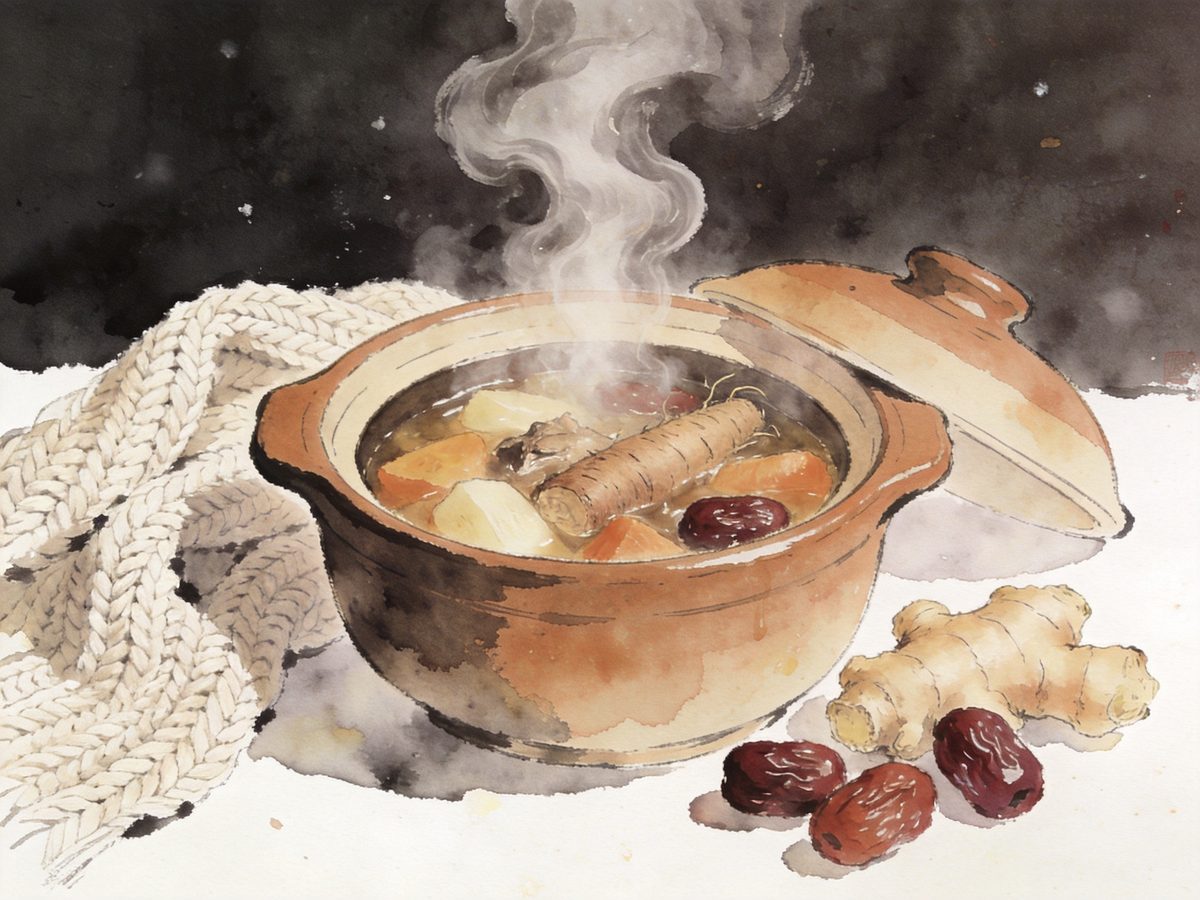
Winter is the season of slow cooking. Stews, braises, and long-simmered broths - not because you have to, but because they simply feel right when it's cold outside.
In Chinese wellness tradition, winter meals often include warming ingredients like ginger, cinnamon, and slow-cooked meats or root vegetables. This article shares two simple winter recipes.
Safety First
If you are pregnant, take medication, or have a medical condition, consult a qualified healthcare professional before trying any self-care practice. Full safety notes.
Simple Ginger & Lamb Broth
A deeply comforting broth that fills your kitchen with a warm, inviting aroma. Lamb is used here as a protein option - not as a prescribed food for any health condition.
You'll need: 200g lamb (or beef) stew meat, 4-5 slices fresh ginger, 1 carrot (chopped), 1 onion (quartered), 6 cups water, salt to taste.
How to: Brown the meat in a pot. Add ginger, carrot, onion, and water. Bring to a boil, then reduce to a gentle simmer. Cook for 1.5-2 hours. Skim any foam that rises. Season with salt. Serve warm.
Note: This is a hearty meal, not a treatment for any condition. If you have gout or are on a purine-restricted diet, consult your doctor about moderate meat consumption.
Black Sesame & Rice Porridge
A warm, naturally sweet porridge that works well as a winter breakfast or snack. Black sesame seeds add a nutty flavor and a beautiful dark color.
You'll need: 3 tbsp black sesame seeds (ground), 1/2 cup rice, 3 cups water, 1 tbsp honey or brown sugar (optional).
How to: Toast sesame seeds lightly, then grind to a powder. Simmer rice in water for 20 minutes until soft. Stir in ground sesame. Cook 5 more minutes. Sweeten if desired. Serve warm.
Who Might Want to Modify
- If you're managing blood sugar, consider whether sweeteners fit your needs.
- If you have gout or kidney concerns, consult your doctor about moderate meat consumption.
- If heavy meals feel uncomfortable, try smaller portions of these dishes.
These are winter comfort foods, not treatments for colds, low energy, or any medical condition. If you have health concerns, please see a qualified healthcare professional.