Spring Eating in Chinese Wellness: Light, Fresh, and Simple
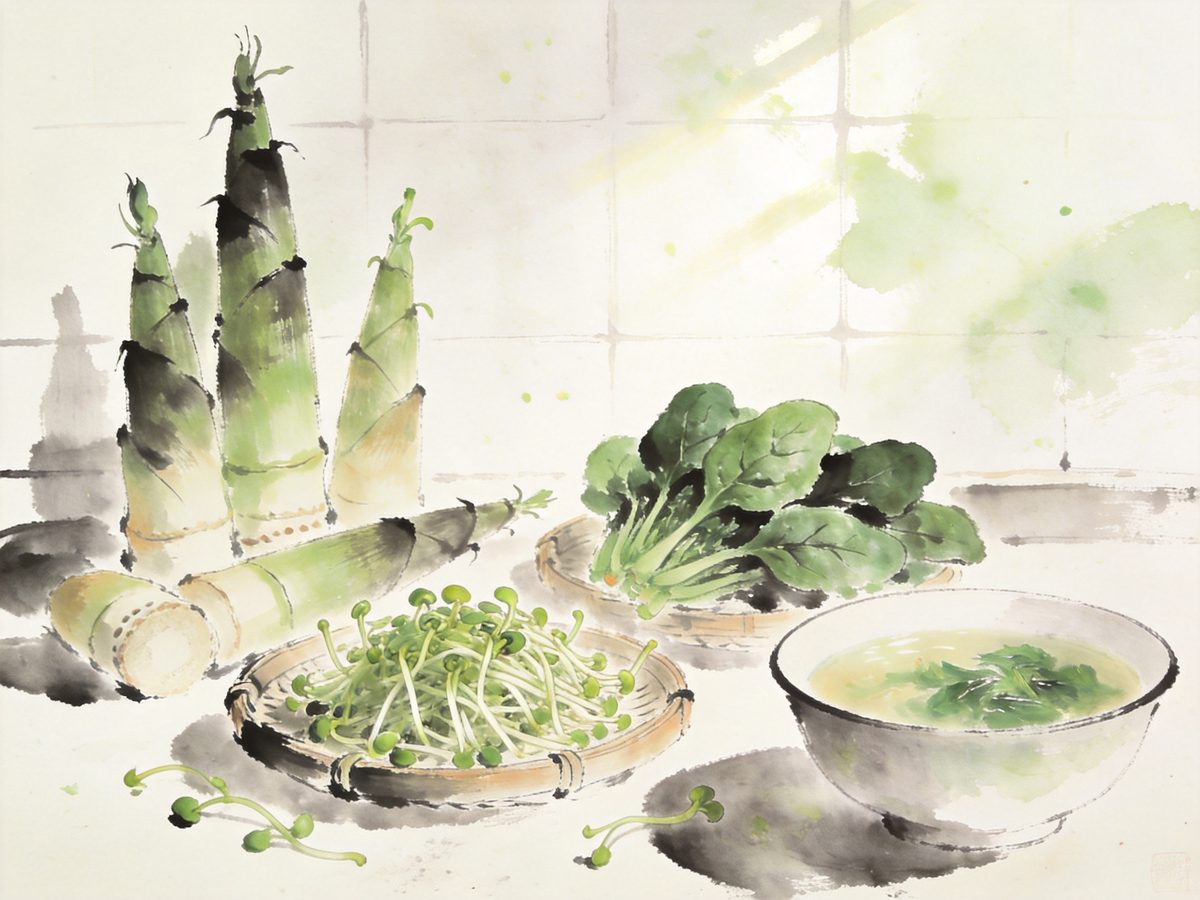
As the weather shifts from cold to mild, many people find themselves naturally craving lighter, fresher food. In Chinese wellness tradition, this is a common seasonal rhythm - not a rule, not a prescription, just an observation that's held true for centuries.
Spring eating means simple meals with fresh ingredients, gentle herbs, and lighter cooking methods. This article shares two spring-friendly recipes and explains who might want to take it easy on raw or very cold foods.
Safety First
If you are pregnant, take medication, or have a medical condition, consult a qualified healthcare professional before trying any self-care practice. Full safety notes.
Ginger & Scallion Noodle Soup
A warm, light soup for cool spring evenings. Ginger adds a gentle warmth that many people find comforting on a changeable spring day.
You'll need: Fresh ginger (3-4 thin slices), 2 scallions (sliced), 1 portion of noodles, 3 cups vegetable or chicken broth, 1 tsp sesame oil.
How to: Simmer ginger slices in broth for 5 minutes. Add noodles and cook until tender. Ladle into a bowl, top with scallions and a drizzle of sesame oil. Enjoy warm - not scalding.
Who might enjoy this: Anyone looking for a light, comforting meal on a cool spring evening.
Mint & Pea Soup
A bright, fresh soup that comes together in under 15 minutes. Perfect for those first warm days when you want something light.
You'll need: 1 cup fresh or frozen peas, a handful of fresh mint leaves, 1 small onion (diced), 2 cups vegetable broth.
How to: Saute onion until soft. Add peas and broth, simmer 5 minutes. Blend until smooth, stir in mint leaves. Serve warm or at room temperature.
Who Should Keep It Simple
These recipes are designed for generally healthy adults. Consider modifying or skipping them if:
- You have a known allergy to any ingredient (especially ginger, mint, or alliums like scallions).
- You have acid reflux or GERD - ginger and onions can trigger symptoms in some people.
- You take blood-thinning medication - ginger may increase bleeding risk; consult your doctor.
- You're following a specific medical diet for a diagnosed condition - these are not medical meal plans.
As always, if you're unsure about any food, skip it. There are plenty of other gentle spring meals to explore.