Chinese Herbal Tea Recipes: 3 Simple Blends You Can Make at Home
URL slug: /food-therapy/chinese-herbal-tea-recipes/
Primary keyword: chinese herbal tea recipe
Secondary keywords: Chinese tea recipes at home, TCM herbal tea blends, simple Chinese tea recipes, goji chrysanthemum tea, cooling Chinese tea, homemade herbal tea
Meta description: Three simple Chinese herbal tea blends using common ingredients — a calming tea, a cooling tea, and a digestive tea. Gentle recipes from Chinese food culture for everyday enjoyment.
Category: Food Therapy
Risk boundary: Frame as culinary/cultural recipes, not treatments. Include allergy warnings, pregnancy cautions, and medication interaction notes. Do not make health claims.
Introduction
Chinese herbal teas are not medicines — they are part of everyday food culture. Walk into any Chinese household, and you will likely find a jar of goji berries, a tin of dried chrysanthemum flowers, or a piece of dried tangerine peel in the kitchen. These ingredients are used to make simple, aromatic teas that are enjoyed for their flavor, warmth, and the quiet ritual of preparing them.
This article shares three easy blends — a calming evening tea, a cooling warm-weather tea, and a gentle digestive tea. Each uses ingredients you can find in most Asian grocery stores or online. They are warm beverages from Chinese culinary tradition — not treatments for any condition.
Before You Begin
- Allergies matter. Chrysanthemum is in the daisy family (Asteraceae). If you react to daisies, chamomile, or ragweed, skip any blend containing it.
- Pregnancy: If you are pregnant, consult your healthcare provider before consuming herbal teas beyond basic ginger or peppermint.
- Medications: Herbs can interact with prescription drugs. If you take medication regularly, ask your doctor or pharmacist before adding new herbal teas to your routine.
- Quality: Source dried herbs from reputable suppliers. Do not forage.
Blend 1: Calming Evening Tea
This tea combines ingredients traditionally associated with relaxation and settling the mind. It is mild, slightly sweet, and floral — a pleasant way to signal the end of the day.
Ingredients
| Ingredient | Amount | What It Brings |
| Goji berries (gou qi zi, 枸杞) | 5 grams (about 1 teaspoon) | Mild sweetness, deep red color |
| Dried chrysanthemum flowers (ju hua, 菊花) | 5 grams (4-5 flowers) | Light floral aroma, golden hue |
| Dried rose buds (mei gui hua, 玫瑰花) | 5 grams (5-6 buds) | Delicate floral note |
| Dried tangerine peel (chen pi, 陈皮) | 5 grams (a few pieces) | Subtle citrus warmth |
Method
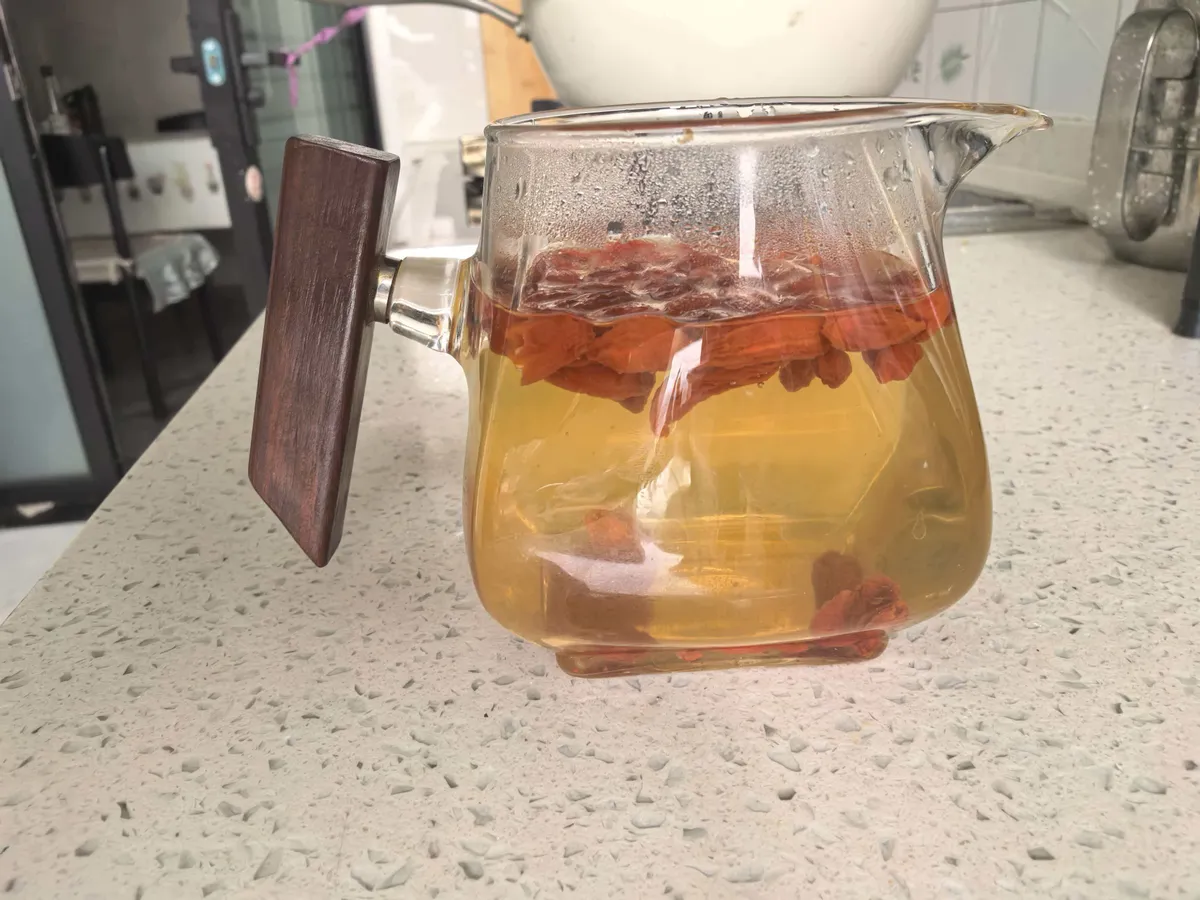
- Place all ingredients in a teapot or heatproof glass pitcher — a clear vessel shows off the colors beautifully.
- Pour 2 cups of freshly boiled water over the herbs.
- Cover and steep for 5-7 minutes. Do not boil the flowers directly — they will turn bitter.
- Strain and pour. The tea is naturally sweet from the goji berries. You can eat the steeped goji berries afterward.
- Enjoy warm. This tea can also be cooled and served at room temperature.
A lovely evening ritual — but it is a tea, not a sedative or anxiety treatment.
Blend 2: Cooling Summer Tea
Hot days call for cooling beverages, and this blend — featuring two of TCM's most famous "heat-clearing" ingredients — is a traditional Chinese summer staple.
Ingredients
| Ingredient | Amount | What It Brings |
| Dried honeysuckle flowers (jin yin hua, 金银花) | 5 grams (about 1 tablespoon) | Light, slightly sweet |
| Dried chrysanthemum flowers (ju hua, 菊花) | 5 grams (4-5 flowers) | Floral, refreshing |
| Licorice root (gan cao, 甘草) | 5 grams (1-2 small slices) | Natural sweetness, smooth finish |
Method
- Place all ingredients in a pot with 3 cups of water.
- Bring to a boil, then immediately reduce heat and simmer gently for 10 minutes.
- Strain into a pitcher. Let cool to room temperature or chill in the refrigerator.
- Serve cool, not ice-cold. In TCM dietary thinking, very cold drinks are thought to shock the digestive system.
Note about licorice root: Licorice (gan cao) can raise blood pressure when consumed in large amounts or for extended periods. A slice or two in an occasional pot of tea is a modest amount, but if you have high blood pressure, heart disease, or kidney issues, skip the licorice or consult your doctor. Licorice also interacts with some medications, including diuretics and blood pressure drugs.
Blend 3: Gentle Digestive Tea
This post-meal tea features mint's refreshing quality and the subtle earthiness of poria. It is a light digestive — the kind of tea you might sip after a heavy meal when you want something clean and settling.
Ingredients
| Ingredient | Amount | What It Brings |
| Dried mint (bo he, 薄荷) | 5 grams (about 1 tablespoon) | Cool, refreshing, aromatic |
| Dried patchouli / cablin (huo xiang, 藿香) | 5 grams | Earthy, aromatic depth |
| Licorice root (gan cao, 甘草) | 5 grams (1-2 slices) | Gentle sweetness |
Method
- Place the patchouli (huo xiang) and licorice in a small pot with 2 cups of water.
- Bring to a boil, then simmer for 10 minutes.
- Place the dried mint in a teapot or mug.
- Pour the hot decoction over the mint. Cover and steep for 5 minutes.
- Strain and serve warm.
The two-step method — boiling the denser herbs, then steeping the delicate mint — ensures the mint's volatile aromatic compounds are not destroyed by prolonged boiling. It is a small technique that makes a noticeable difference in flavor.
Licorice caution applies here too — see the note in Blend 2.
A Quick Reference: Ingredient Amounts
| Ingredient Type | Typical Amount per Serving | Examples |
| Flowers | 3-5 grams | Chrysanthemum, rose, honeysuckle, mint |
| Fruits & berries | 6-10 grams | Goji, jujube (red date), longan, dried pear |
| Roots & rhizomes | 6-10 grams | Astragalus, Glehnia, Solomon's seal, Chinese yam |
| Seeds | 5-10 grams | Cassia seed, bitter apricot seed (processed only), Job's tears |
| Barks & peels | 3-5 grams | Tangerine peel, cinnamon bark |
These are food-grade amounts for tea-making. Do not exceed them significantly or consume in large quantities expecting medicinal effects.
How to Store Dried Herbs
Dried herbs lose their potency and flavor over time. For best results:
- Store in airtight glass jars, away from direct sunlight
- Keep in a cool, dry place — not above the stove or near a window
- Label with the name and date of purchase
- Most dried flowers and leaves are best used within a year; roots and barks can last longer
- If herbs smell musty, look discolored, or show any sign of mold, discard them
Want More Like This?
The book Chinese Wellness Self-Care includes food therapy principles, seasonal eating ideas, and herbal tea recipes from Chinese tradition. It is written for general wellness education.
Learn more: /book/
Disclaimer
This article provides culinary recipes from Chinese food culture for general educational purposes only. These teas are foods and beverages — they do not diagnose, treat, cure, or prevent any disease or medical condition. Herbs can cause allergic reactions, interact with medications, and may not be appropriate for pregnant women, children, or people with certain health conditions. Licorice root can raise blood pressure and interact with medications. Consult a qualified healthcare professional before adding herbal teas to your routine if you are pregnant, take medications, or have any health concerns.
Editorial Source Notes
- Ingredient selections and TCM food therapy classifications are from standard Chinese dietary therapy references.
- Licorice safety cautions (hypertension, hypokalemia, drug interactions) are documented in herbal medicine safety literature.
- Chrysanthemum allergy cross-reactivity (Asteraceae family) is a standard allergy warning.
- Ingredient amounts reflect typical culinary use — not therapeutic dosing.