Chinese Herbal Tea Ingredients: A Beginner's Guide
URL slug: /food-therapy/chinese-herbal-tea-ingredients-guide/
Primary keyword: chinese herbal tea ingredients
Secondary keywords: Chinese tea herbs guide, TCM tea ingredients, beginner Chinese herbs, Chinese herbal tea staples, goji berry tea, chrysanthemum tea, dried tangerine peel
Meta description: A beginner-friendly guide to common Chinese herbal tea ingredients — flowers, fruits, roots, barks — with what each tastes like and how to use it. For culinary and cultural education only.
Category: Food Therapy
Risk boundary: Frame as a culinary/cultural reference guide. Do not make health or treatment claims for any ingredient. Include allergy warnings and medication interaction notes.
Introduction
Chinese herbal teas — known as liang cha (凉茶, cooling tea) or yao shan cha (药膳茶, food-therapy tea) — are a fixture of everyday life in Chinese culture. They are not medicines in the clinical sense. They are gently flavored beverages made from dried flowers, fruits, roots, and barks, enjoyed for their taste, warmth, and connection to food traditions that go back centuries.
This guide introduces the most common ingredients, organized by type. Think of it as a pantry guide — what each item is, what it tastes like, and how it is typically used in tea-making. It is for culinary and cultural education only. None of these descriptions constitute health claims or medical advice.
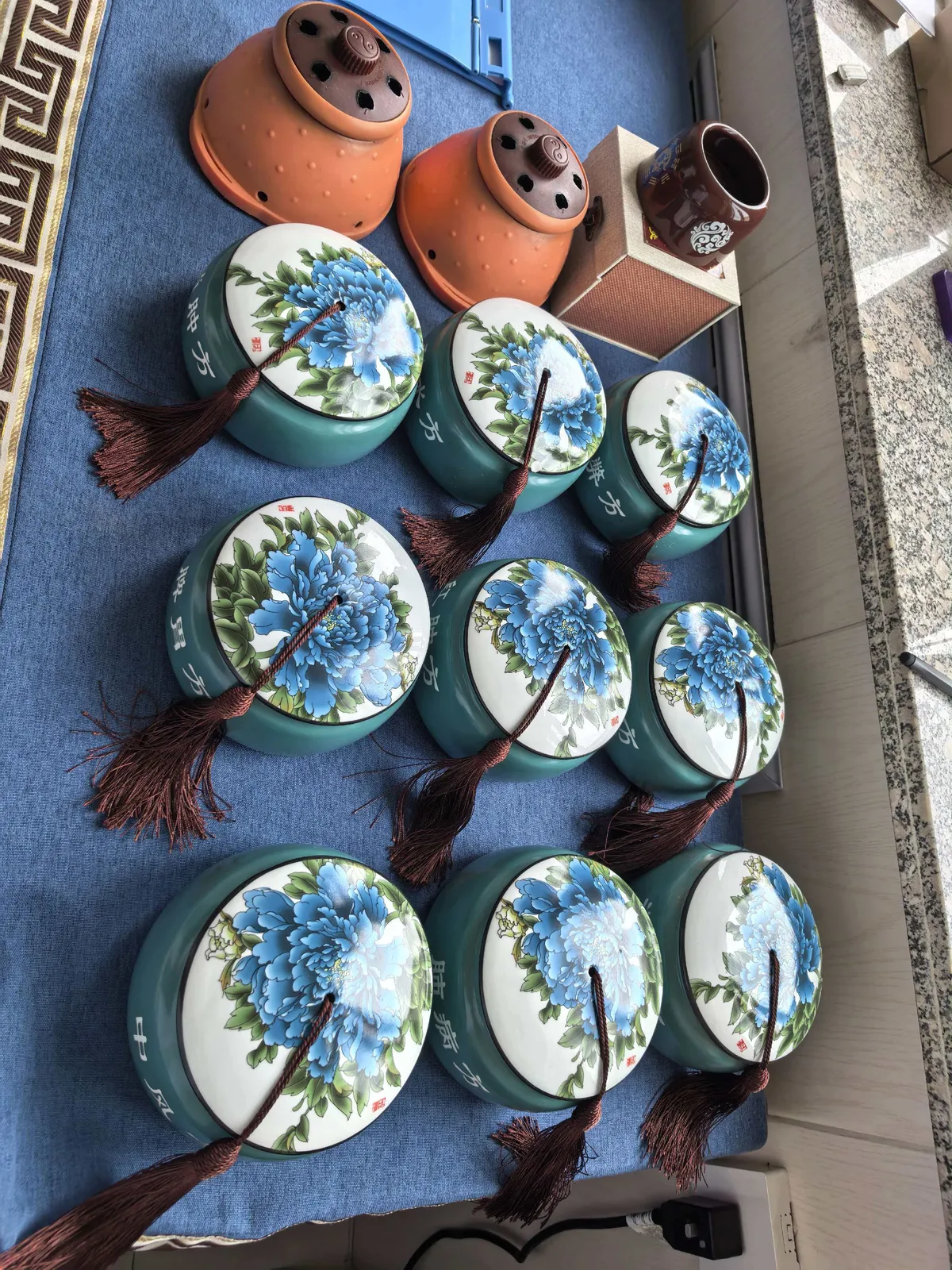
What Is Chinese Herbal Tea?
In Chinese practice, "herbal tea" covers two overlapping traditions:
- Food-therapy teas (药膳茶): Made from food-grade ingredients — goji berries, red dates, ginger, tangerine peel — and consumed as part of daily diet. These are not medicines; they are foods in liquid form.
- Cooling teas (凉茶): Traditional herbal decoctions — sometimes bitter, sometimes sweet — consumed for their perceived heat-clearing properties, especially in southern China during hot weather. These can contain stronger herbs and should be approached with more caution.
This guide focuses on the first category: gentle, food-grade ingredients suitable for everyday tea-making.
Flowers
Chrysanthemum (Ju Hua, 菊花)
- Taste: Light, floral, slightly sweet
- Appearance: Small dried yellow or white flowers
- How to use: 3-5 flowers per cup. Steep in hot water (not boiling — around 90°C) for 3-5 minutes. The flowers will unfold and release a golden color.
- Common pairings: Goji berries, honey, rock sugar
- Caution: Daisy family (Asteraceae). Avoid if allergic to daisies, ragweed, or chamomile.
Honeysuckle (Jin Yin Hua, 金银花)
- Taste: Mildly sweet, delicate
- Appearance: Slender dried flowers, pale yellow-white
- How to use: 3-5 grams per cup. Steep in hot water for 5 minutes.
- Common pairings: Chrysanthemum, licorice root
- Note: A classic ingredient in southern Chinese cooling teas.
Rose (Mei Gui Hua, 玫瑰花)
- Taste: Subtly sweet, distinctly floral
- Appearance: Small dried rose buds, deep pink to burgundy
- How to use: 4-6 buds per cup. Steep for 5-7 minutes.
- Common pairings: Goji berries, red dates, longan
- Note: Choose food-grade dried rose buds from culinary suppliers — not potpourri or decorative roses, which may be treated with chemicals.
Mint (Bo He, 薄荷)
- Taste: Cool, refreshing, familiar
- Appearance: Dried green leaves — or use fresh
- How to use: 3-5 grams per cup. Steep, do not boil — prolonged heat destroys the volatile oils.
- Common pairings: Chrysanthemum, licorice, tangerine peel
Fruits and Berries
Goji Berry (Gou Qi Zi, 枸杞)
- Taste: Sweet, slightly tangy, raisin-like
- Appearance: Small, shriveled red-orange berries
- How to use: 5-10 grams (1-2 teaspoons) per cup. Add to hot water and steep 5-10 minutes. The berries will plump up. Eat them after drinking — they are food.
- Common pairings: Chrysanthemum, red dates, longan
- Note: Goji is a food, not a medicine. It contains vitamin A precursors and polysaccharides. If you take warfarin, check with your doctor — there are isolated case reports of goji-warfarin interaction.
Red Date / Jujube (Da Zao / Hong Zao, 大枣/红枣)
- Taste: Deeply sweet, caramel-like
- Appearance: Wrinkled dark red dates
- How to use: 2-3 dates per cup. Break or slice them open to release more flavor. Steep 10+ minutes. The dates themselves can be eaten.
- Common pairings: Ginger, goji, longan
Longan (Long Yan Rou, 龙眼肉)
- Taste: Very sweet, honey-like
- Appearance: Dried brown translucent flesh
- How to use: 5-10 grams per cup. Steep 5-10 minutes. Eat afterward.
- Common pairings: Red dates, goji — the classic "three-red" combination
Luo Han Guo / Monk Fruit (Luo Han Guo, 罗汉果)
- Taste: Intensely sweet — much sweeter than sugar — with a subtle earthy note. Zero calories.
- Appearance: Round, brown, hard-shelled dried fruit. Sold whole or in pieces.
- How to use: Break off a quarter to a half of the fruit. Simmer in 3-4 cups water for 20 minutes. A little goes a long way — the whole fruit would be overwhelming for one pot.
- Common pairings: Chrysanthemum, licorice root
- Note: Monk fruit's sweetness comes from mogrosides, not sugar. It is widely used as a natural sweetener.
Roots and Rhizomes
Fresh Ginger (Sheng Jiang, 生姜)
- Taste: Pungent, warming, spicy
- Appearance: Fresh knobby rhizome with tan skin and yellow flesh
- How to use: 3-5 thin slices (about 10 grams) per cup. Simmer 10-15 minutes — ginger needs heat and time to release its compounds. Simple steeping in a cup produces a weaker tea.
- Common pairings: Red dates, brown sugar, tangerine peel
- Caution: Blood-thinning medications, GERD, gallstones. See our ginger-specific articles for details.
Chinese Yam (Shan Yao, 山药)
- Taste: Mild, slightly sweet, neutral
- Appearance: Dried white slices, chalky texture
- How to use: 10-15 grams per pot. Simmer 15-20 minutes. The slices become soft and edible.
- Note: A food-first ingredient. Fresh yam is a common vegetable in Chinese cooking.
Glehnia Root (Sha Shen, 沙参)
- Taste: Mild, slightly sweet
- Appearance: Dried beige root slices
- How to use: 6-10 grams per pot. Simmer 15 minutes.
- Note: Often used in food-therapy soups as well as teas.
Barks, Peels and Seeds
Dried Tangerine Peel (Chen Pi, 陈皮)
- Taste: Bittersweet, citrusy, aromatic
- Appearance: Dark, dried pieces of tangerine or mandarin peel. The older the peel, the darker the color and the more valued it is — true aged chen pi can be quite expensive.
- How to use: 3-5 grams (a few small pieces) per cup. Simmer 5-10 minutes, or steep longer in hot water.
- Common pairings: Ginger, poria, licorice
- Note: One of the most versatile ingredients in Chinese food therapy. Make sure you are buying food-grade dried peel — not peel treated with preservatives for decorative use.
Poria (Fu Ling, 茯苓)
- Taste: Very mild, almost tasteless — adds body rather than flavor
- Appearance: Small white cubes or slices. Poria is a fungus that grows on pine roots.
- How to use: 10-15 grams per pot. Simmer 15-20 minutes. It does not contribute much flavor on its own — use with more aromatic ingredients.
- Common pairings: Tangerine peel, ginger, licorice
Cassia Seed (Jue Ming Zi, 决明子)
- Taste: Slightly bitter, nutty
- Appearance: Small, shiny dark brown seeds
- How to use: 5-10 grams per cup. Simmer 10 minutes. The seeds remain hard — do not attempt to eat them.
- Note: Often included in "eye-brightening" tea blends in Chinese tradition.
A Note on Licorice Root (Gan Cao, 甘草)
Licorice root deserves a special mention because it appears in so many Chinese tea blends. It is a natural sweetener and harmonizer — a small slice makes any tea blend taste smoother and rounder.
But licorice is not for everyone:
- It can raise blood pressure when consumed regularly or in large amounts
- It can cause potassium loss (hypokalemia), which affects heart rhythm
- It interacts with diuretics, blood pressure medications, and corticosteroids
For occasional tea-making, a thin slice (2-3 grams) in a pot shared among multiple cups is a modest amount for most people. But if you have high blood pressure, heart disease, or kidney issues, skip the licorice or consult your doctor. Do not consume licorice tea daily in large quantities.
Quick Reference Table
| Ingredient | Type | Taste | Amount per cup | Brew method |
| Chrysanthemum | Flower | Floral, light | 3-5 flowers | Steep 3-5 min |
| Honeysuckle | Flower | Sweet, mild | 3-5 g | Steep 5 min |
| Rose | Flower | Floral, sweet | 4-6 buds | Steep 5-7 min |
| Mint | Leaf | Cool, fresh | 3-5 g | Steep, do not boil |
| Goji berry | Fruit | Sweet, tangy | 5-10 g | Steep 5-10 min |
| Red date | Fruit | Caramel-sweet | 2-3 dates | Steep 10+ min |
| Longan | Fruit | Honey-sweet | 5-10 g | Steep 5-10 min |
| Monk fruit | Fruit | Intensely sweet | ¼-½ fruit | Simmer 20 min |
| Ginger | Rhizome | Pungent, warm | 10 g (3-5 slices) | Simmer 10-15 min |
| Chinese yam | Root | Mild, sweet | 10-15 g | Simmer 15-20 min |
| Tangerine peel | Peel | Citrusy | 3-5 g | Simmer 5-10 min |
| Poria | Fungus | Neutral | 10-15 g | Simmer 15-20 min |
| Licorice root | Root | Sweet | 2-3 g (thin slice) | Simmer 5-10 min |
| Cassia seed | Seed | Bitter, nutty | 5-10 g | Simmer 10 min |
Getting Started: A Minimalist Pantry
If you are new to Chinese herbal teas, start with just three or four ingredients:
Goji berries + chrysanthemum flowers + dried tangerine peel + ginger
With these four, you can make:
- Goji-chrysanthemum tea (floral, sweet)
- Ginger-tangerine tea (warming, citrusy)
- All four together (balanced, aromatic)
Add red dates and longan for sweetness. Add mint for freshness. Expand slowly as your confidence grows.
Want More Like This?
The book Chinese Wellness Self-Care explores food therapy principles, seasonal eating, and herbal tea traditions from Chinese culture. It is written for general wellness and culinary education.
Learn more: /book/
Disclaimer
This article provides cultural and culinary information about Chinese herbal tea ingredients for general educational purposes only. None of the ingredients described are intended to diagnose, treat, cure, or prevent any disease or medical condition. Herbs can cause allergic reactions, interact with prescription medications (particularly blood thinners, blood pressure medications, and diabetes medications), and may not be appropriate for pregnant women, children, or people with certain health conditions. Licorice root can raise blood pressure and cause potassium depletion. Source all herbs from reputable culinary or herbal suppliers. Consult a qualified healthcare professional before adding herbal teas to your routine if you take medications, are pregnant, or have health concerns.
Editorial Source Notes
- Ingredient descriptions, taste profiles, and traditional TCM classifications are from standard Chinese materia medica and food therapy references, presented here for culinary and cultural education.
- Licorice safety cautions (hypertension, hypokalemia) are documented in herbal medicine safety literature and NCCIH resources.
- Goji-warfarin interaction is based on isolated case reports in medical literature; the mechanism is not fully established.
- Ingredient amounts reflect typical culinary use, not therapeutic dosing.