Motion Sickness Pressure Points: Where to Press and How Long
Introduction
Motion sickness has a way of ruining a perfectly good trip. One winding road or choppy ferry later, you are sweating, dizzy, and counting the minutes until you can get off.
One of the most popular drug-free comfort options is acupressure — and unlike most acupressure points, the main point for nausea, PC6, has actually been studied for motion sickness in clinical trials. This guide covers three pressure points people use for travel queasiness: where each one is, how to press it, and how long to hold it.
One safety rule comes first: if you are the driver, do not practice acupressure while driving. If you feel unwell, pull over. No pressure point is a substitute for stopping.
This article is general wellness education only. It does not treat, cure, or prevent motion sickness or any medical condition.
Point 1: PC6 (Neiguan) — the Main Point for Nausea
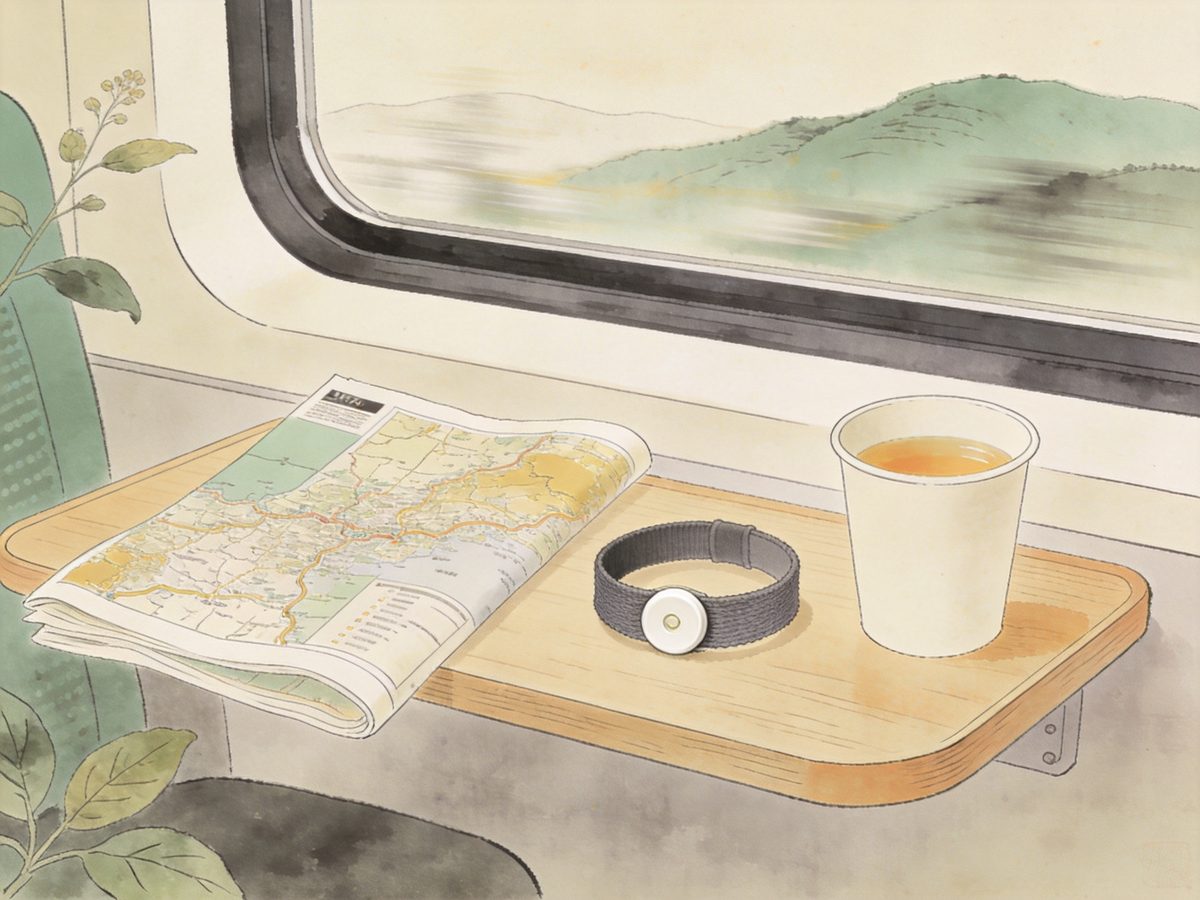
PC6, on the inner forearm, is the best-known pressure point for nausea of any kind, and it is the point that acupressure wristbands ("sea bands") are designed to press.
Where It Is
- Hold one hand palm-up.
- Find the wrist crease where your hand meets your forearm.
- Place three fingers of your other hand (index, middle, ring) across the wrist, starting at the crease.
- PC6 sits at the far edge of your ring finger, in the groove between the two rope-like tendons that run down the center of your inner forearm.
When you have the right spot, firm pressure usually produces a dull, spreading ache — slightly sore, but not sharp.
How to Press It for Motion Sickness
- Press with your thumb at a comfortable, firm angle for 2–3 minutes.
- Breathe slowly while you press — many people find slow breathing helps on its own.
- Switch arms and repeat if needed.
- Before a trip, you can also press each side for about 30 seconds as a pre-boarding ritual.
You can repeat this every couple of hours during travel. Elastic wristbands work the same way — just check that the button sits exactly on PC6, not too close to the wrist crease.
For a deeper guide to PC6 — including what clinical research says about it for nausea — see Acupressure for Nausea.
Point 2: Yintang — Between the Brows
Yintang is the point directly between the eyebrows, sometimes called the "hall of impression." It is traditionally used for calming the mind and easing the heavy, swimmy-headed feeling that comes with motion sickness.
Where It Is
The smooth spot exactly midway between your two eyebrows.
How to Press It
- Rest a finger (or knuckle of your closed hand) on the point — useful because it needs no free hand position.
- Use gentle pressure and slow circular motion for 1–2 minutes.
- Close your eyes while you do it, and breathe slowly through your nose.
The pressure should be light-to-moderate. This point is more about settling the head and breathing than the stomach.
Point 3: ST36 (Zusanli) — Below the Knee
ST36 is one of the most famous points in all of acupressure, traditionally associated with digestion and stamina. Travelers use it for the churning, unsettled stomach feeling that comes with motion sickness.
Where It Is
- Sit down and place one foot flat on the floor.
- Measure four finger-widths below the bottom of your kneecap.
- ST36 sits one finger-width to the outside of your shin bone, in the muscle there.
A common test: you have the right area when firm pressure produces a distinct sore, tingling feeling that can radiate down toward the foot.
How to Press It
- Press with your thumb or knuckles for 1–2 minutes per leg.
- Firm, steady pressure works better than jabbing.
- On a plane or train, this one is easy to reach; in a car as a passenger, it may be easier to skip and stick with PC6.
For more on this point and its traditional "leg three li" name, see Gentle Foot and Leg Acupressure Points.
A Simple Travel Sequence
When queasiness starts:
- Fix the basics first: look at the horizon, get fresh air if possible, and stop reading or looking at your phone.
- Press PC6 for 2–3 minutes, then switch arms.
- Add Yintang for 1–2 minutes with your eyes closed.
- Add ST36 if your stomach still feels unsettled and you have room to reach it.
None of this requires equipment, and plain slow breathing between points is fine. Acupressure does not work for everyone — if it is not helping, use whatever conventional option you normally would.
When Travel Queasiness Needs Medical Attention
Seek medical care if:
- You cannot keep down any fluids, or vomiting continues after the journey ends
- You notice signs of dehydration: dark urine, dizziness on standing, dry mouth
- Symptoms started after a head injury
- A child shows listlessness or unusually few wet diapers alongside vomiting
- Severe dizziness, hearing changes, or slurred speech appear — these are not typical motion sickness and need prompt evaluation
Regular motion sickness that strikes on every trip is worth mentioning to a doctor too — effective conventional preventives exist, and there is no prize for suffering through it.
Safety Reminders
- Pressure should feel like a dull ache, never sharp pain. Ease off if a point hurts.
- Do not press over cuts, rashes, burns, or bruises.
- If you take blood thinners or have a bleeding disorder, ask your doctor before regular acupressure.
- Pregnant? PC6 is commonly used for morning sickness, but check with your prenatal care provider first.
- Drivers: pull over first. Always.